| Disponibilidad: | Check availability | Condición: | nuevo |
|
| Envío: | a partir de $0.00 | Garantía: | 2Yrs |
The GPS / GNSS Over Fiber In-Building Distribution System is designed to extend satellite positioning signals into locations where normal GPS and GNSS reception is weak, blocked, or completely unavailable. This includes underground facilities, parking structures, tunnels, basements, large commercial buildings, transportation hubs, data centers, hospitals, warehouses, public safety facilities, and other indoor GNSS shadow areas.
Outdoor GNSS signals are often blocked by concrete, steel, underground structures, and large buildings. This system solves that problem by receiving GNSS signals from an outdoor antenna, processing them through a central master unit, and distributing synchronized GNSS service to multiple indoor remote antenna units over fiber optic cable.
The system is based on a central Master Unit, also called the MU, and multiple Remote Units, also called RUs. A GNSS receiving antenna is installed outside the building where it has clear visibility to the sky. The GNSS signal is received by the MU and then distributed through fiber optic links to indoor RU antenna units.
Each RU rebroadcasts the GNSS signal in its local indoor service area, allowing GPS and GNSS-enabled devices to receive positioning information even when they are located inside a building or underground area.
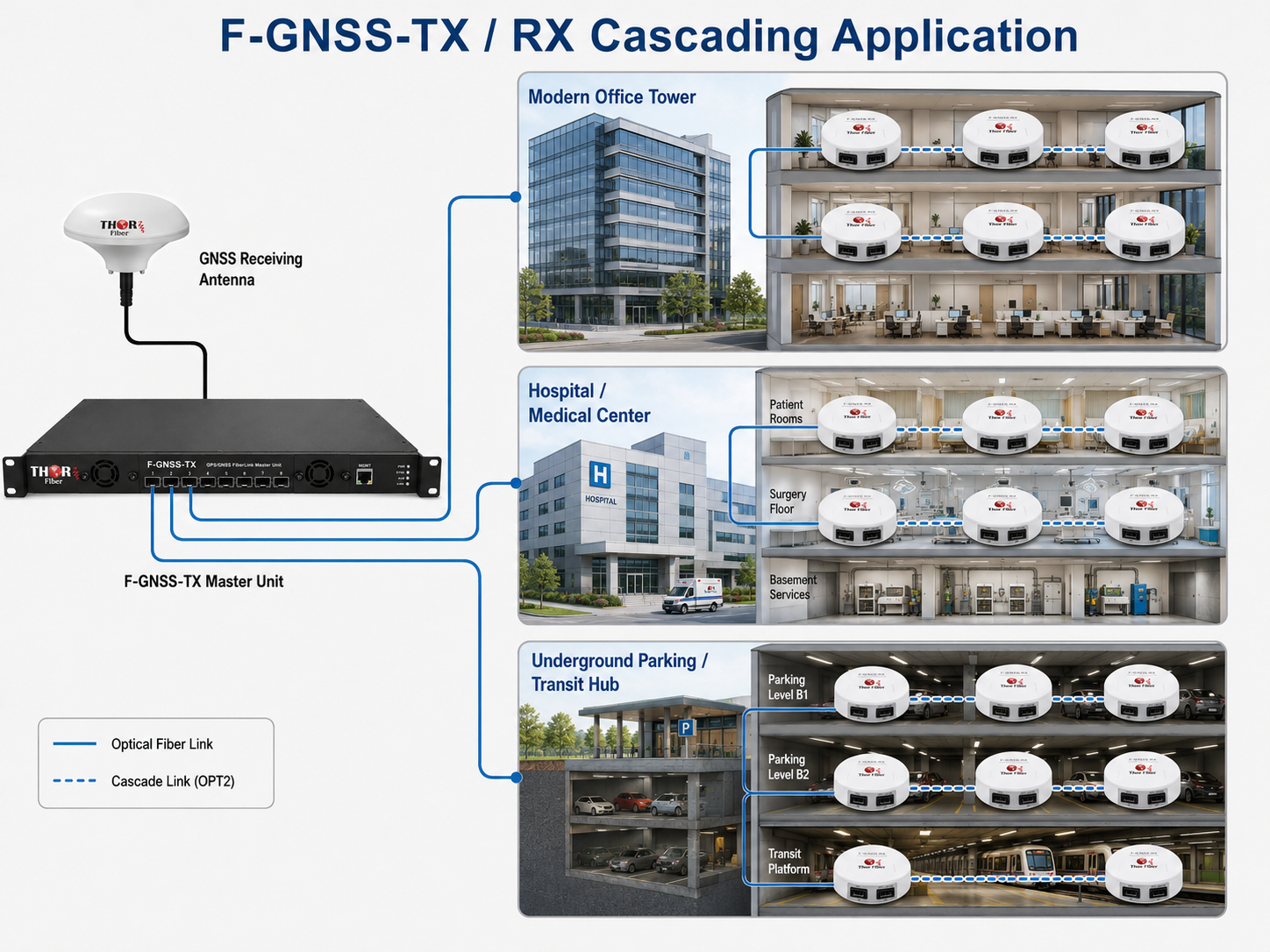
The MU includes multiple optical SFP ports, allowing connection to several RU branches. The RU units can also be cascaded, making it possible to expand the system across multiple floors, hallways, rooms, parking levels, or indoor zones.
In underground parking garages, GPS signals are normally unavailable. This system allows vehicles, mobile phones, and navigation devices to continue receiving GNSS positioning information, helping drivers locate routes, parking areas, exits, and pickup locations.
For emergency response teams, indoor location information can be critical. The system helps improve location awareness in buildings, underground facilities, tunnels, and large public spaces where standard GPS coverage is not available.
Warehouses, logistics centers, loading docks, and transportation facilities can use indoor GNSS coverage to help track vehicles, assets, equipment, and personnel in areas where outdoor satellite signals are blocked.
The system can be used as part of a smart building or smart city infrastructure where indoor positioning, asset tracking, location-based services, and safety systems require reliable GNSS availability.
GNSS timing and location data may be required in secure facilities, financial institutions, data centers, and other critical infrastructure environments. This system helps bring GNSS availability into protected or shielded indoor areas.
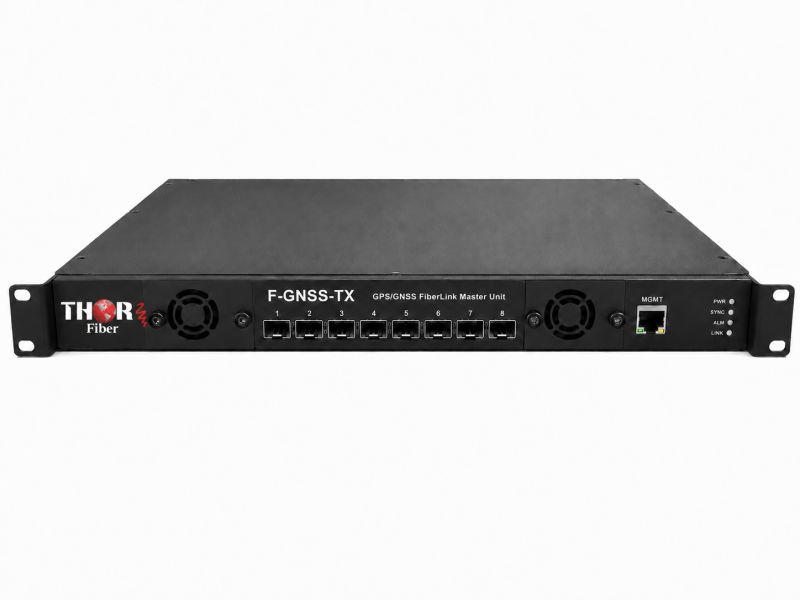
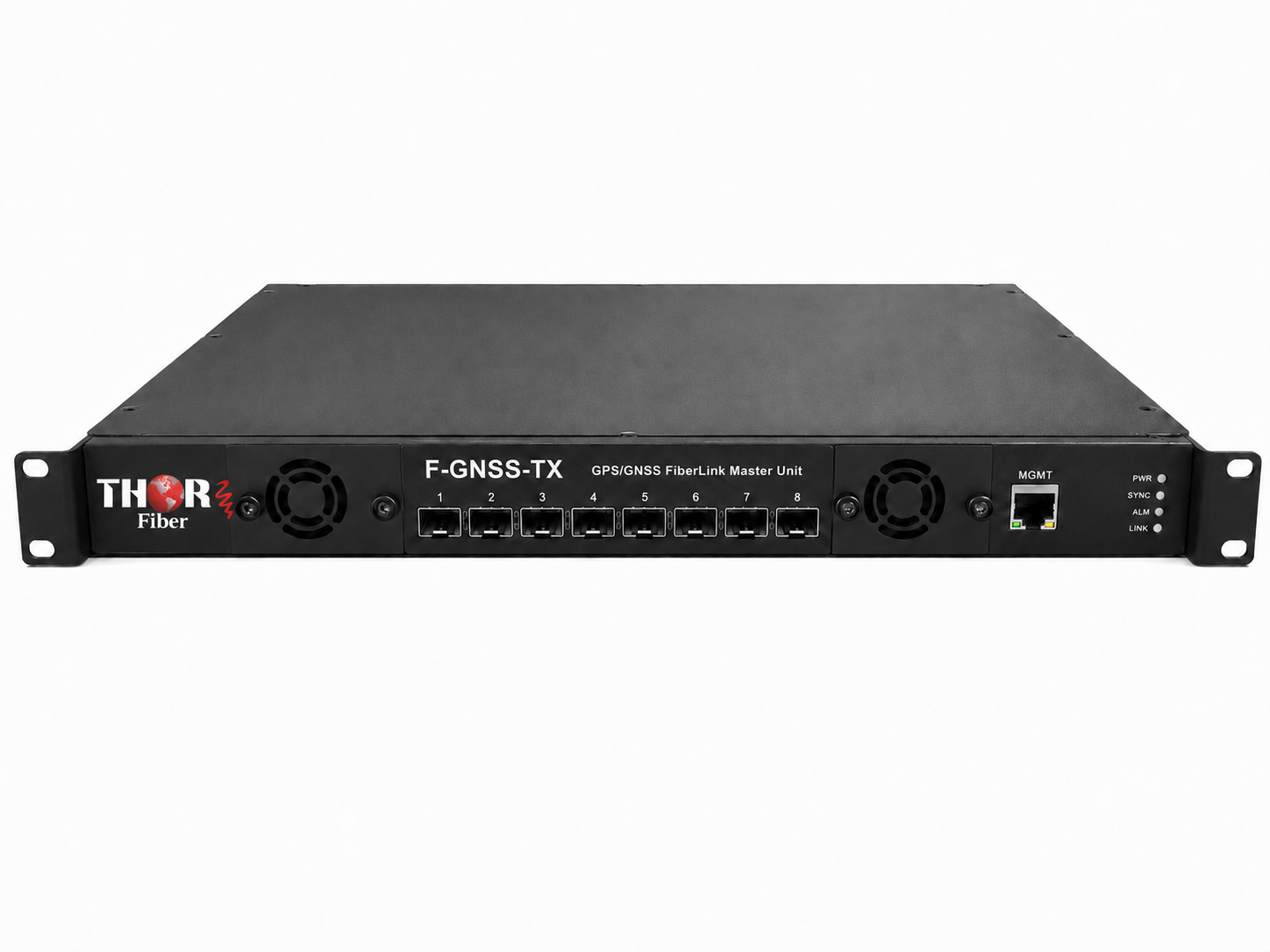
A typical installation includes one outdoor GNSS antenna, one 1RU rack-mount MU master unit, fiber optic links, and multiple indoor RU antenna units. The outdoor antenna receives GNSS satellite signals and sends them to the MU. The MU distributes the signal through its optical SFP ports to the RU units installed throughout the building.
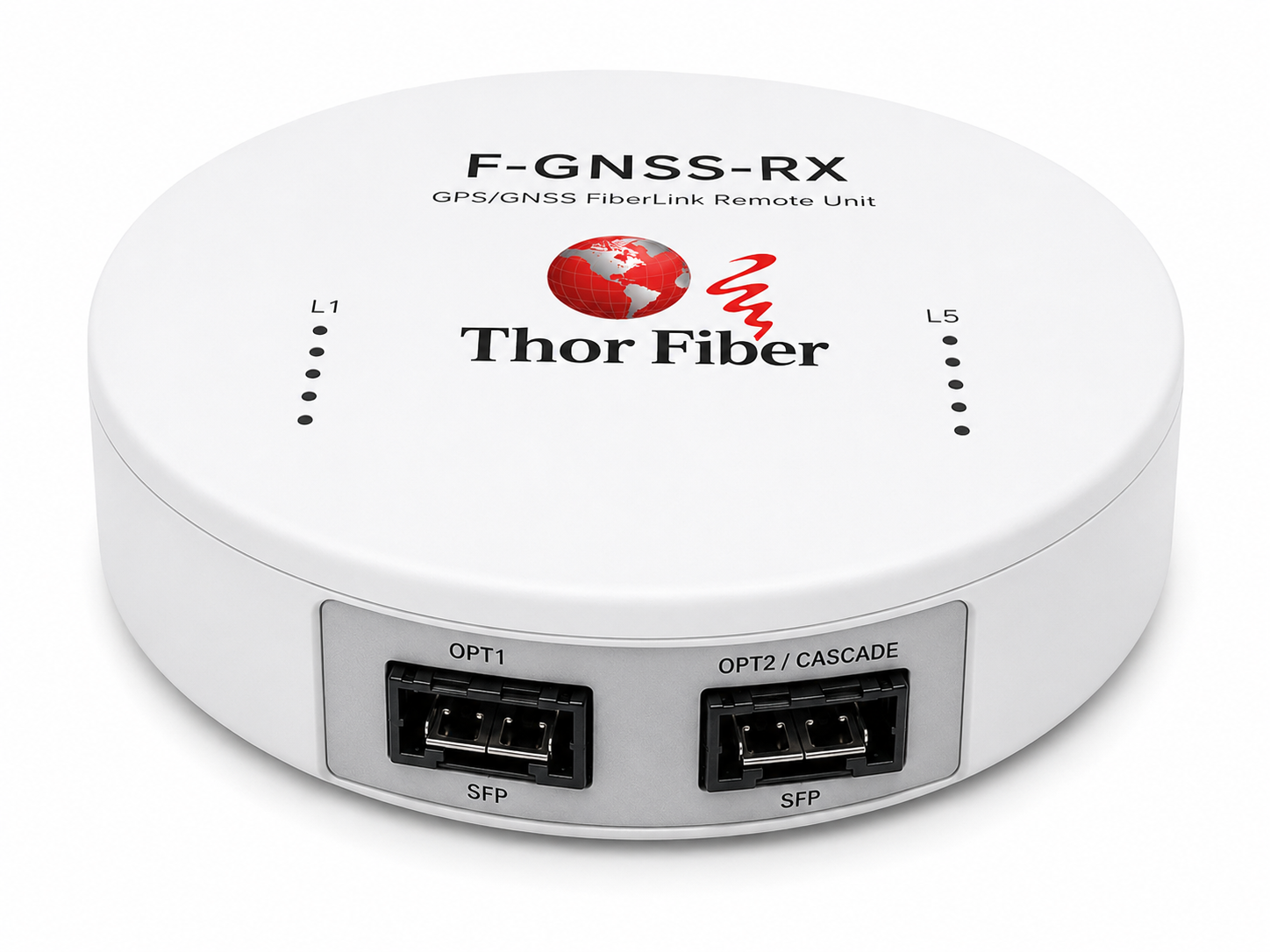
Each RU provides GNSS coverage for its local service area. Additional RUs can be connected using cascade ports, allowing the system to be expanded in a logical and cost-effective way.
Fiber optic cable is ideal for distributing GNSS signals inside large facilities because it provides long-distance transmission, low loss, electrical isolation, and immunity to electromagnetic interference. Unlike coaxial cable, fiber can carry the signal over long distances without the same level of RF loss, making it suitable for large buildings, campuses, tunnels, and multi-level facilities.
Using fiber also allows the central GNSS equipment to be installed in a secure rack room while the remote antenna units are placed exactly where indoor GNSS coverage is needed.
A GNSS antenna is mounted on the roof or another outdoor location with clear sky visibility. The antenna connects to the MU master unit located in the equipment room. From the MU, fiber optic cables are routed to RU units installed inside the building. The RU units provide localized GNSS signal coverage for indoor areas such as parking levels, corridors, warehouse zones, emergency response areas, or transportation terminals.
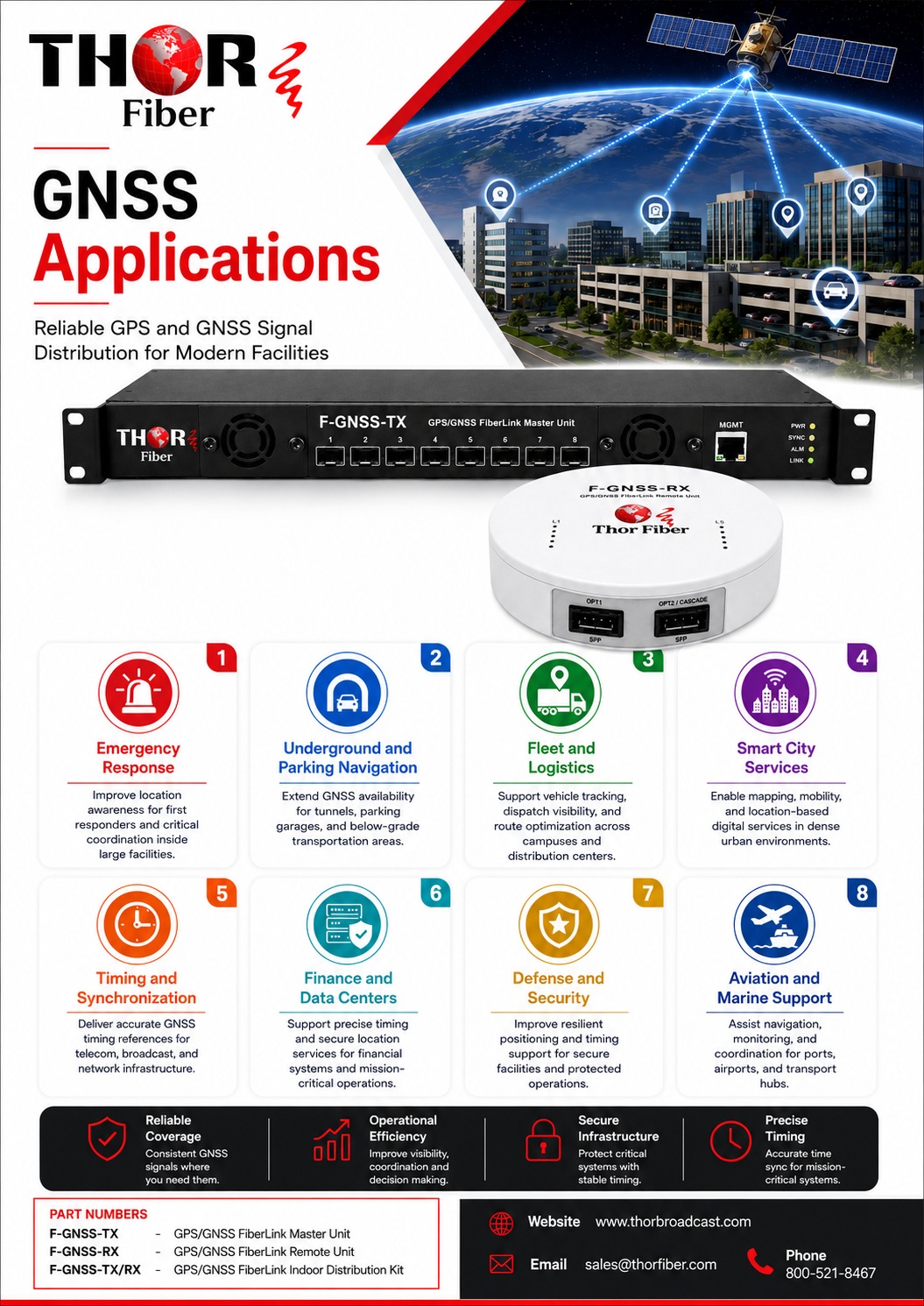
F-GNSS-TX - GPS/GNSS FiberLink Master Unit
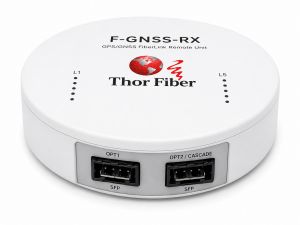
F-GNSS-RX - GPS/GNSS FiberLink Remote Unit
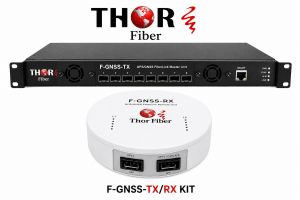
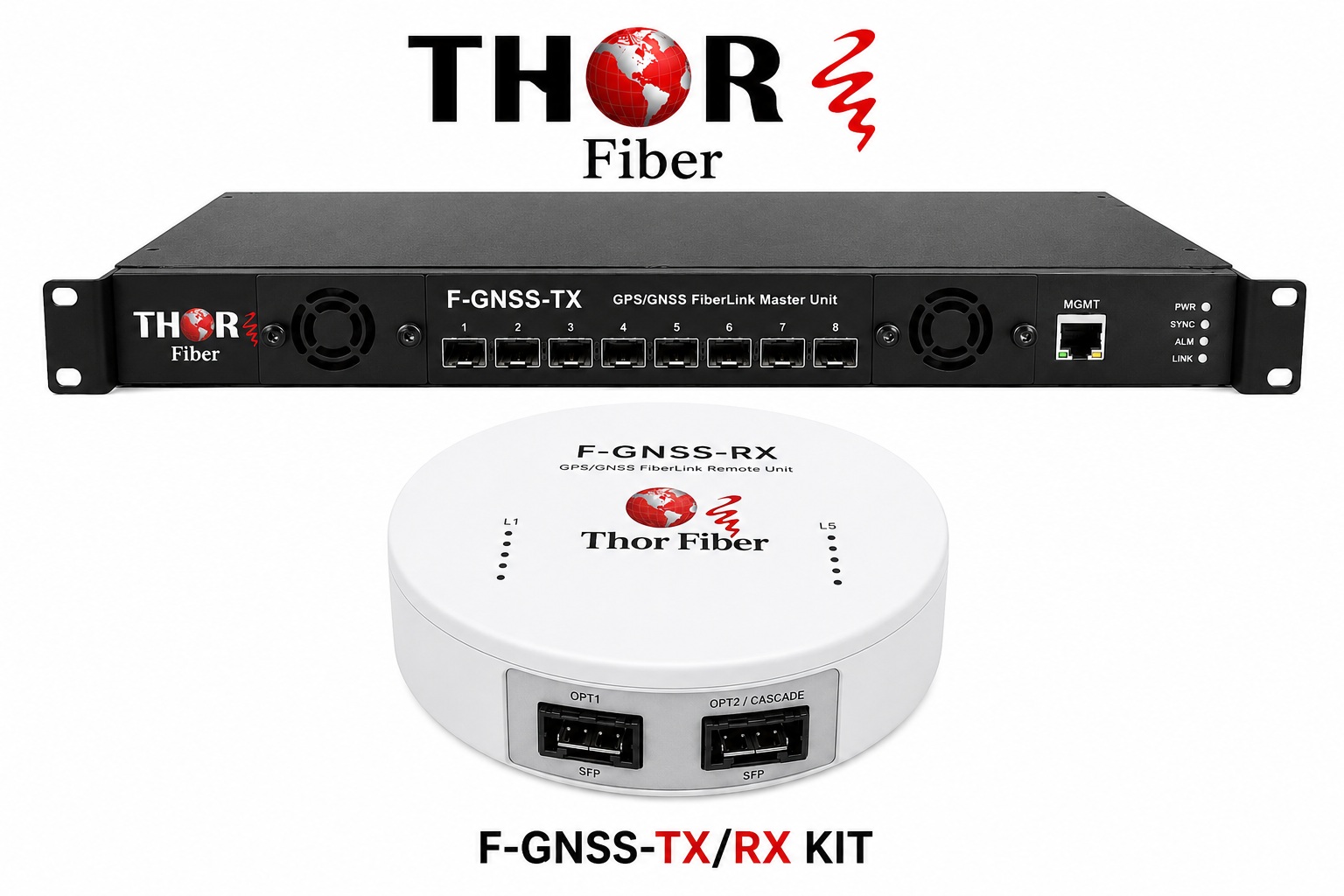
F-GNSS-TX/RX - GPS/GNSS FiberLink Indoor Distribution Kit
| Part Number | Items | Specifications | Remark |
|---|---|---|---|
| F-GNSS-TX GPS/GNSS FiberLink Master Unit |
Service Band | L1, L5 | |
| Receive Signal Channel | 24 Channel | L1, L5 Total | |
| Doppler Range | < ±5 kHz | ||
| Position Error | ≤ 3 m | ||
| Transmission Distance | ≤ 10 km | Single-mode fiber | |
| Physical Interface | SFP 8 Port | RU Interface | |
| Max RU Connections | 32 RU | 8 Branch / 4 Cascade | |
| Size | 1U | 19" Rack Mount |
| Thor Part Number | Items | Specifications | Remark |
|---|---|---|---|
| F-GNSS-RX GPS/GNSS FiberLink Remote Unit |
Service Band | L1, L5 | |
| Service Channel | ≤ L1: 8 ch / L5: 8 ch | ||
| System Power | ≤ 0 dBm | ||
| Power Control Range | 40 dB | ||
| Power Control Step | 0.5 dB | ||
| Delay Control Range / Step | 0~120 μs / 8 ns | ||
| Connection Structure | Connected, End-to-End | ||
| Physical Interface | SFP 2 Port | Including Cascade | |
| Cascade | Data 4-hop | ||
| Antenna Gain L1 / L5 | -3 dBic / 1 dBic | ||
| Size | 200 × 200 × 50 mm | Ceiling / Indoor Mount |
| Kit Part Number | Description |
|---|---|
| F-GNSS-TX/RX | GPS/GNSS FiberLink Indoor Distribution Kit, including Master Unit and Remote Unit configuration. |
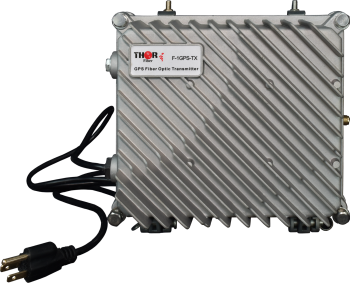 GPS por Fibra - Solución Impermeable de Fibra Óptica para Sincronización de Referencia
Transmisor GPS por fibra óptica para exteriores impermeable y receptor para montaje en rack de 19"; envía la señal desde una antena GPS a un receptor a través de fibra monomodo. El transmisor y receptor cuentan con medidores RF y ópticos, permitiendo una implementación rápida y sencilla sin instrumentos ópticos o RF adicionales.
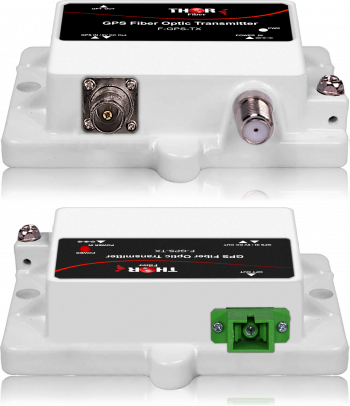 Sistema de Transporte de 1 GPS por Fibra
Extensor de fibra para un GPS hasta 20 km por fibra monomodo con conectores SC/APC

 EN
EN