In the face of rapid development, high-quality video transmission stands as one of the highest requirements within the broadcasting industry.

Table of Contents
In the face of rapid development, high-quality video transmission stands as one of the highest requirements within the broadcasting industry. HD-SDI over fiber is a great technology that contributes to making the quality of high-definition video signals pass for a long distance without any failure. The article is going to give some overview to HD-SDI over fiber, how it works, its advantages, and where modern broadcasting uses it.
HD-SDI can support uncompressed high-definition video signals and hence finds very extensive applications in television production and broadcasting. Transmission at 1080p resolution makes HD-SDI a perfect fit for a wide range of applications from live sports to television shows and even film productions. On the other hand, traditional coax cables limit the efficient transmission distance of HD-SDI due to attenuation and electromagnetic interference.
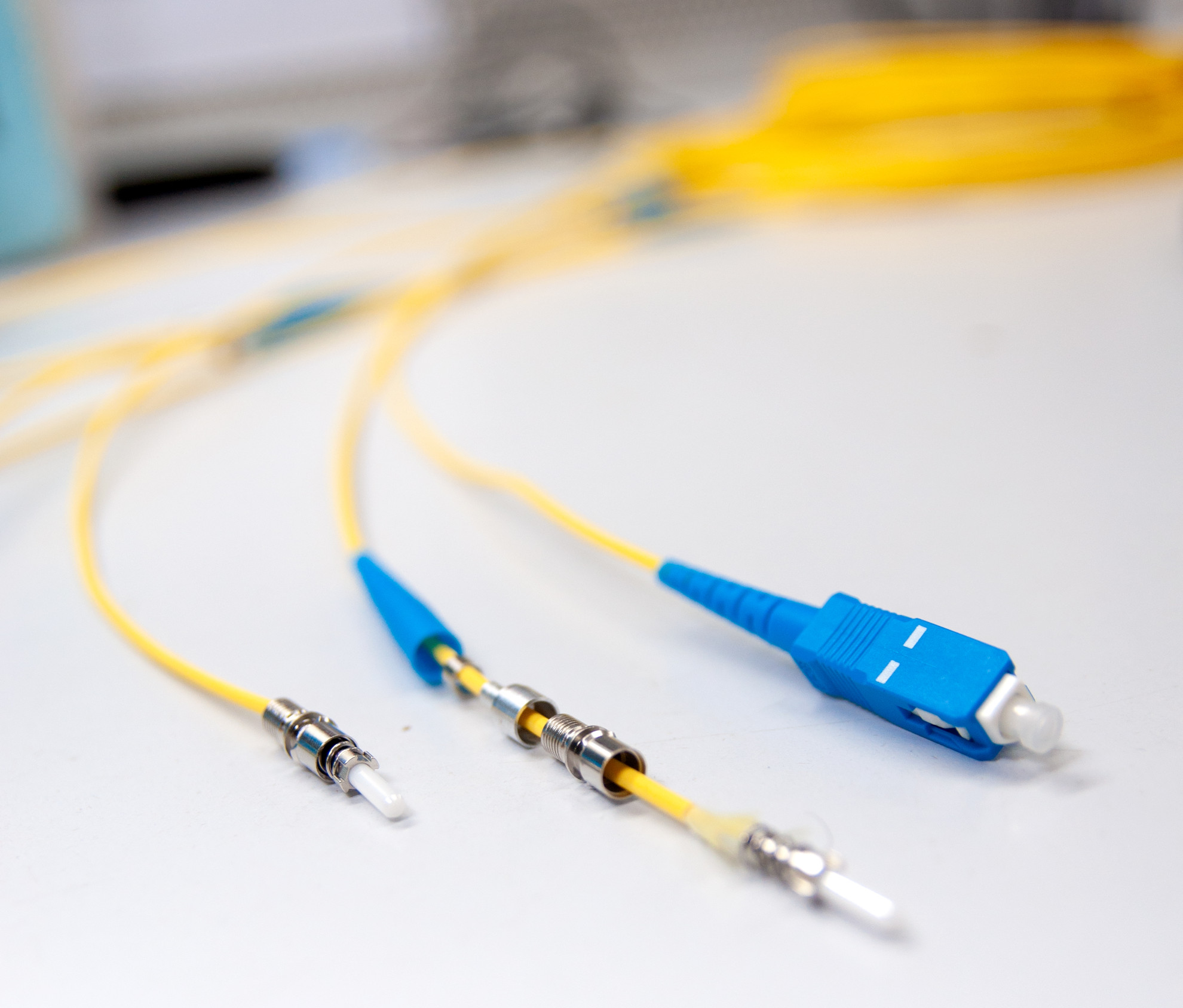
The innovation of video transmission using fibre optics ingeniously uses the medium of light instead of electrical signals. The following are some advantages that this technique offers as compared to traditionally used copper cables:
This fiber optic cable can carry information to distances measured in several kilometers without there being any deterioration in the quality of the signal. This is an important feature as far as broadcasting is concerned, where it often becomes necessary and even crucial that sending of signals from distant locations takes place to the central facilities.
Fiber optics offer much higher bandwidth than copper cables, thus allowing several HD-SDI signals to travel over a single cable without a loss in signal quality.
This SDI fiber extender will convert the electrical HD-SDI into an optical form that can be transmitted across the fiber optics. It extends cable runs with no loss in quality and does extensions to HD-SDI in a huge way.
This is a multiplexer that can permit several HD-SDI signals to combine onto one fiber optic cable and transmit. In larger productions, there may be a need to have several camera feeds transmit back to the central position.
This SDI optical multiplexer offers effective management on multiple HD-SDI signals, hence assuring those signals can be switched and transmitted out with no interference.
HD-SDI is one of various standards to which fiber optics pertain and are often spoken about right next to 3G SDI and 12G SDI.
3G-SDI over fiber allows for 1080p video at higher frame rates-or supports 2K resolutions-and better fits more demanding broadcasting environments.
Taking that a step further, 12G SDI over fiber supports 4K at 60 frames-a frame rate becoming increasingly popular for high-end broadcasts.
While HD-SDI is still a very viable option for most applications, the fiber technology grants flexibility to a broadcaster in order to choose the right SDI standard to suit their application.
One of the cardinal benefits derived from transmitting HD-SDI over fiber is that the quality of the video remains well preserved. The technology ensures that the signals are transmitted uncompressed and pristine for viewers to have a very fine viewing experience. This advantage is quite important during live broadcasts since any quality loss could be very destructive.
Although a little more expensive initially to invest in than copper cabling, it actually offers quite a good number of long-term savings. These fiber optic cables are much thinner and lighter, hence reducing installation and maintenance costs. Additionally, fewer signal boosters and repeaters also translate to a lot lower operation costs over time.
With the ever-changing face of broadcasting, it is adaptability or nothing. HD-SDI over fiber provides broadcasters with much-needed scalability on which they can build their infrastructure. Integration for added channels and devices can easily be made using SDI multiplexers without rewriting their current system infrastructure. Indeed, this guarantees better resource management and increases workflow.
This is of special concern for live broadcasting, especially if one considers the switch between different feeds coming from different cameras. HD-SDI over fiber reduces the latency to ensure that a live event captured in real time gets delivered with immediacy-and is as immediate as live sports or any time-sensitive production demand.

Most live events, from sports to concerts, require high-definition video captured from several angles and vantage points. HD-SDI over fiber allows broadcasters to send many camera feeds back to the production truck without compromising quality. SDI fiber extenders and multiplexers ensure these feeds will be clear and reliable even over long distances.
HD-SDI over fiber is the increasingly deployed technology in television studios where video signals are routed between cameras, production equipment, and control rooms. This will really enable the studios to be scalable and flexible enough to seamlessly adapt to new workflows and more equipment.
HD-SDI over fiber is particularly applicable to today's very fast-growing trend of remote production, whereby broadcasts are controlled from another location. Quality video signals will be possible that transmit back from remote sites to the central production facilities. The ability has just become a lot more important in light of world events which limit gatherings of people physically.
The industry is already moving towards IP-based workflows, and this level of integration with existing systems is going to be highly essential. Since fiber optics have the capacity to handle both HD-SDI signals apart from data traffic, it is thus able to enable almost effortless communication among all kinds of devices. This is even more vital to forthcoming innovations in broadcasting technologies.
HD-SDI over fiber today represents the leading edge in broadcasting technology, whereby HD signals can be broadcast from a distance without loss of quality. Advantages include better video quality, overall cost-effectiveness, scalability, and low latency, thus making it an important addition in any broadcaster's quest to deliver a better viewing experience.
Due to the growing demand for high-definition content, HD-SDI over fiber has a very bright future in the world of broadcasting. They find their application in live sports, television production, and remote broadcasting. HD-SDI over fiber reassures with efficiency in integrating into the IP network, thereby setting the face of this industry for years to come.
Read More:


 ES
ES