SDI fiber multiplexers will be imperative in modern long-distance video transmission, enabling broadcasters to manage multiple SDI channels over a single optical fiber.
Table of Contents
One of the most salient features that is an absolute necessity in professional broadcasting is the ability to transport high-quality video signals over long distances. As live audiences demand increasingly dynamic content delivered in high definition and beyond, so too are broadcasters faced with an increasing challenge of having to efficiently manage and transport numerous video channels. Where the SDI fiber multiplexer has become an integral part of modern broadcast systems. This article researches the use of the SDI fiber multiplexer, focusing on how it manages to enable several channels of SDI over a single optical fiber.
SDI comes in various formats, meeting various needs in broadcasting:

Fiber optic technology has transformed video transmission by allowing signals to cover larger distances without loss of signal quality. Compared to electrical signals, fiber optics deploy light signals. The major advantages are as follows:
Long-distance capabilities: It is possible for fiber optic cables to transmit data over several kilometers without the extreme depreciation of the signal. Therefore, they could be very suitable for big productions or broadcasts.
Immunity to interference: Since fiber optics are immune to EMI, the video signals shall be clear with no interruption caused even in an area with a high level of electronic equipment.
High Bandwidth: Its higher data-carrying capacity provides high-definition and ultra-high-definition video signals with fiber optics.
An SDI fiber multiplexer is basically an optical transmitter that can transmit several SDI channels over a single strand of fiber. The SDI fiber multiplexer makes the management of video feeds quite easy because several SDI signals are combined into one stream. This, in turn, increases efficiency within broadcasting workflows.
The basic operation involved in an SDI fiber multiplexer involves the following steps:
The SDI fiber multiplexer provides a variety of input channels to which a wide range of SDI signals can be connected: feeds from different cameras, graphics, or other video sources.
Signal Processing: These will be fed into the multiplexer for processing into one stream of output. The encoding of the various SDI signals it does, together with proper effectiveness in the flow of data.
This combined output signal is then transmitted over the single fiber optic cable, thereby enabling the running of signals over long distances without deterioration in quality.
Receiving End: At the receiving end, another device on that end-an SDI fiber extender-can decode this multiplexed signal back into individual SDI streams for use over the airwaves.
The big benefits of SDI fiber multiplexer involve bandwidth utilization. In such a way, it allows the broadcasters to reduce cabling by transmitting multiple signals over one optical fiber with the achievement of maximum data capacity transmission.
This might involve a number of SDI signals within a broadcasting environment, which can be somewhat cumbersome with substantial sets of cables. The fiber multiplexer for SDI minimizes such cables and their connections. This simplifies not just the setup but makes maintenance way easier.
With fewer connections, the integrity of the signal is better. Broadcasters reduce possible failure points using the SDI fiber multiplexer in their systems. The immunity of optical fibers to interference and the efficient signal processing of the multiplexer together translate into quality, non-degrading video transmissions.
Though the cost of initial investment in the fiber optic technology and multiplexers may be higher, it surely has brought in cost-saving at least for the long run. The result is considered to be a lower operational cost over time due to reduced cable requirement along with the low maintenance.
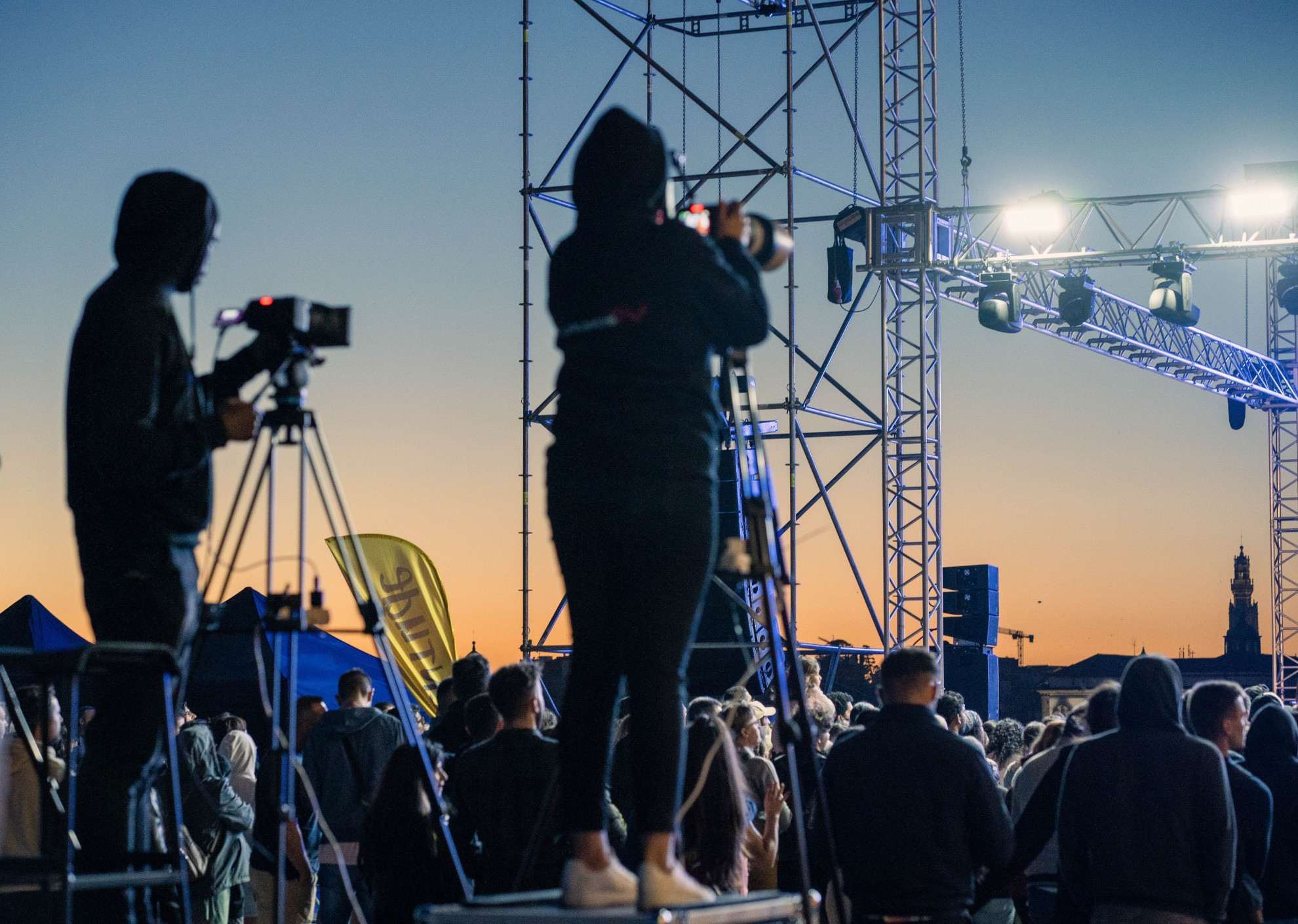
Major applications of SDI fiber multiplexers include those related to live event broadcasting. Events such as sports games, concerts, and conferences-many in total-make use of the benefits of having many camera feeds from multiple angles so that the viewer can see precisely what happens. With an SDI fiber multiplexer, a multitude of camera feeds may integrate smoothly into one output stream so that a production team may combine said many streams into a single output stream for transmission.
In large venues where distances between cameras and the control rooms are great, fiber optic cables along with multiplexers ensure non-degraded high-quality signals to the production team.
In the studio, this would be controlling a number of sources, including cameras, graphics, and pre-recorded segments. SDI fiber multiplexers do this by allowing all these inputs to be combined into a single output, thus simplifying the routing of video signals. It is very helpful in live broadcasts, where time and preciseness mean a lot.
As these configurations for remote production have become more common, so too has the need for effective management of those signals. SDI fiber multiplexers are a means for broadcasters to transmit a variety of signal types from these remote locations back to a central facility. This is especially important in news gathering applications where timely reporting from the field is important.
Systems of SDI fiber multiplexers are immensely useful in those video productions that contain several cameras. Examples include talk shows and reality TV, where various camera feeds get combined onto one signal to make the seamless transition of a production team to ensure that all sources dovetail neatly into a cohesive output.
Due to the unstoppable development in technology, higher resolutions such as 4K and 8K videos are bound to expand more. SDI Fiber multiplexers will greatly help in satisfying these demands by enabling several video signals to transmit over long distances effectively.
Integration with more advanced technologies, such as cloud-based broadcasting and AI in video production, will further extend to make SDI fiber multiplexers even more capable. They will also continue to be central in the broadcasting scenario by allowing sound infrastructure for the transmission of high-quality video feeds.
SDI fiber multiplexers will be imperative in modern long-distance video transmission, enabling broadcasters to manage multiple SDI channels over a single optical fiber. Because several video signals can be combined into one stream, infrastructure is easier to manage, signal integrity improved, and bandwidths used more effectively.
With the industry moving to even higher resolutions and increasingly complicated workflows, SDI fiber multiplexers will be brought to the fore. Such technology will ensure that broadcasters meet modern demands while continuing to provide professional video production with the quality and reliability it deserves. For a rapidly changing broadcast world, SDI fiber multiplexers present a clear way forward-one that will enable easy, high-quality video transmission.
Read more:


 ES
ES