Learn how IPTV HDMI encoders and HDMI encoders stream video over IP networks. Complete professional guide by Thor Broadcast.
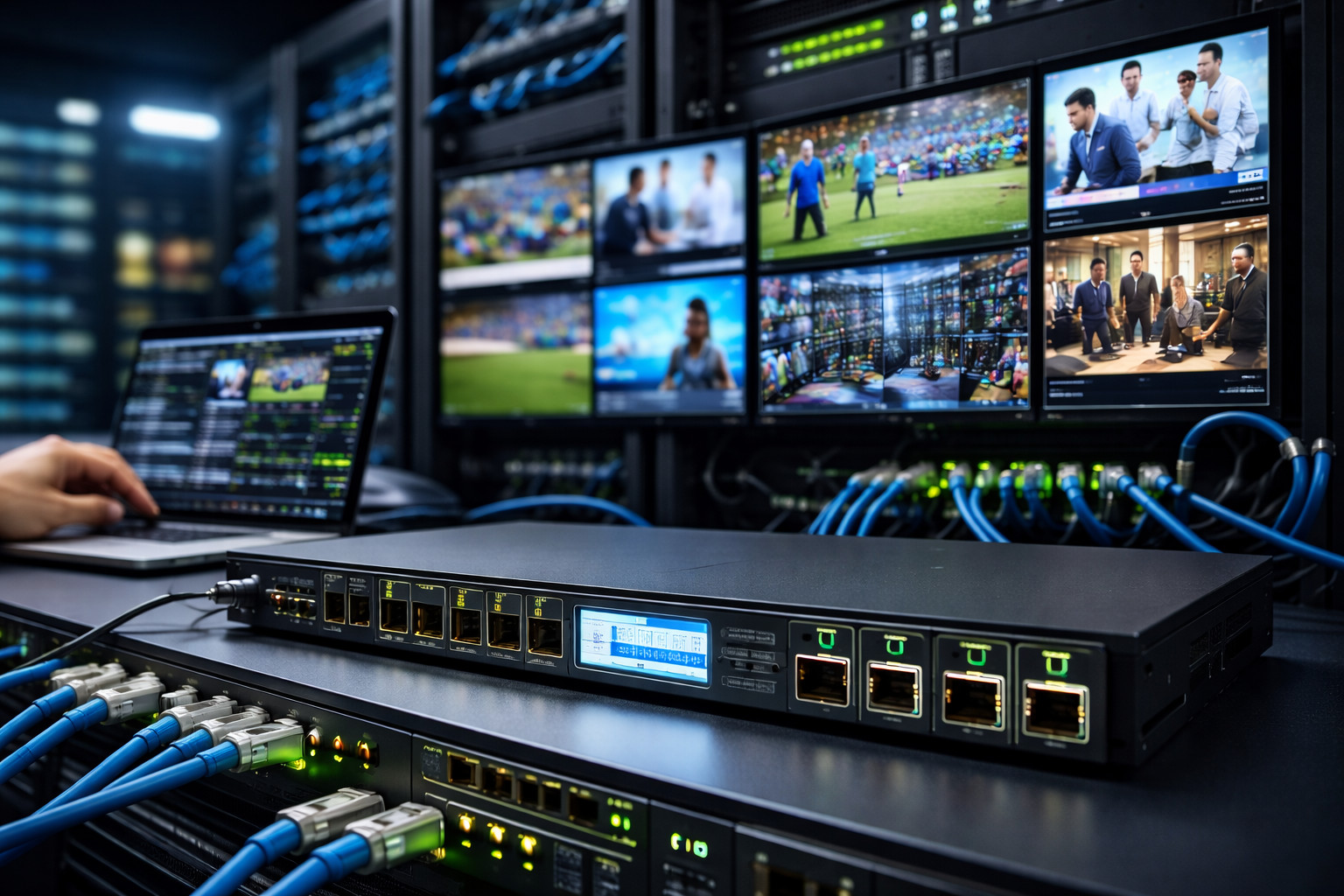
In today’s digital broadcasting and AV environments, delivering high-quality video over IP networks is essential. Whether you are managing a hotel TV system, corporate video network, digital signage platform, or live broadcast operation, an IPTV HDMI encoder, IPTV encoder, or HDMI encoder plays a vital role in modern content distribution.
These devices convert HDMI video sources into IP-based streams that can be transmitted over local networks or the internet. At Thor Broadcast, we specialize in professional-grade encoding solutions designed for reliability, scalability, and performance.
To explore our complete range of broadcast and streaming products, visit: https://thorbroadcast.com/
Table of Contents
An IPTV HDMI encoder is a device that takes an HDMI input from a video source and converts it into a digital IP stream. This stream can then be distributed across a network and viewed on compatible devices such as smart TVs, set-top boxes, computers, tablets, and mobile phones.
These encoders are commonly used in IPTV systems, where television content is delivered over internet protocol networks instead of traditional coaxial cables.
By converting HDMI to IP, IPTV HDMI encoders enable flexible and cost-effective video distribution.
An IPTV encoder is a broader term that refers to any device that converts audio and video signals into IP-based streaming formats. While HDMI encoders focus on HDMI input, IPTV encoders may also support SDI, CVBS, or other video sources.
IPTV encoders compress video using modern codecs such as H.264 or H.265, allowing high-quality streaming with reduced bandwidth usage. They then package the video into protocols such as UDP, RTP, RTSP, or HTTP for network transmission.
These devices form the foundation of IPTV headend systems.
An HDMI encoder converts HDMI video signals into compressed digital streams. These streams can be delivered over IP networks, cloud platforms, or content delivery systems.
HDMI encoders are widely used in:
Live streaming platforms
Corporate broadcasting
Online education
Surveillance systems
Event streaming
They allow HDMI devices such as cameras, media players, and computers to become network-based video sources.
Using professional encoding equipment provides several important advantages.
Modern encoders use advanced compression to reduce bandwidth requirements while maintaining video quality.
IP-based streaming allows content to be delivered to hundreds or thousands of devices.
All streams can be controlled and monitored from one location.
Streams can be viewed on TVs, mobile devices, and computers.
IPTV systems eliminate the need for complex cabling and distribution equipment.
Professional encoders provide stable, continuous operation.
These benefits make IPTV and HDMI encoders essential for enterprise-level video systems.
The encoding process follows several technical steps:
HDMI input is received from the source device
Video and audio signals are digitized
Data is compressed using H.264 or H.265 codecs
Streams are packaged into IP protocols
Content is transmitted over the network
End devices decode and display the stream
This process ensures smooth and efficient video delivery across IP networks.
Hotels use IPTV encoders to distribute live TV, promotional content, and guest information.
Companies use encoders for internal communications, training, and meetings.
Universities stream lectures and courses through IPTV platforms.
Hospitals provide patient entertainment and information systems.
Live games and events are streamed to multiple displays.
Retail and public spaces display advertising and announcements.
These applications rely on high-performance encoders for consistent results.
When selecting an IPTV HDMI encoder, consider the following factors.
Look for support for H.264 and H.265 for optimal compression.
Ensure compatibility with 1080p or 4K video sources.
Check support for UDP, RTP, RTSP, HTTP, and multicast.
Some encoders support multiple input channels.
Low-latency encoding is critical for live applications.
Web-based control simplifies configuration and monitoring.
Industrial-grade hardware ensures long-term stability.
Thor Broadcast encoders are designed to meet these professional requirements.
Thor Broadcast delivers enterprise-level IPTV and HDMI encoding solutions for professional AV and broadcast installations.
Our products feature:
High-performance processing hardware
Advanced video compression technology
Multi-format protocol support
Network management tools
Durable construction
Professional technical support
By choosing Thor Broadcast, you invest in equipment trusted by broadcasters and integrators worldwide.
Visit https://thorbroadcast.com/ to explore our encoder solutions.
It converts HDMI video sources into IP streams for network-based distribution.
Yes, many professional models support multiple input channels.
Some models support 4K encoding, depending on specifications.
Local IPTV systems can operate without internet access.
Most encoders support UDP, RTP, RTSP, HTTP, and multicast.
Yes, when integrated with compatible IPTV middleware.
Bandwidth depends on resolution, codec, and bit rate.
Yes, they are designed specifically for professional environments.
Most models offer web-based or network-based management.
For large deployments, professional installation ensures optimal performance.
An IPTV HDMI encoder, IPTV encoder, and HDMI encoder are essential components of modern video streaming and distribution systems. They enable organizations to deliver high-quality content over IP networks with flexibility, scalability, and reliability.
Whether you are building a hotel IPTV platform, corporate streaming network, or broadcast distribution system, professional encoders provide the performance and control you need.
For advanced IPTV and HDMI encoding solutions, visit: https://thorbroadcast.com/
Oczywiście — tutaj masz gotowy **FAQ schema w JSON-LD** dla tej sekcji:

 ES
ES