| Availability: | In stock | Condition: | new |
|
| Shipping: | starting at $0.00 | Warranty: | 1Yrs |
Contact us for pricing on a specific attenuation level and connector.
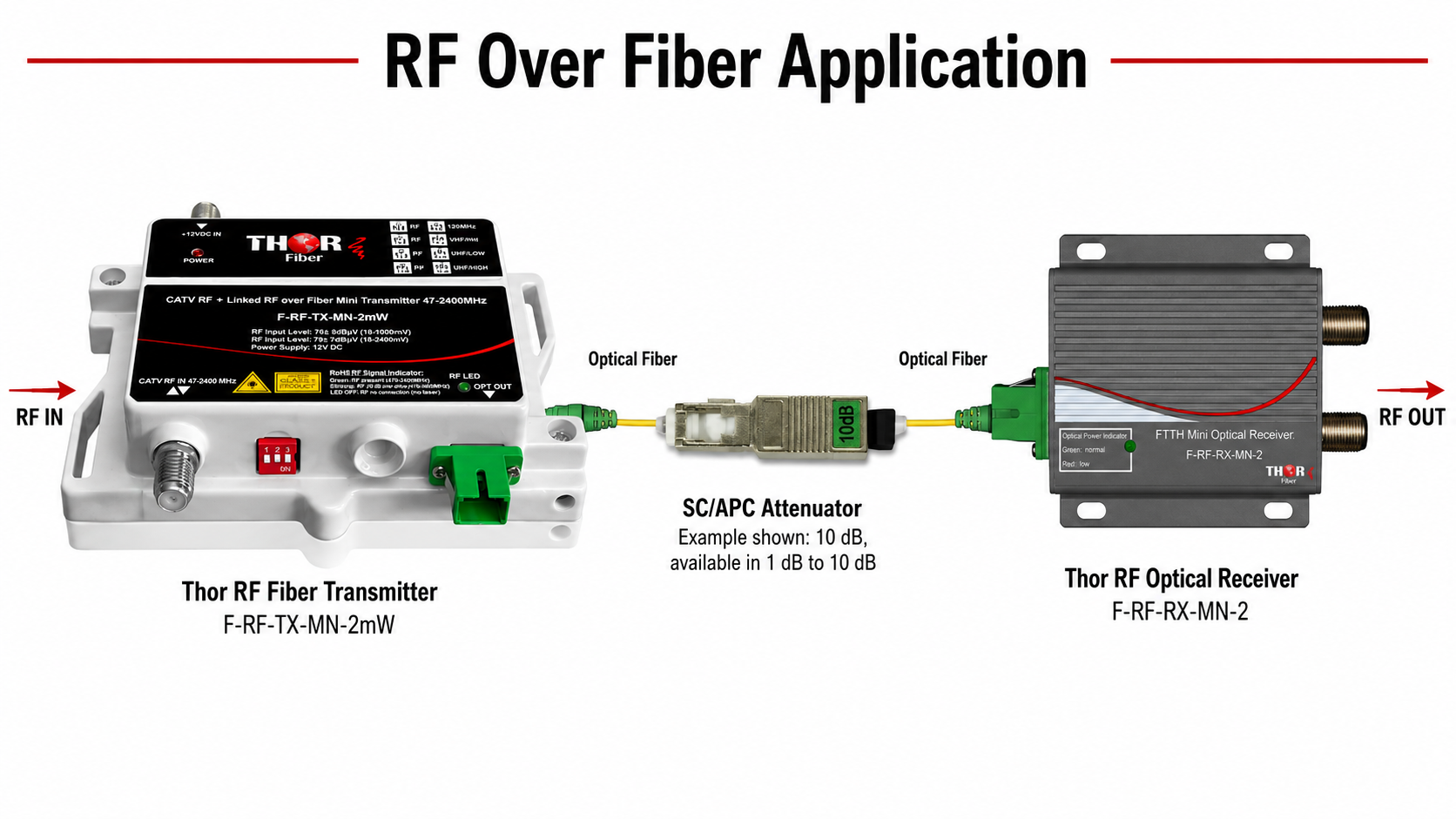
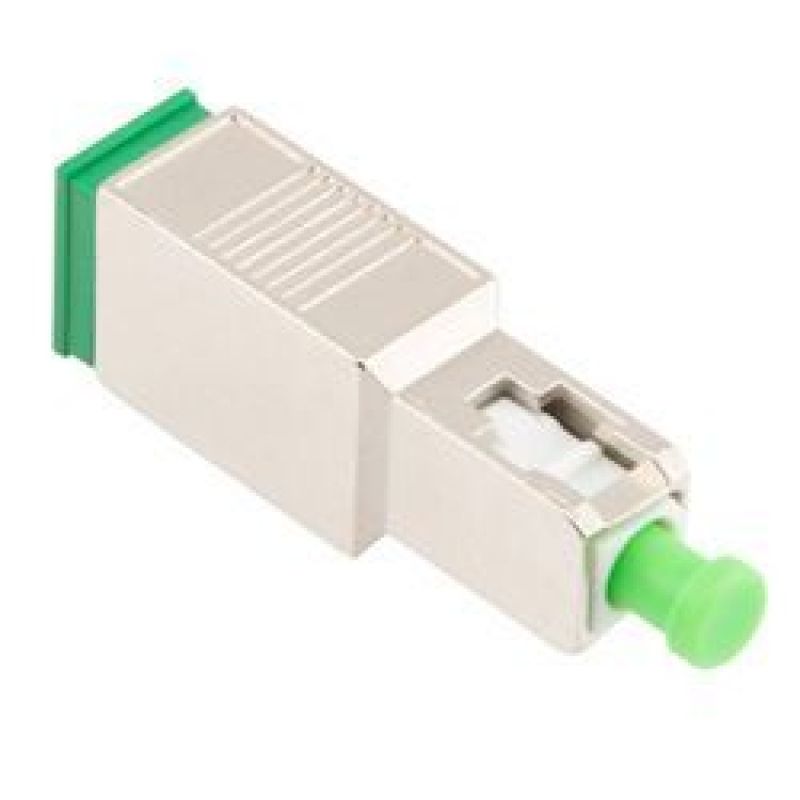
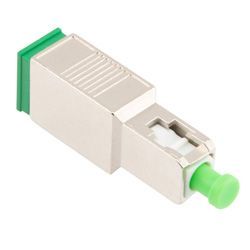
F-ATT-01 - 1 dB SC/APC to SC/APC Attenuator
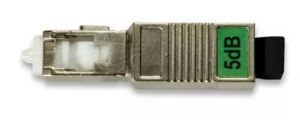
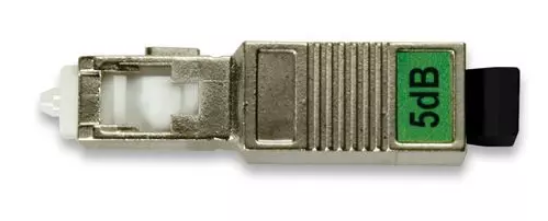
F-ATT-05 - 5 dB SC/APC to SC/APC Attenuator
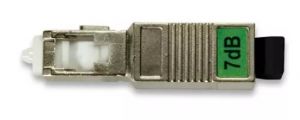
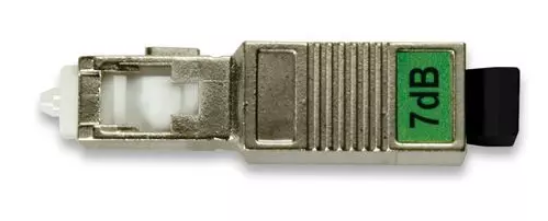
F-ATT-07 - 7 dB SC/APC to SC/APC Attenuator
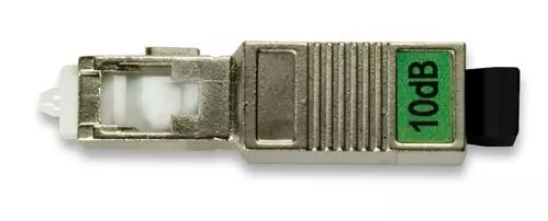
F-ATT-10 - 10 dB SC/APC to SC/APC Attenuator
An optical attenuator is used when the optical signal arriving at the receiver is too strong and is above the receiver’s recommended input range. In RF over fiber systems, too much optical power can overload or saturate the optical receiver. When the receiver is saturated, it may not convert the optical signal back to RF correctly, and the result can be distorted RF, poor MER/BER, unstable QAM/ATSC channels, noisy analog channels, or no usable signal at all.
The attenuator reduces the optical power before it enters the receiver so the receiver can operate in its proper optical input range.
Example:
If a CATV RF optical transmitter has 8 mW optical output power, that is approximately +9 dBm optical power.
The formula is:
dBm = 10 x log10(mW)
So:
8 mW = about +9 dBm
If the optical receiver input range is 0 dBm to -10 dBm, then +9 dBm is too strong for the receiver. If the fiber distance is very short and there are no splitters or other optical losses, the receiver may receive almost the full +9 dBm signal. That would be above the receiver’s maximum recommended input level and could overload the receiver.
In this case, an optical attenuator should be installed between the transmitter and receiver, usually at the receiver side, before the optical input.
For example:
Transmitter output: +9 dBm Receiver recommended range: 0 dBm to -10 dBm Desired receiver input: around 0 dBm to -3 dBm for good margin
If the receiver is getting +9 dBm and we want to reduce it to 0 dBm:
+9 dBm - 9 dB attenuator = 0 dBm
So a 9 dB or 10 dB SC/APC attenuator would be appropriate.
If we want to reduce it to approximately -1 dBm:
+9 dBm - 10 dB attenuator = -1 dBm
So in this example, a 10 dB attenuator would be a good choice.
Simple rule:
Required attenuator value = current optical power at receiver - desired optical power at receiver
Example:
Current optical power at receiver: +9 dBm Desired optical power at receiver: 0 dBm Required attenuation: 9 dB
So you would use a 9 dB attenuator, or commonly a 10 dB attenuator.
Important: fiber loss must also be included.
Typical single-mode fiber loss is very small, especially on short runs. For example, at 1310 nm, fiber loss may be around 0.35 dB per km. So if the fiber run is only 100 meters, the fiber loss is almost negligible. That means a high-power transmitter can easily overload the receiver on a short link.
Example with short fiber:
8 mW transmitter: +9 dBm Fiber loss: 0.5 dB Receiver input before attenuator: about +8.5 dBm
Receiver max input: 0 dBm
Needed attenuation:
+8.5 dBm - 0 dBm = 8.5 dB
Recommended attenuator: 9 dB or 10 dB
Example with longer fiber or splitter:
8 mW transmitter: +9 dBm 1x8 splitter loss: about 10 to 11 dB Fiber and connector loss: about 1 dB Receiver input: about -2 dBm to -3 dBm
In that case, no attenuator may be needed because the splitter and fiber already reduced the optical power into the receiver’s working range.
Best practice:
Use an optical power meter to measure the actual optical power at the receiver location before choosing the attenuator. Then select the attenuator value that brings the receiver input into the recommended range.
For most CATV RF over fiber receivers, the ideal target is usually close to 0 dBm, or slightly below 0 dBm, depending on the receiver specification. Avoid going above the maximum input level, because the receiver may saturate. Also avoid going too low, because the receiver may have weak RF output or poor signal quality.
Where to install it:
The attenuator is usually installed at the receiver optical input. This makes it easy to protect the receiver and fine-tune the optical level at the point where it matters.
Example explanation for website:
An SC/APC optical attenuator is used when the optical signal level from the fiber transmitter is too strong for the optical receiver. This is common in short-distance RF over fiber links or systems using high-power optical transmitters. For example, an 8 mW optical transmitter outputs approximately +9 dBm, while many CATV optical receivers are designed to operate around 0 dBm to -10 dBm. If the fiber distance is short and there is very little optical loss, the receiver may be overloaded by too much optical power. Adding the correct attenuator reduces the optical level and brings the signal into the proper receiver input range for stable RF performance.
A 1 dB to 10 dB SC/APC attenuator can be selected based on the measured optical power. For example, if the receiver is receiving +9 dBm and the desired input level is approximately 0 dBm, a 9 dB or 10 dB attenuator should be used. This helps prevent receiver saturation, improves signal stability, and protects the optical receiver from excessive input power.
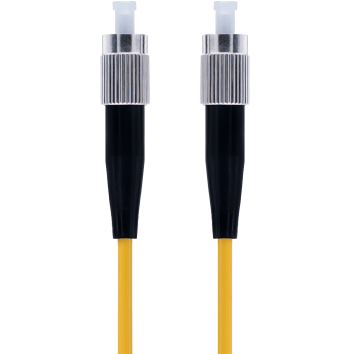 FC/PC to FC/PC Simplex, 3.0mm, Singlemode Patch Cable
Grade B LC UPC to LC UPC 9/125 Single-Mode Bend-Insensitive Fiber Patch Cable
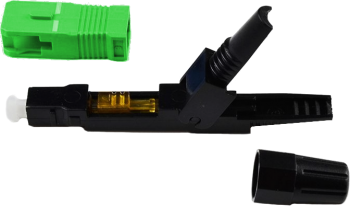 FTTH Fiber Optic SC/APC SM Single Mode Fast Connector
FTTH Fiber Optic SC/PC SM Single Mode Fast Connector

 ES
ES