| Availability: | In stock | Condition: | new |
|
| Shipping: | starting at $0.00 | Warranty: | 2Yrs |
PN: H-HDMI-SDI
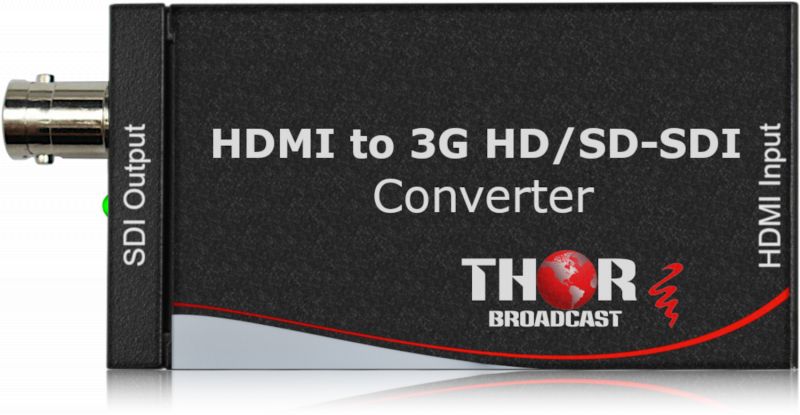
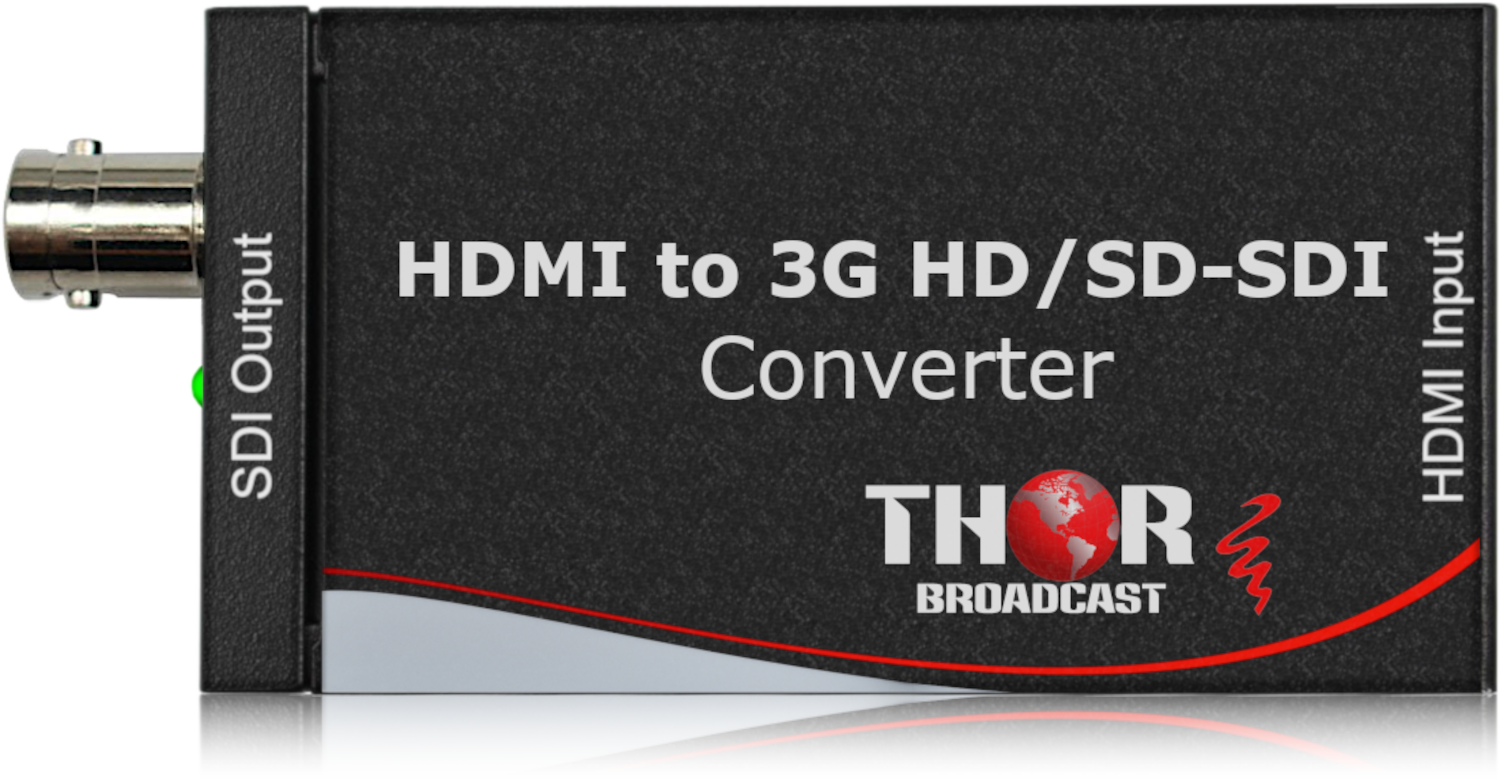
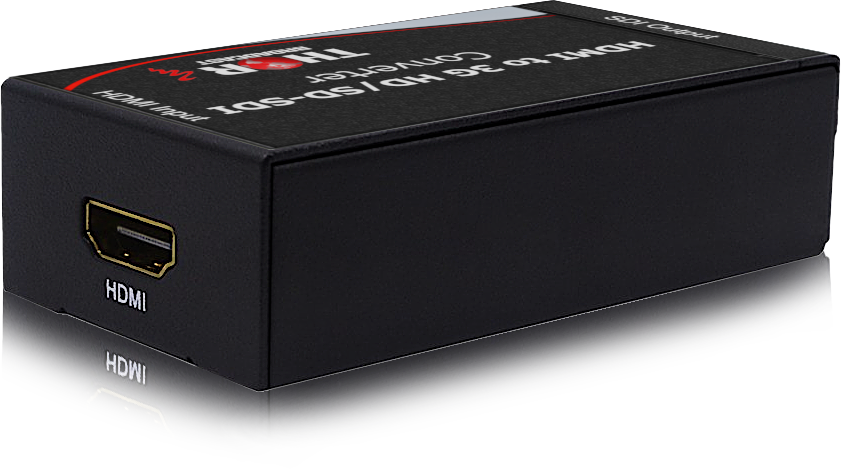
The HDMI to SD/HD-SDI converter allows you to take any HDMI signal content and make it available to be displayed on any SDI viewing device while maintaining a max bit rate of 2.970G/s to give you the highest supported resolution from your signal without any loss.
For PRO-DVB personnel, this means that it is easier to convert your HDMI signal with audio to 3G SDI over longer cable runs.
We also have SDI to HDMI converters: H-SDI-HDMI
The converter accepts a digital HDMI input signal and internally processes the video and audio streams into a professional Serial Digital Interface (SDI) signal format.
Supported formats typically include:
SD-SDI (270 Mbps)
HD-SDI (1.485 Gbps)
3G-SDI (2.97 Gbps)
This allows compatibility with nearly all professional broadcast equipment.
Once converted, the signal is transmitted through the BNC SDI output, which offers several advantages over HDMI:
- Much longer transmission distance
- Locking connector for professional reliability
- Broadcast-grade signal stability
- Compatibility with routers, patch panels, and distribution amplifiers
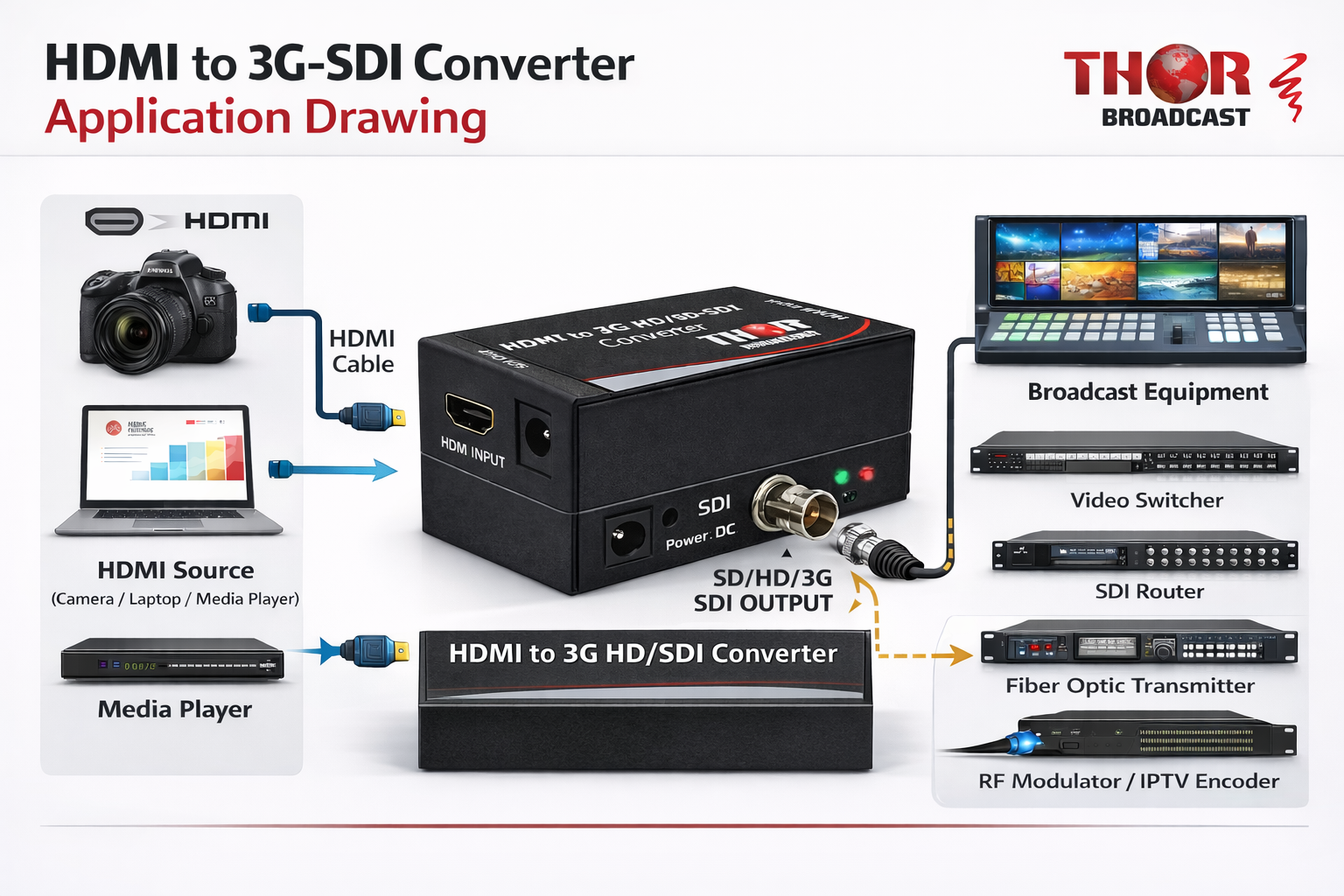
Many broadcast studios use HDMI cameras or computers for graphics, presentations, or streaming feeds. The HDMI-to-SDI converter allows these sources to integrate directly into an SDI production workflow.
Example workflow:
Camera -> HDMI -> Converter -> SDI -> Production Switcher
At conferences, concerts, or corporate events, presentation computers usually output HDMI. The converter allows these signals to be distributed over long SDI cable runs to production equipment located far away.
Example:
Laptop -> HDMI -> Converter -> SDI -> Video Switcher -> LED Wall
When transporting video across long distances, SDI is often converted to fiber optic signals.
Example signal chain:
HDMI Source
-> HDMI to SDI Converter
-> SDI Fiber Transmitter
-> Fiber Optic Cable
-> Fiber Receiver
-> Broadcast Equipment
This approach enables reliable kilometer-distance transmission without signal degradation.
The converter is also frequently used in RF modulation and IPTV headend systems, where HDMI sources must be integrated into broadcast networks.
Example:
Media Player -> HDMI -> Converter -> SDI -> Encoder / RF Modulator -> TV Distribution Network
This allows any HDMI device to become a broadcast television channel within a hotel, hospital, campus, or sports venue.
| Feature | HDMI | SDI |
|---|---|---|
| Connector | Consumer friction connector | Locking BNC |
| Distance | ~10-15 meters | Up to 100 meters or more |
| Broadcast compatibility | Limited | Industry standard |
| Signal stability | Consumer grade | Broadcast grade |
| Routing | Difficult | Easy through SDI routers |
Because of these advantages, SDI remains the preferred infrastructure in professional video environments.
The Thor Broadcast HDMI to SDI converter is designed for easy installation in:
- Broadcast racks
- Production carts
- Portable field kits
- Conference AV systems
- CCTV and monitoring systems
Its compact metal housing provides excellent durability and heat dissipation while maintaining a small footprint.
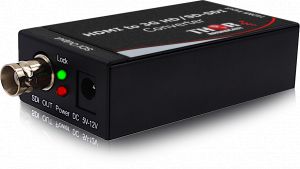
LED indicators on the unit display:
- Power status
- SDI signal lock
This allows technicians to quickly verify proper operation during installation.
This converter is often used together with other Thor Broadcast products such as:
- SDI encoders
- RF HDMI modulators
- Fiber optic video transmitters
- IPTV streaming systems
By converting HDMI to SDI, the device acts as a bridge between consumer video equipment and professional broadcast infrastructure.
 ASI to IP and IP to ASI converted with decoding to SDI and HDMI
Flexible gateway allowing the following conversions: ASI to IP, IP to ASI, and it can also decode IP or ASI inputs to video as SDI or HDMI simultaneously
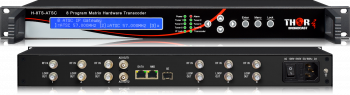 ATSC MPEG2 H264 Transmport Stream Matrix Hardware Transcoder
8 SD or 4 HD program transcoder; unit has RF tuners: 6 ATSC or 6 QAM or 6 DVBS2 or 6 ASI inputs. This is a professional bidirectional transcoder to convert video between H.264 and MPEG-2 formats and also to transcode between HD and SD programs simultaneously. It is equipped with 6 tuner inputs and an IP input to receive digital channels. After transcoding, it outputs MPTS & SPTS through the DATA port or ASI port.

 ES
ES