Thor Broadcast Logo
Iniciar sesión
Carro (0)
  • en EN
  • Productos
    • CATV Moduladores
      • HDMI los Moduladores de RF
      • HD-SDI convertidores
      • IP para CATV Moduladores Borde
    • DVB Codificadores
      • Los Codificadores De Vídeo
      • Hdmi RTSP RTMP, RTSP Codificadores
      • Transcodificadores, MPEG Convertidores, IP ASI puertas de enlace
    • Decodificadores (IRD y STB)
      • RF Decodificadores del IRD
      • Difusión IP Decodificadores
      • RF CATV de IPTV y OTT STB del
    • Satélite Moduladores
      • DVB-S/S2 Satélite Moduladores
    • De Fibra Óptica De Transporte
      • SDI a lo largo de la Fibra
      • SDI SD/HD/3G con CWDM
      • TV por Cable CATV RF 45-900Mhz
      • L del Satélite en la Banda de RF 45-3000Mhz
      • Datos y Ethernet en fibra
    • Wireless HD SD de Vídeo de Transporte de Datos
      • Wireless HD de Vídeo SD con los Datos de los Equipos
    • Descuento De Inventario
      • Nuevos Equipos De Transmisión En Venta
      • Laboratorio de Equipos de transmisión Utilizados en venta
      • Última Generación De Equipos De
  • About
  • Cartera De Clientes
  • Apoyo
      • Support Center Apoyo
      • User Manuals Manuales
        de Usuario
      • Request an RMA Solicitar una
        RMA
  • ⬇Download
    • Manuals
    • Datasheets
    • Quick Guides
  • Case Studies
    • THOR Gym
    • THOR Stadium
    • THOR Hotel
    • THOR University
  • Videos
  • Contacto
  • Conviértete en un revendedor
  1. Productos
  2. TV por Cable CATV RF 45-900Mhz
  3. 32 mW de potencia RF CATV Largo de la Fibra Tx 45-870 MHz
back

32 mW de potencia RF CATV Largo de la Fibra Tx 45-870 MHz

Model: F-RF-1310-TX-32mW
Qty: 0
Product image Previous Next
Product image
Product image
Precio: $3,695.00
Disponibilidad: En stock Condición: nuevo QR Code 32 mW de potencia RF CATV Largo de la Fibra Tx 45-870 MHz
Envío: starting at $0.00 Garantía: 2Yrs
Cantidad:
preguntar por el producto
Enviar petición
Descripción Caracteristicas Dibujos Accessories Especificación Q&A
Documents
  • Manual
  • Datasheet
  • Quick Guide
Apoyo

Descripción

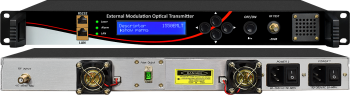
RF largo de la Fibra Tx - 32mW Salida 45-870 MHz

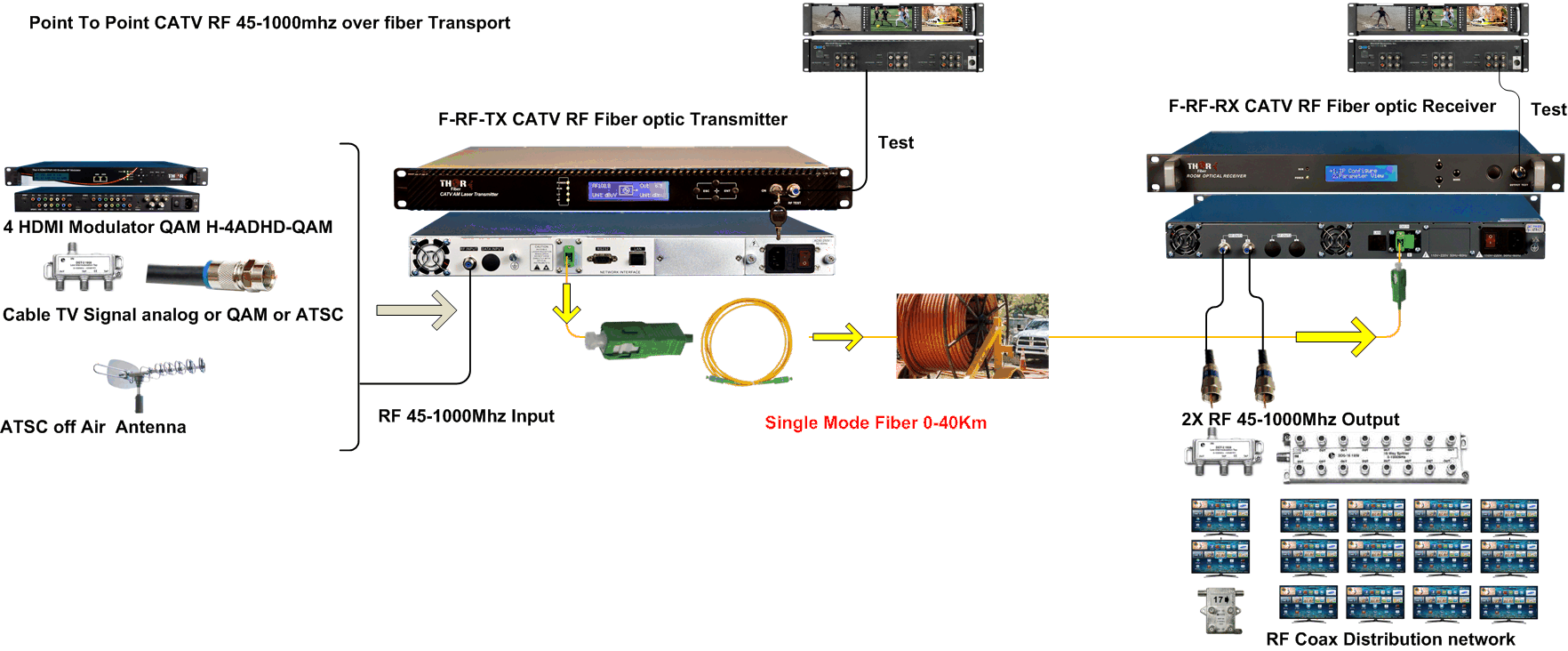
1310 - 32mW de fibra óptica, transmisor de Televisión de RF (Radio Frecuencia) de 45-870 MHz. Convierte directamente cualquier entrante se?al de RF dentro de esta banda óptica de RF. Transporta todos los canales y programas a través de una fibra. Puede ser utilizado para punto a punto, o combinado con PLC acopladores de fibra óptica y los divisores de punto a multipunto aplicaciones. Salidas estándar de la Industria RFoG (RF sobre el Vidrio) se?ales de que puede ser aceptada por la mayoría de la fibra óptica receptores de RF de otros fabricantes. Fácil de leer LCD del panel frontal proporciona información y datos de alarma, y simplifica la configuración. Este sistema cuenta con un muy lineal láser DFB con ajuste automático de circuitos con Control Automático de Ganancia. Para mayor fiabilidad, una segunda fuente de Alimentación interna de la Unidad está disponible como una opción.


El transmisor se puede utilizar con cualquier o Thor Fibra óptica receptores de RF

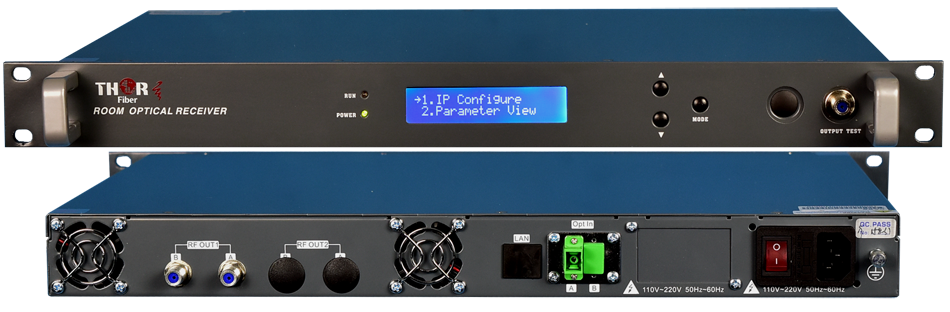
F-RF-RX-RM

CATV RF para Montaje en Rack Receptor de Alta Potencia


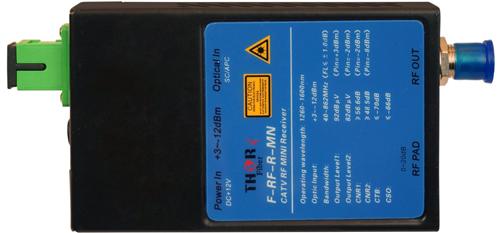
F-RF-RX-MN

CATV RF Mini receptor óptico


F-Mininode

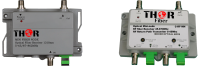
CATV Mininode -Receptor de RF y de la ruta de retorno de RF del transmisor

Caracteristicas

? 32 mW de Potencia Óptica de Salida del sensor de retroalimentación controlada sistema de láser
? Transporta toda la 45-870 MHz de la banda, incluso, con pleno canal de linups
? Crear de alta seguridad "que se rompa la Fibra" para eliminar el cable coaxial de la se?al de la ruta de retorno
? Control automático de Ganancia (AGC), que gestiona nivel de RF con necesario realizar ningún ajuste
? Compatible con todos Thor RFoG CATV serie de sistemas de receptor óptico

NOTA IMPORTANTE*** (es muy importante a la interfaz de nuestra unidad con SC/APC - Ángulo de Pulido del Conector para evitar los reflejos de la luz.

Si la fibra se termina con el SC, ST, FC /PC conector plano, es necesario utilizar una óptica puente de PC tipo SC/APC para la correcta conversión.

Dibujos


Accessories & Upgrades

Recommended Accessory: F-PLC Passive Fiber Optic Splitter

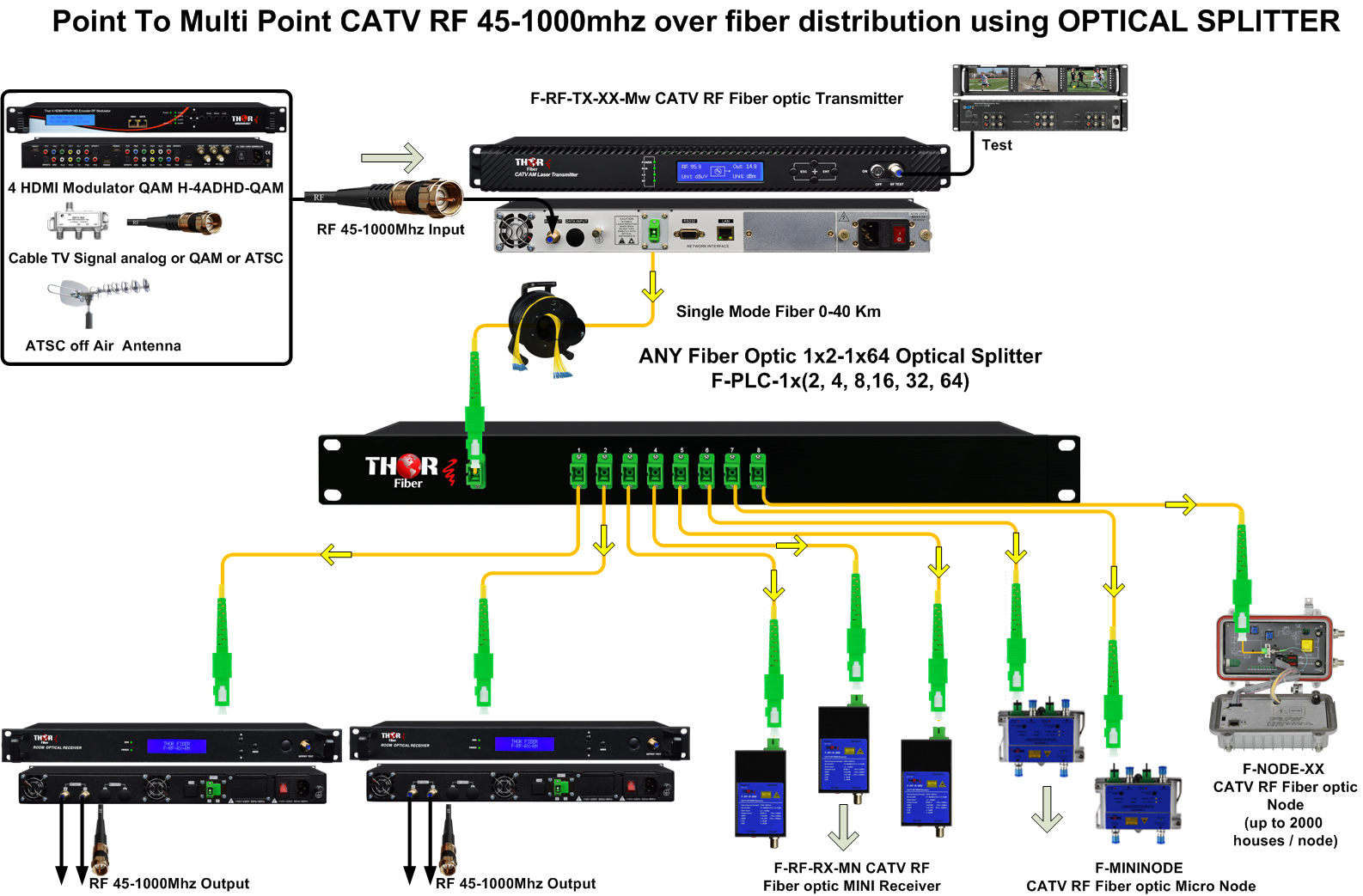
The Thor F-PLC passive fiber optic splitter with SC/APC connectors is an ideal accessory for CATV RF optical transmitters, allowing one optical signal to be split and routed to multiple locations over fiber. Available in 1x2 to 1x64 versions, it is perfect for RF over fiber distribution systems in hotels, campuses, apartment buildings, and other multi-location installations.

Learn more about Thor F-PLC Splitters →

Especificación

*Todas las Especificaciones Sujetas a Cambio Sin previo Aviso
  • De entrada

1x Tipo de conector F - 75 Ohm

  • Longitud De Onda Óptica
1310 nm
  • Ancho De Línea:
< 1 MHz FWHM
  • Relación De Extinción
>20 dB XP
  • Equivalente De Ruido De Intensidad
< -160 dB/Hz
  • Potencia De Salida
32 mW
  • La Pérdida De Retorno
>55 dB
  • Conector Óptico

SC/APC - Ángulo de Pulido

NOTA IMPORTANTE*** (es muy importante a la interfaz de nuestra unidad con SC/APC - Ángulo de Pulido del Conector para evitar los reflejos de la luz.

Si la fibra se termina con el SC, ST, FC /PC conector plano, es necesario utilizar una óptica puente de PC tipo SC/APC para la correcta conversión.

  • El Nivel de Potencia de RF
11 a 29 de dBmV AGC Administrado
  • Planitud
<? 0.75 45 - 862 MHz
  • SBC Frenar
>17 dBm
  • CNR
>50 dB @ 10 km la longitud de la fibra
  • CTB
< -63 dB
  • Las OSC
< -57 dB
  • Dimensiones
19 x 10 x 1.75 pulgadas
  • Peso
2.5 kg
  • Temperatura De Funcionamiento
0 - 45 ?

Question and Answers

Question:
I have a similar question as one already on your website. I changed the question to fit our application. Here it is.. We are having our cable provider quote our cable channels to be in the clear. Our provider is Charter and i believe they said they would be converted to ClearQam. This service will be provided by them to one building and we need to send the Clear QAM signal over our Fiber to another location and then reconvert convert the Clear QAM from Fiber to the RF distribution block. Will will be doing the same for 3 other locations all on the same fiber network. Each location has a low TV count. 10 TVs, 7 TVs, 10 TVs, 12 TVs, 17 TVs, is the count per location. What equipment would i need at each location to provide up to 120 channels provided by our cable provider in the clear? 1) They would all be a point to point but not all locations have single-mode but I can dedicate separate fibers just for video and have a separate network with bandwidth control 2 locations have multimode, the rest are single-mode. Luckily are runs are rather short. i think the longest distance is 1300 ft. We can replace the multimode fiber with a single-mode for the two other properties or have our cable provider run their fiber to those two locations separately. 2) Can one mini receiver per location split to all the TVs at that location and provide up to 120 channels?

Answer:
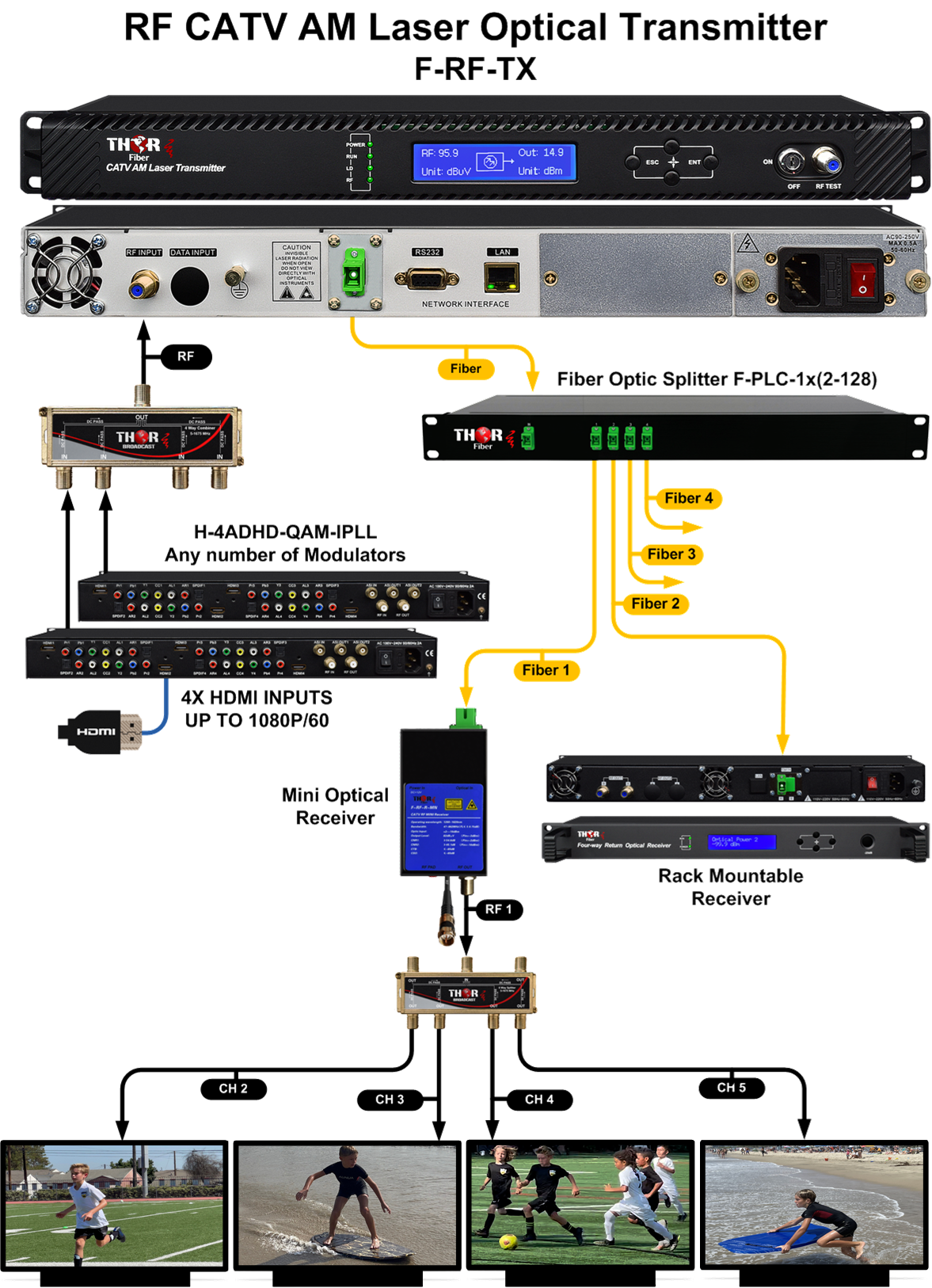
1) Are these all point to point with single mode fiber in place? https://thorbroadcast.com/products/cable-tv-catv-rf-45-900mhz This is our page of dedicated CATV frequency band Transmitters and Receivers, The rackmount OTx and Mini or Rackmount Receiver sets are the most popular because of their longstanding history of durability 2 points I need to make off the bat, RF can only be put on Singlemode Fiber, Putting it on multimode is impossible; the signal deteriorates at a massive level because of the wide core creating reflections, no one in the world makes gear like that because theoretically, it is impossible Second we can use distance to make approximate guesses at what power optical OTx you'll need, if they're short with minimal patch panels we can guess. If they are longer runs I would hope you can get an OTDR reading of the optical loss in the Fiber. RF on fiber needs to be dedicated, and optical budget is what we work around to decide what power laser you need. 2) So at this juncture because of your short runs, I would go with a single high power OTx; use an optical coupler and mini receivers. This basic diagram shows you a simple layout; single Transmitter; optical coupler which eats a lot of power, and you can run your CATV Clear QAM into the transmitter and get cable everywhere else Yes this equipment carries the entire echelon of CATV DVB-C RF modulation; meaning it carries 45-870Mhz or approximately channels 2-135. https://thorbroadcast.com/product/1-x-2-to-1-x-128-fiber-optic-couplers.html/224 This page shows you how optical couplers eat power, the chart at the bottom is what we use with our units; other companies might vary The coupler essentially dictates how powerful of an OTx you need. What I suggest you do is make sure of exactly how many end locations you have; then we work backward, Couplers come in 1x2 1x4 1x8 etc so if you have 4 runs then need to add a 5th it really isn't simple. So planning ahead is crucial to future proof you don't need to replace the coupler and OTx

Question:

We’ve got a Dish Smartbox that we distribute mostly over coax (QAM16) throughout our hospital.  We’ve started to extend this to other remote buildings on the same campus and our current system is very limited.  I think what I need is these three items…but I’d love to know if I’m off in left field a bit.  At the moment I only need to get this into two buildings, but we’re building more down the road so I figured the 16x splitter made the most sense.  I’m pretty sure I’ve got the right receiver, but I wasn’t sure about the 1310 vs 1550 transmitter as well as the transmit power…some of the SMF runs are as short as 1200ft but others could be up to 2 miles.  Any input is appreciated.


F-RF-1550-TX-16mW transmitter

F-RF-RX-RM receiver

F-PLC-1x16-LC/APC or SC/APC optical splitter

Answer:
So you're on the right track. 
Right now you're only required to send the signal to two buildings, but you will need to expand to 16 buildings?
 
If you think at most the run might be about 2 miles then hopefully the fiber installed has very mild loss, you should be fine with a 1310nm 32mW OTx. 
1550nm is only recommended with the use of an EDFA that is used to distribute the signal to dozens of end locations. 
In your case having a maximum of 16 endpoints with minimal distance is not a good reason to use 1550nm.
 
I would suggest this as a BOM:

F-RF-1310-TX-32mW transmitter

F-RF-RX-RM receiver

https://thorbroadcast.com/product/catv-rf-fiber-receiver-high-rf-power-rack-8230.html

F-PLC-1x16-SC/APC optical splitter

https://thorbroadcast.com/product/1-x-2-to-1-x-128-fiber-optic-couplers.html/227


Since the transmitters and receivers, all use SC/APC; I would make sure the PLC Coupler follows suit to minimize any reflections. 

Question:

What are the typical losses in the fiber?

How to calculate the optical budget when the transmitter outputs +15dBmV and the optical receiver has a 0dBmV receiver sensitivity?

Answer:

There are several types of losses that can occur in fiber optic cables, including:

  1. Insertion loss: This is the loss of signal power that occurs when light is transmitted through the fiber. It is typically caused by imperfections in the fiber itself, such as bends, scratches, or impurities.

  2. Splice loss: This occurs when two fibers are joined together, typically through a splicing process. Losses can occur due to imperfections in the splicing technique, as well as the difference in the refractive index between the fibers being spliced.

  3. Connector loss: This occurs when light is transferred between two fibers through a connector. Losses can occur due to imperfections in the connector itself, such as dirt or damage.

  4. Absorption loss: This is caused by impurities in the fiber that absorb light, reducing the signal strength. The main cause of absorption loss is the absorption of water molecules in the core of the fiber.

  5. Scattering loss: This is caused by microscopic variations in the refractive index of the fiber, which cause light to scatter and be absorbed.

  6. Macrobending Loss: This is caused by the fiber being bent in a radius of curvature that is too large. This causes the light to be reflected back into the cladding and is lost.

  7. The use of passive optical splitters results in each splitter having its own insertion loss. For example, the F-FOS-1x2 1x2 splitter has a 4.5dB insertion loss

These losses can be mitigated by using high-quality fiber optic cables, connectors, and splicing techniques, as well as by regularly inspecting and maintaining the fiber optic network.


Insertion loss in fiber refers to the loss of signal power that occurs when light is transmitted through a fiber optic cable. In single mode fiber, insertion loss is typically measured at 1310nm and 1550nm wavelengths, which are the most commonly used wavelengths for long-distance telecommunications.

The insertion loss at 1310nm is typically higher - 0.35db/km  than at 1550nm -0.25db/Km , due to the fact that the attenuation coefficient at 1310nm is smaller than at 1550nm. However, the use of 1550nm allows for a larger transmission window and can support higher bandwidths, making it more suitable for high-speed data transmission.

Insertion loss can also occur at the connections and splices within a fiber optic cable. These losses are caused by imperfections in the connectors and splicing techniques, as well as by the difference in the refractive index between the fibers being spliced. To minimize these losses, high-quality connectors and splicing techniques must be used. This loss should not exceed 0.1dB per connecion

. Additionally, insertion loss can occur at connections and splices due to imperfections in connectors and splicing techniques. To minimize these losses, high-quality connectors and splicing techniques must be used, This loss should not exceed 0.1dB per connecion

--

To calculate the optical budget, you need to take into account all of the losses that occur in the fiber optic link, including attenuation, connector loss, and splice loss. The optical budget is calculated by subtracting the total losses from the transmitter output power.

In this case, the transmitter outputs +15dBmV and the receiver has 0dBmV receiver sensitivity. To calculate the optical budget, you would subtract the receiver sensitivity from the transmitter output power:

Optical budget = Transmitter output power - Receiver sensitivity Optical budget = +15dBmV - 0dBmV Optical budget = 15db

It's important to note that the receiver sensitivity is usually given in negative dBmV. So, in this case, the receiver sensitivity of 0dBmV is equivalent to -0dBmV.

It's also important to note that the optical budget should be greater than the receiver sensitivity to ensure that there is enough power to reach the receiver and also to take into account any other losses that may occur in the link.

Additionally, depending on the application, the optical budget should be designed with a margin of safety, to account for changes in the link such as temperature, aging, or unexpected loss.


Question:

1) Have a project that the local cable company brought in coax and we need to transition to fiber into our treatment plant. looking for technical advise on making sure your product is the correct solution.

2)  We will need option 2 can we buy direct from you?

Do you offer second option for multi-mode?

Answer:

1)

Okay we certainly have the gear available that you need, but to narrow it down I just have a couple basic questions. 
 
What is the distance of your single mode fiber? Do you already have SC/APC terminations on the singlemode? 
 
Do you need bidirectional or is this application just going unidirectionally?
If this is uni- directional transmission ( Cable TV video only)
you can use those TX/RX units , 1 single mode fiber is required SC/APC fiber connects
F-RF-TX-MN-2mW
https://thorbroadcast.com/product/thor-optical-mini-catv-rf-transmitter-45-1000mhz.html
F-RF-RX-MN-2
https://thorbroadcast.com/product/thor-fiber-optical-mini-ftth-rf-catv-cable-tv-receiver-8230.html
 
 
If this is Bi-directional ( Cable TV + Internet)
You can use this unit, 2 single mode fibers are required, SC/APC fiber connects
F-RFoF-TX/RX
https://thorbroadcast.com/product/coax-cable-bi-directional-catv-rf-transmitter-and-receiver-over-fiber-8230.html


2)

Unfortunately not because it is impossible to put RF on multimode; no company offers such a product because it simply won't work. 
It's absolutely mandatory to use singlemode fiber

Question:

Can you please explain how a CMTS system works?

I’m trying to understand how it is possible to connect 500 or even 1,000 cable modems on the same network. I understand that modems receive RF, but they also transmit upstream — so how are they synchronized so they don’t interfere with each other?

If the return path is using standard QAM in the 5–45 MHz range, and hundreds of modems are transmitting data back, how is that data kept organized and readable? Is there some form of multiplexing or time-sharing involved?

Also, since each modem has a 10/100/1000 Ethernet interface, how is that data packaged and converted into RF for upstream transmission? How does one modem’s transmission avoid interfering with others?

Answer:

Great question — this is the core of how DOCSIS / CMTS systems actually work, and once you see it, it all clicks.

I’ll break it down step-by-step in a practical way (not textbook).


???? Big Picture

You’re thinking:

“If 500–1000 modems are all transmitting RF back on the same cable… why don’t they collide?”

???? Short answer:
They DO NOT transmit at the same time.

The CMTS acts like a traffic controller and strictly schedules who is allowed to talk and when.


???? Downstream (Easy Part)

From CMTS → Modems:

  • Continuous broadcast (like TV)
  • Uses QAM modulation (e.g., 64-QAM / 256-QAM)
  • All modems receive everything
  • Each modem only reads its own data

???? This is simple — like IPTV or RF broadcast.


???? Upstream (This is the Key Part)

From Modems → CMTS:

???? This is NOT continuous QAM like downstream
???? It is time-controlled burst transmission


???? Think of It Like This

Imagine 1000 people sharing one microphone

Instead of everyone talking at once:

???? The CMTS says:

  • “Modem #1 → talk for 2 microseconds”
  • “Modem #2 → now you talk”
  • “Modem #3 → your turn next”

This is called:

???? TDMA (Time Division Multiple Access)


???? How Modems Stay Synchronized

This is where DOCSIS is very smart:

1. Ranging (Distance Measurement)

Each modem:

  • Measures how far it is from CMTS (signal delay)
  • CMTS tells it:
    ???? “Transmit slightly earlier/later”

? So all signals arrive aligned at the CMTS


2. Power Control

CMTS adjusts modem power:

  • Far modem → transmit stronger
  • Close modem → transmit weaker

? So all signals arrive at similar levels


3. Timing Slots

The upstream channel is divided into:

???? mini time slots (microseconds)

Each modem is assigned:

  • exact time
  • exact duration

? No overlap → no collisions


???? What Modulation is Used Upstream?

Not always the same as downstream.

Typical:

  • QPSK
  • 16-QAM
  • 64-QAM (clean systems)

???? Lower modulation = more robust for noise


???? How 1000 Modems Share One Channel

Example:

Let’s say:

  • 1 upstream channel = ~30 Mbps usable
  • 1000 modems connected

???? Not all are transmitting at once

Real behavior:

  • Most modems are idle
  • Only active ones get time slots
  • Bandwidth is dynamically assigned

This is called:

???? Statistical multiplexing


???? Data Flow (Ethernet → RF)

Inside each modem:

Step 1 – Ethernet Input

User traffic enters:

  • Netflix, browsing, etc.

Step 2 – Packet Processing

Modem:

  • buffers data
  • waits for CMTS permission

Step 3 – CMTS Grants Transmission

CMTS sends:

???? “You can transmit now (time slot X)”

Step 4 – Burst Transmission

Modem:

  • converts data → RF burst
  • sends during assigned time slot

Step 5 – CMTS Receives & Reassembles

CMTS:

  • collects bursts from all modems
  • reconstructs data stream

???? Why Signals Don’t Interfere

Because of 3 controls:

? 1. Time separation

Only one modem transmits per time slot

? 2. Power leveling

All signals arrive at similar strength

? 3. Timing alignment

All bursts arrive perfectly aligned


???? Important Concept

???? The upstream is NOT continuous RF
???? It is short bursts from many devices

This is why your RF over fiber system works:

? It just transports RF
? It doesn’t care what’s inside
? CMTS logic still controls everything


???? Real-World Example

Let’s say:

  • 100 modems active
  • each needs small bursts

CMTS schedules:

  • Modem A → 10 µs
  • Modem B → 5 µs
  • Modem C → 20 µs

This happens thousands of times per second.


???? Why This Scales to 1000+ Modems

Because:

  • Users are not always transmitting
  • Traffic is bursty
  • CMTS dynamically allocates bandwidth

???? Simple Analogy (Best One)

???? It’s like a Wi-Fi network — but fully controlled and scheduled

Instead of random collisions (Wi-Fi):

???? CMTS enforces strict order


???? Key Takeaways

  • Upstream is time-shared, not continuous
  • CMTS controls EVERYTHING
  • Modems never “talk over each other”
  • RF channel is shared efficiently
  • Fiber transport doesn’t change behavior

1. System Diagram (CMTS → Fiber → Nodes → Modems → Return)

Here’s a clean logical diagram of your setup:


                         HEADEND
                    ?????????????????
                    ?     CMTS      ?
                    ? (Down + Up RF)?
                    ?????????????????
                           ? RF (Coax)
                           ?
                 ????????????????????????
                 ? 1310nm TX (Forward)  ?
                 ????????????????????????
                           ? Fiber (SM, SC/APC)
                           ?
                  ?????????????????????
                  ? Optical Splitter  ?
                  ?   (1x8 / 1x32)    ?
                  ?????????????????????
                      ?    ?    ?
        ???????????????    ?    ???????????????
                          ?
                FIELD / DOCK AREAS (xN)

        ?????????????????????????????????
        ?   Mini Node (Optical → RF)    ?
        ?   F-MININODE-2RP-HP           ?
        ?????????????????????????????????
                    ? RF (Coax)
                    ?
          ??????????????????????????
          ? Splitters / Cabling    ?
          ??????????????????????????
                      ?
         ????????????????????????????
         ?        Cable Modems      ?
         ?   (Boats / Users)        ?
         ????????????????????????????

================= RETURN PATH =================

Cable Modems (Upstream RF 5–45 MHz)
                    ?
                    ? RF
        ?????????????????????????????????
        ? Mini Node (RF → Optical)      ?
        ?????????????????????????????????
                    ? Fiber (DEDICATED)
                    ?

           HEADEND RETURN RECEIVERS

        ????????????????????????????????
        ? 4ch Return RX (F-RF-RP4RX)   ?
        ????????????????????????????????
                    ? RF Combined
                    ?
                 ?????????
                 ? CMTS  ?
                 ?????????


???? 2. What’s REALLY Happening (Over Fiber)

Now let’s connect this with the DOCSIS behavior you asked about.


???? KEY IDEA

???? Your fiber system is NOT doing any routing, switching, or packet handling

???? It is ONLY doing:

  • RF → Optical conversion
  • Optical → RF conversion

So:

? CMTS still controls everything
? Modems behave exactly the same as coax network


???? Forward Path (CMTS → Modems)

Flow:

  1. CMTS generates RF channels (downstream QAM)
  2. RF goes into F-RF-1310-TX
  3. Converted to optical (1310 nm)
  4. Split (1x8 / 1x32)
  5. Sent to all nodes
  6. Each node converts back to RF
  7. RF distributed to modems

???? This is identical to coax — just longer distance


???? Return Path (THIS IS THE IMPORTANT PART)

Flow:

  1. Modems transmit upstream (burst mode)
  2. RF enters mini node
  3. Mini node converts RF → optical
  4. Each node sends back on its OWN fiber
  5. Headend receivers convert optical → RF
  6. RF combined → fed into CMTS

???? WHY THIS WORKS PERFECTLY

Because your system preserves:

? Timing

DOCSIS timing slots stay intact

? Power levels

Nodes + CMTS control levels

? Burst structure

Nothing changes — still time-based bursts


???? IMPORTANT INSIGHT (This is GOLD for you)

???? The fiber system behaves like:

“A very long, very clean coax cable”


???? No Collisions Still

Even over fiber:

  • Only one modem transmits per time slot
  • CMTS schedules everything
  • Fiber does NOT change this behavior

???? Why You NEED Separate Return Fibers

This is critical:

Forward:

? Can split (broadcast)

Return:

? Cannot combine optically

Why?

Because:

  • Upstream is burst-based RF
  • If you combine optical signals passively → signals mix → noise

So instead:

???? Each node = dedicated return fiber

Then:

???? Combine in RF domain at headend (controlled)


???? Real Example (Your Harbor)

Let’s say:

  • 8 nodes
  • 100 modems per node
  • 800 total modems

What happens:

  • CMTS schedules all 800 modems
  • Each modem transmits in micro time slots
  • Signals travel:
    modem → node → fiber → receiver → CMTS

???? No collisions
???? No overlap
???? Fully controlled


???? Why This Is BETTER Than Coax

In coax system:

  • Signal degrades over distance
  • Many amplifiers
  • Return path becomes messy

In your fiber system:

? No distance issue
? No RF noise buildup
? No amplifier cascade
? Much cleaner return path


???? VERY IMPORTANT (For your design thinking)

The ONLY thing you must ensure:

1. Optical levels

Node input ≈ 0 dBm

2. RF output from node

~45 dBmV → enough for local distribution

3. Return levels

Balanced so CMTS sees ~0 dBmV


???? Simple Way to Explain to Customer

You can say:

“We are extending your CMTS over fiber — the system behaves exactly like coax, just without distance and noise limitations.”


???? Bonus Insight (Why This Is Perfect for You)

Your application (harbor + boats):

? Fiber backbone already exists
? Coax needed at dock
? WiFi unreliable

???? This solution = BEST FIT


Documentos

F-RF-1310-TX - USER MANUAL
F-RF-1310-TX-32mW - TECHNICAL DATASHEET
F-RF-1310-TX - QUICK SETUP GUIDE
catv-rf-conversions-of-power-chart-75o-dbmv-dbuv-dbm-8230

32 mW de potencia RF CATV Largo de la Fibra Tx 45-870 MHz

Previous Next
Ask about 32 mW de potencia RF CATV Largo de la Fibra Tx 45-870 MHz

Formulario de contacto

This site is protected by reCAPTCHA and the Google Privacy Policy and Terms of Service apply.
*necesario
Thor Broadcast Sales

Email: [email protected]
Phone: 1(800) 521 8467 Ext 1
FAX: 1(800)521-6384


Get In Touch
Customer Service/ Support

Phone: 1-800 521 8467 Ext 2
Email: [email protected]
Login

Login


Forgot your password? Remind password
Don't have an Account? Register
Login by:facebookGoogle
The product has been added to the basket:
32 mW de potencia RF CATV Largo de la Fibra Tx 45-870 MHz
Go to shopping cart
Productos similares:

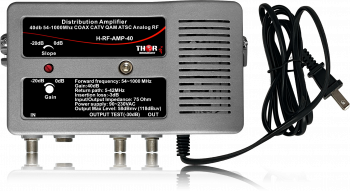
Amplificador de distribución de 30db 54-1000Mhz COAXIAL de CATV ATSC, QAM Analógico RF Amplificador de distribución de 30db 54-1000Mhz COAXIAL de CATV ATSC, QAM Analógico RF

El Thor 30db CATV de Distribución de Coaxial Amplificador soporta 54-1000mhz - 158-canal Analógico de RF, Cable QAM, ATSC, DVB-T, ISDB-T

16 mW de potencia RF CATV Largo de la Fibra Tx 45-870 MHz 16 mW de potencia RF CATV Largo de la Fibra Tx 45-870 MHz

16 mW de Fibra Óptica del Transmisor RF para la Televisión de se?ales portadoras de programas o cualquier otro de RF en el 45-870 MHz de la banda. Transmite la banda completa con las se?ales de respuesta lineal.

Contáctenos

Thor Broadcast Ventas

[email protected]
1(800)521-THOR (8467) Ext 1
1(800)521-6384

Servicio al Cliente / Soporte

1(800)521-THOR (8467) Ext 2
[email protected]


  • CATV Moduladores:
    • HDMI los Moduladores de RF
    • HD-SDI convertidores
    • IP para CATV Moduladores Borde
  • DVB Codificadores:
    • Los Codificadores De Vídeo
    • Hdmi RTSP RTMP, RTSP Codificadores
    • Transcodificadores, MPEG Convertidores, IP ASI puertas de enlace
  • Decodificadores (IRD y STB):
    • RF Decodificadores del IRD
    • Difusión IP Decodificadores
    • RF CATV de IPTV y OTT STB del
  • Satélite Moduladores:
    • DVB-S/S2 Satélite Moduladores
  • De Fibra Óptica De Transporte:
    • SDI a lo largo de la Fibra
    • SDI SD/HD/3G con CWDM
    • TV por Cable CATV RF 45-900Mhz
    • L del Satélite en la Banda de RF 45-3000Mhz
    • Datos y Ethernet en fibra
    • Analógica De Audio Y Vídeo
    • La fibra de Amplificadores EDFA
    • DVB - ASI
    • Fibra De Puentes, Cables, Atenuadores,
    • Óptica Acopladores Divisores CWDM Une
    • Óptica Metros, La Prueba De Equipos, Accesorios
    • Analógica en Banda base de Audio y Vídeo, RS485/422/232 Datos, Cierre de Contacto
  • Wireless HD SD de Vídeo de Transporte de Datos:
    • Wireless HD de Vídeo SD con los Datos de los Equipos
  • HD Cámaras 4K, SDI - HDMI - IP Streaming - PTZ - Linea y Seciurity:
  • Descuento De Inventario:
    • Nuevos Equipos De Transmisión En Venta
    • Laboratorio de Equipos de transmisión Utilizados en venta
    • Última Generación De Equipos De


Thor Broadcast Logo
Email: [email protected]
Phone: 1(800) 521-8467 Ext 1
FAX: 1(800)521-6384
Information:
  • About us
  • Client Portfolio
  • Become a Reseller
  • Contact
  • Articles
  • Return Policy
  • Shipping Policy
  • International Order Policy
Popular:
  • RF Modulator
  • HDMI over COAX
  • HDMI over IP
  • COAX to HDMI
  • HDMI to SDI

Thor Broadcast
Torrance Business Park
2421 W 205th St
Torrance
CA 90501

© 2026 Thor Broadcast
Suscríbete a nuestro boletín

Regístrese aquí para recibir las últimas noticias, actualizaciones y ofertas especiales directamente en su bandeja de entrada.

Puedes darte de baja en cualquier momento
newsletter image