Thor Broadcast Logo
Log in
Cart (0)
  • es ES
  • Products
    • CATV Modulators
      • HDMI RF Modulators
      • HD-SDI converters
      • IP to CATV Edge Modulators
    • DVB Encoders
      • IPTV Video Encoders
      • Hdmi RTSP RTMP RTSP Encoders
      • Transcoders, MPEG Converters, IP ASI Gateways
    • Decoders (IRD's & STB's)
      • RF input - Video /Audio Ouput
      • IP Broadcast Decoders
      • RF CATV and IPTV OTT STB's
    • Satellite Modulators
      • DVB-S/S2 Satellite Modulators
    • Fiber Optic Transport
      • SDI Fiber Optic Extenders, Digital Audio Extenders
      • SDI SD/HD/3G with CWDM
      • Cable TV CATV RF 45-900Mhz
      • L-Band Satellite RF 45-3000Mhz
      • Data & Ethernet over fiber
    • HDMI SDI Switchers, LAN Extenders, and Wireless Video Transport
      • HD Video Switchers and Signal Format Converters for AV Pros
      • Wireless HD SD Video Data Equipment
      • Video Audio Extenders Over Ethernet LAN IP Network
    • DIscounted Inventory
      • Satellite and CATV Broadcast Equipment for Sale
      • Lab Used Broadcast Equipment on sale
      • Past Generation Equipment
    • SDI Monitors
    • Warehouse
  • About
  • Client Portfolio
  • Support
      • Support Center Support Center
      • User Manuals User
        Manuals
      • Request an RMA Request an
        RMA
  • ⬇Download
    • Manuals
    • Datasheets
    • Quick Guides
  • Case Studies
    • THOR Gym
    • THOR Stadium
    • THOR Hotel
    • THOR University
  • Videos
  • Contact
  • Become a Reseller
  1. Products
  2. RF input - Video /Audio Ouput
  3. 16 RF Tuners to IPTV
back

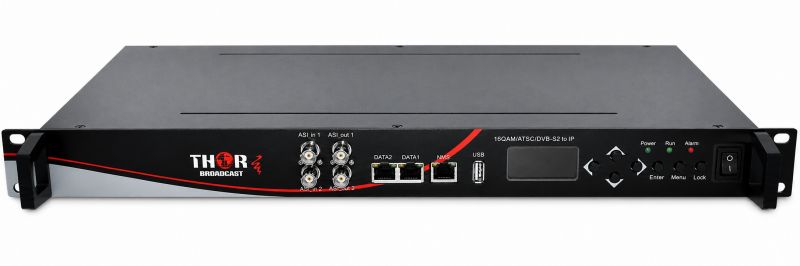
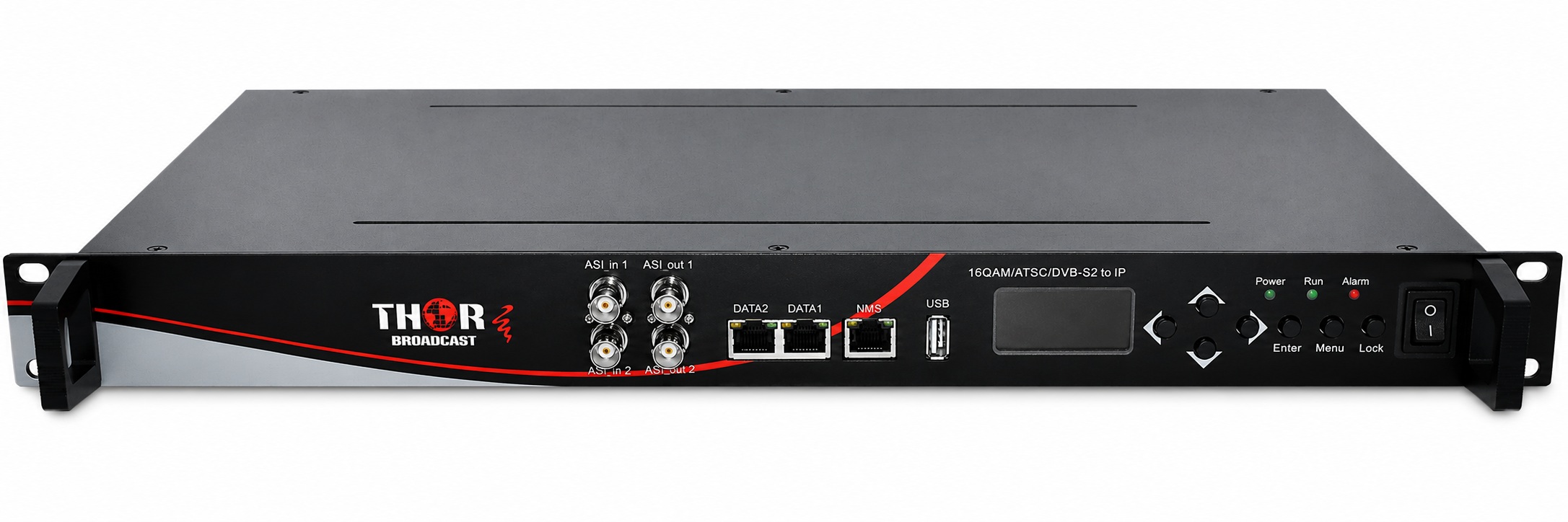
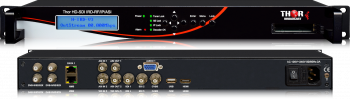
16 RF Tuners to IPTV 16 x Cable QAM Inputs tuners to IP

16 x DVB-T/T2 tuners to IP16 x Off Air ATSC Inputs tuners to IP16 x Cable QAM Inputs tuners to IP16 x Satellite DVB S/S2 tuners to IP
Model: H-16QAM-IP
Qty: 3
Product image Previous Next
Product image
Product image
Price: $4,495.00
Availability: In stock Condition: new QR Code 16 RF Tuners to IPTV
Shipping: starting at $0.00 Warranty: 2Yrs
Quantity:
ask about product
send request
Description Features Drawings Video Models Accessories Specification Q&A
Documents
  • Manual
  • Datasheet
  • Quick Guide
Support
16 x Cable QAM Inputs tuners to IP model description
16 Independent Cable DVB-C QAM 64/256 tuners input to IP TS SPTS multicast or unicast outputs. PN H-16QAM-IP Each TS program - "subchannel" from any QAM Channel can be converted to IP stream - UDP/RTP/RTSP The unit has also 2 ASI inputs for external TS's sources. also other models are available: H-16QAM-IP-16ATSC 16 QAM to 16 ATSC trans modulator with VCT edit, H-16QAM-IP-16QAM : 16 QAM to 16 DVB-C QAM- trans modulator with VCT edit,

Description

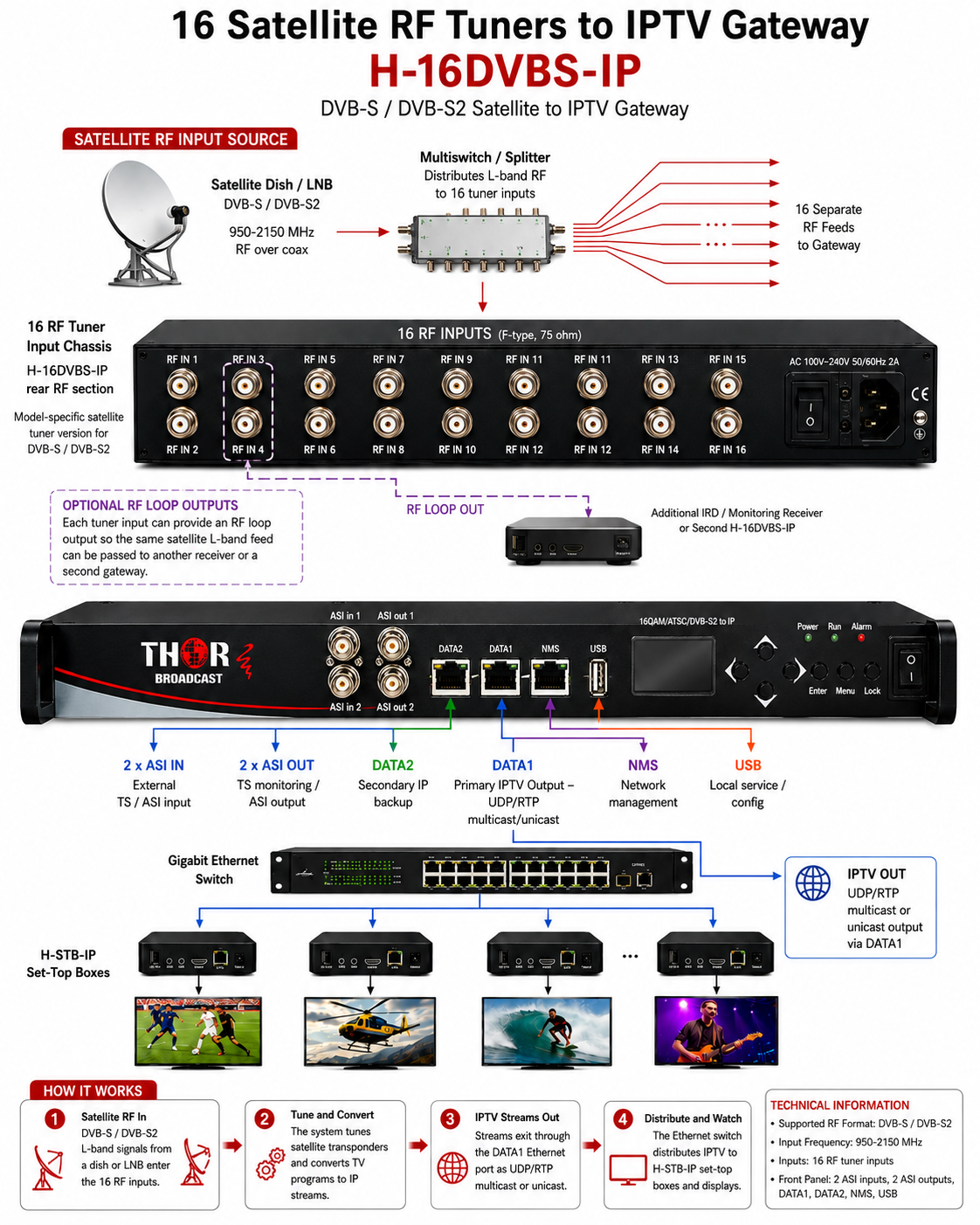
RF to IP Gateway

Broadcast FULL HD IPTV content from 16 TV frequencies that can be ATSC / DVBS-S2 - or QAM(A&B) / DVBT / DVBT2 / ISDBT
EXAMPLE Model numbers can be ( H-16QAM-IP ---- H-16ATSC-IP ---- 16-8DVBS-IP )
The 16 Input Tuners choices are: All
The IP Output format is UDP multicast or multicast

FTA tuner inputs can be set to any non-adjacent carrier and converted to IP UDP unicast, multicast streams.
After setting the frequency the unit scans for Video/Audio programs and once discovered they can be converted individually to IP streams or re-modulated on different frequencies(channels) or a different modulation standard.

It supports up to 512 IP inputs and one IP (MPTS) output through GE1 and TS input for re-mux through 2 ASI ports. This is the next generation of Gateways of which will create a seamless conversion of RF programs to IP TS that are easily managed via a secure NMS system developed by Thor to help distribute all of your programs via IP and ASI. Convert 16 CATV in either DVBS2, QAM, or ATSC to IP or Transmodulate one format of RF to another form of RF. This family of products equipped with 16RF tuners is model dependent for QAM/ ATSC/ DVBS2 and works as RF to IP Gateway and can output Multicast or Unicast also can act as an RF Translator.

Because we use RF Tuners with specific modulation formats, these models are all independent of each other and must be ordered correctly because they are hardware based; we offer them in standards used across the globe so you can use your specific modulation standard for your country (please check model selection, reach out to your local dealer or call Thor directly). Essentially there are 3 hardware sets we manufacture, one specifically for ATSC, one for DVBS-S2, and the third is for QAM (the QAM model has built in modulation standards for QAM Annex A and Annex B, DVB-T, DVB-T2, and ISDB-T; this is selectable through the NMS GUI)

Features

  • 16 RF Tuners INPUT: ( ATSC, DVB-C Annex A/B QAM, DVB-S/S2)
  • Excellent RF output performance index, MER≥40db
  • 16 groups multiplexing +16 groups scrambling +16 groups QAM modulating
  • 1 IP(MPTS) output over UDP or RTP
  •  512 IP SMPTS' output over UDP or RTP
  • Accurate PCR adjusting
  • PSI/SI editing and inserting
  • VCT edit
  • Web management, Updates via web

Drawings


Video

Product Video
16 CATV RF QAM or ATSC or DVB- T to IPTV Converter
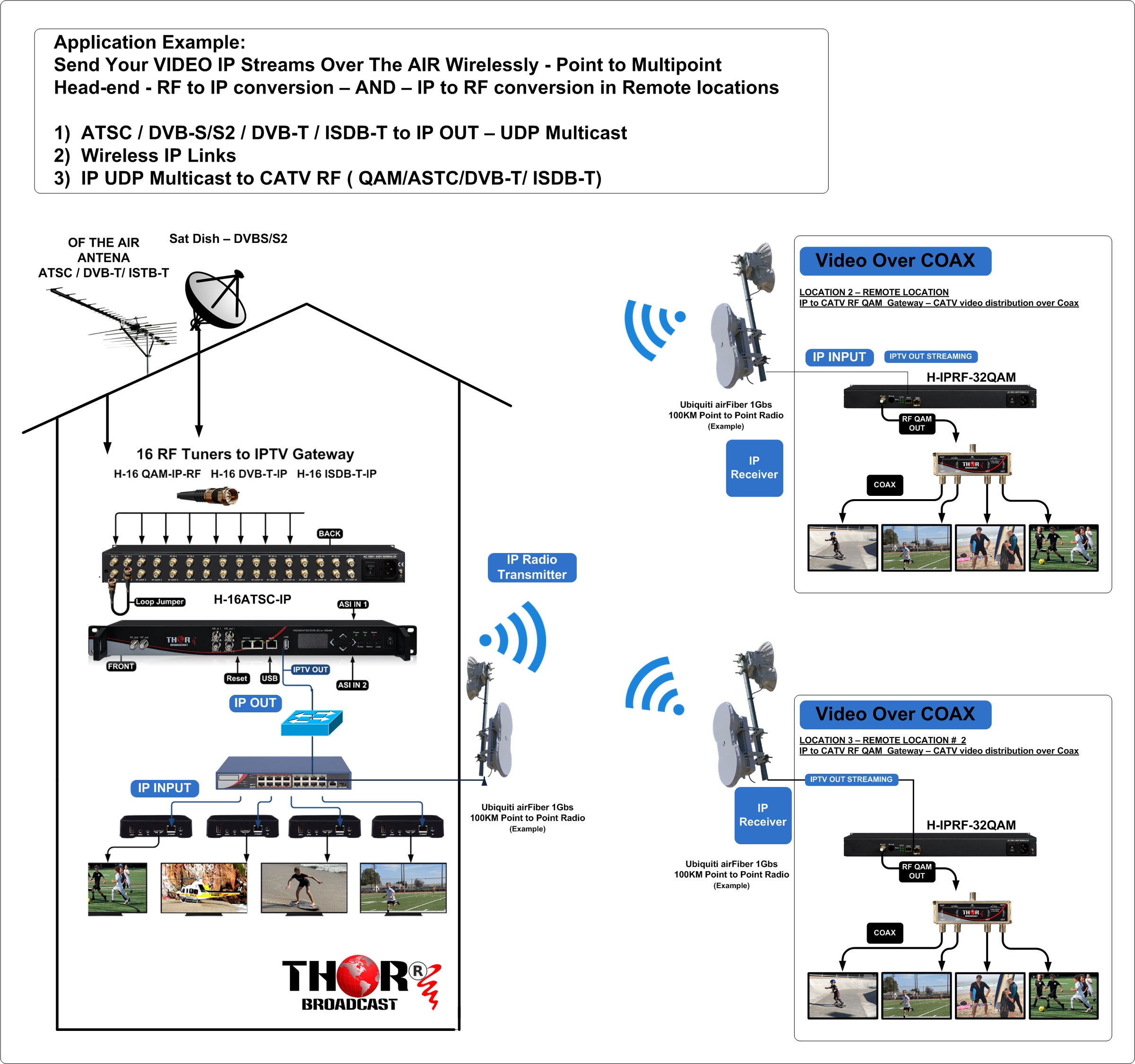
The unit inputs 16 modulated CATV RF channels and output ready to go multicast or unicast UDP/RTP stream for IPTV distribution. It outputs SMPT's and MPTS for each TS program from QAM, ATSC, DVB-T, ISDB-T (Model specific). It works as QAM to IP, ATSC to IP, DVB-T to IP, ISDB-T to IP converter Gateway, this is the easiest way to create IPTV headend form the CATV RF cable or OFF-AIR. In many cases, 16 RF channels carry over 100 Video programs. Very often used for varies HOTES, GYM's SCHOOLS, HOSPITALS, CHURCHES IPTV Distribution application. It simply works as TUNER - IP Converter https://thorbroadcast.com/product/16-rf-tuners-to-iptv-ts-qam-output.html/116 Spanish Language: La unidad ingresa 16 canales de RF de CATV modulados y la salida está lista para ir a la transmisión UDP / RTP de multidifusión o unidifusión para la distribución de IPTV. Produce SMPT y MPTS para cada programa TS de QAM, ATSC, DVB-T, ISDB-T (modelo específico). Funciona como QAM a IP, ATSC a IP, DVB-T a IP, puerta de enlace convertidor ISDB-T a IP, esta es la forma más fácil de crear cabecera IPTV desde el cable RF CATV o OFF-AIR. En muchos casos, 16 canales de RF transmiten más de 100 programas de video. Muy a menudo se usa para HOTES, ESCUELAS DE GIMNASIO, HOSPITALES, IGLESIAS Aplicación de distribución de IPTV https://thorbroadcast.com/product/16-rf-tuners-to-iptv-ts-qam-output.html/116
Product Video
Quick Configuration Guide for H-16ATSC-IP - 16 x Off Air ATSC Inputs tuners to IP
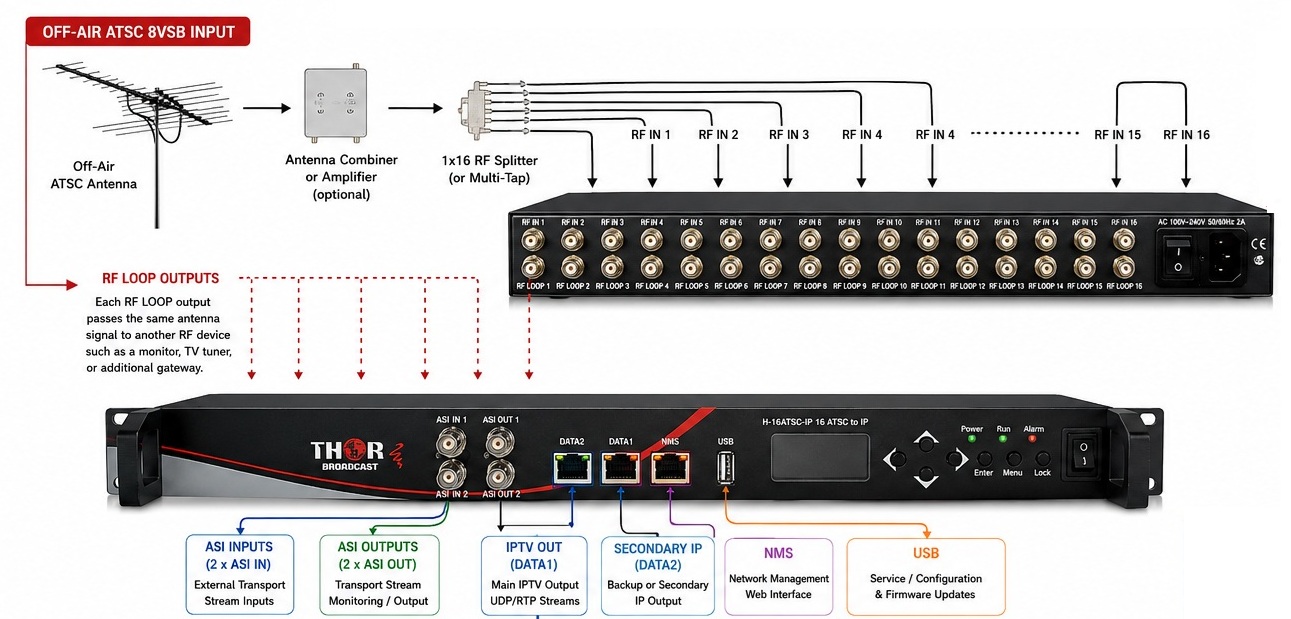
16 Independent Off Air ATSC tuners input to IP TS SPTS multicast or unicast outputs. PN H-16ATSC-IP. Each TS program - "subchannel" from any ATSC Channel can be converted to IP stream - UDP/RTP/RTSP , it could be used as an ATSC cherrypicker to IP gateway used to be the ATSC Lighthouse Station used during the ATSC3 Transformation The unit has also 2 ASI inputs for external TS's sources , also other models are available: H-16ATSC-IP-16ATSC 16 ATSC to 16 ATSC trans modulator with VCT edit, H-16ATSC-IP-16QAM : 16 ATSC to 16 DVB-C QAM- trans modulator with VCT edit. RF to IP GatewayBroadcast FULL HD IPTV content from 16 TV frequencies that can be ATSC / DVBS-S2 - or QAM(A&B) / DVBT / DVBT2 / ISDBTEXAMPLE Model numbers can be ( H-16QAM-IP ---- H-16ATSC-IP ---- 16-8DVBS-IP )The 16 Input Tuners choices are: AllThe IP Output format is UDP multicast or multicastFTA tuner inputs can be set to any non-adjacent carrier and converted to IP UDP unicast, multicast streams.After setting the frequency the unit scans for Video/Audio programs and once discovered they can be converted individually to IP streams or re-modulated on different frequencies(channels) or a different modulation standard.It supports up to 512 IP inputs and one IP (MPTS) output through GE1 and TS input for re-mux through 2 ASI ports. This is the next generation of Gateways of which will create a seamless conversion of RF programs to IP TS that are easily managed via a secure NMS system developed by Thor to help distribute all of your programs via IP and ASI. Convert 16 CATV in either DVBS2, QAM, or ATSC to IP or Transmodulate one format of RF to another form of RF. This family of products equipped with 16RF tuners is model dependent for QAM/ ATSC/ DVBS2 and works as RF to IP Gateway and can output Multicast or Unicast also can act as an RF Translator.Because we use RF Tuners with specific modulation formats, these models are all independent of each other and must be ordered correctly because they are hardware based; we offer them in standards used across the globe so you can use your specific modulation standard for your country (please check model selection, reach out to your local dealer or call Thor directly). Essentially there are 3 hardware sets we manufacture, one specifically for ATSC, one for DVBS-S2, and the third is for QAM (the QAM model has built in modulation standards for QAM Annex A and Annex B, DVB-T, DVB-T2, and ISDB-T; this is selectable through the NMS GUI). Features: - ATSC to IP (SPTS Mode) Each ATSC frequency subchannel Transport strem can be cherry-picking and encapsulated to IP Multicast or unicast stream- ATSC to IP (MPTS mode) all subchannels are being converted to one MPTS stream- Auto PIS's detection on the tuner input and automated passes on the IP output-It can be used as an ATSC3 Lighthouse Station Tuner, receive an IP gatewayOther models are available: H-16ATSC-IP-16ATSC 16 ATSC to 16 ATSC trans-modulator with VCT edit, H-16ATSC-IP-16QAM : 16 ATSC to 16 DVB-C QAM- trans modulator with VCT edit,

Model Selection

Models :
RF to IP
H-16QAM-IP -   16 QAM to IP Gateway (unit includes QAM(A&B), DVBT, DVBT2, and ISDBT)
H-16ATSC-IP  - 16 ATSC to IP Gateway
H-16DVBS-IP - 16 DVBS/S2 to IP Gateway
 

Accessories & Upgrades

Specification

Input

16 INPUT  FTA Tuner selection:: DVB-S/S2 OT ATSC or DVB-C Annex A/B QAM  (Model dependent)

512 IP (GE1only)input over UDP and RTP protocol    

2 ASI input, BNC interface

Tuner Section

DVB-S

Input Frequency

950-2150MHz

Symbol rate

2-45Msps

Signal Strength

-65~-25dBm

FEC Demodulation

1/2, 2/3, 3/4, 5/6, 7/8 QPSK

DVB-S2

Input Frequency

950-2150MHz

Symbol rate

QPSK 1~45Mbauds

8PSK 2~30Mbauds

Code rate

1/2, 3/5, 2/3, 3/4, 4/5, 5/6, 8/9, 9/10

Demodulation Mode

QPSK, 8PSK

Multiplexing     

Maximum PID Remapping      

128per input channel

Function

PID remapping (automatically or manually)

Accurate PCR adjusting

Generate PSI/SI table automatically

Modulation Output

Modulation Output format

ATSC or DVB-C Annex A / B QAM ( model dependendt, please chek model selection)

Standard

EN300 429/ITU-T J.83A/B or 8VSB ( ATSC model )

MER

≥40db

RF frequency

50~960MHz, 1KHz step

RF output level

-20~+10dbm(87~107 dbµV),0.1db step

Symbol Rate

5.0Msps~7.0Msps, 1ksps stepping

Constellation

16/32/64/128/256QAM


J.83A

J.83B

Constellation

16/32/64/128/256QAM

64/256 QAM

Bandwidth

8M

6M

System

Remote management

Web NMS (10M/100M)

RF Out

16 DVB-C output or ATSC ( model dependendt, please chek model selection)

IP Out

1 IP (MPTS) output over UDP and RTP/RTSP (GE1 only)

Mirrors one carrier

Language

English

Software Upgrading

Web

General

Dimension

(W*D*H)

482mm×300mm×44.5mm (1RU 19x8x3)

Weight

3.7kg

Temperature

0~45°C(Operation) ; -20~80°C(Storage)

Power

AC 100V±1050/60Hz;

AC 220V±10%, 50/60HZ

Consumption

25W

Question and Answers

Question:
I am interested in this product, which will be ideal for one of our new projects. I need to clarify, on each RF input what can I send, whole transponder or single channel? I need to send all channels (about 32 channels) in the one RF feed from point to point via IP. Can you please confirm if possible? I will not be able to move whole transponder feed with one RF input. The channels are all Virgin Media channels. I would like to send the RF signal from A to B, and looking for a solution, even I leave them as IP on site B or convert them back to RF. The best solution is your RF to Fibre and Fibre to RF devices, which we already have, they work perfect, but for this project, we do not have dark fiber between A and B.

Answer:
Are your channels clear or scrambled and need CAM cards? This unit would convert 16 clear channels to IP, you would need 2 pcs. https://thorbroadcast.com/product/8-x-atsc-or-satelliete-antenna-tuners-to-iptv-8230.html 2 x 16 CH H-16DVBS2-IP 16 x Satellite S2 Tuners to IPTV & ASI Output The unit can discover all TS's programs and broadcast each SPTS for each TS. What do you need to do with those streams on the other end? Do you want to leave it as an IP and use IP STB? Or convert this IP to RF QAM or DVB-T. If so this would be the best unit to do it: IP to 16/32 CH RF Gateway https://thorbroadcast.com/product/iptv-to-16-32-clear-channel-rf-qam-atsc-modulator.html I totally understand, but this unit has 16 RF inputs, it converts 16 individual channels to IP. so with those 2 pcs you can move 32 channels You are absolutely right, it would be easier to use fiber optic converters RF to RF. So you don't have dark fiber? But if you have fiber with, anything on there, maybe ethernet or L-band? Whatever doesn't matter, then we can make a pass through mux for you. We can do a custom product for you and multiplex anything on the single fiber. To explain it better, if you would have something already occupied by RFor Ethernet or ASI /SDI. We can build a unit with that and have that signal and in addition RF as well? Does that make sense? Please take a look at this CWDM multiplexer for example : https://thorbroadcast.com/product/chassis-multiplexing-system-for-sdi-ethernet-gigabit-ethernet-rs-data-8230.html

Question:
I have a customer that wants us to build a small system for them We have DTV antennas pointing at different digital OTA stations and we are looking for a box with built-in ATSC tuners that will encode them H.264/H.265(+) on IP so they can use any streaming box to watch the channels through a local IP network. we would like to encode from 4/6/8-16 channels.... do you have 1 rack-mount device that does what we want?

Answer:
Yes we have a direct converter that will take RF programs and convert them to IP streams; however that device is not an encoder but rather a Gateway, so the programs will maintain their MPEG2 protocol. If you would like to convert to H264 then you would have to use a tuner or STB, for each stream with an HDMI output; then those HDMI outputs would go into a broadcast encoder which will then convert each HDMI input to an IP stream in H264. This is our very popular 8 Channel HDMI to IP Encoder https://thorbroadcast.com/product/8-hdmi-broadcast-encoder-iptv-streamer-and-asi-out-h-264-8230.html Otherwise, if MPEG2 would work out then you can use this device as the gateway for RF to IP https://thorbroadcast.com/product/16-rf-tuners-to-iptv-ts-qam-output.html/116 Considering we use MPEG2 in North America to view streams; if the client to elects to convert to H264; they would still need to use a decoder to grab those IP streams and convert to something you can view on.

Question:
I came across one of your products on the web - "Thor 16 RF Tuners to IPTV TS & QAM Output"
1. Does it have H.264/H.265 support?
2. Does it have encryption support?
Or if you have any other product which supports these please share the details of that product?

Answer:
This unit is a gateway, so it demodulates and converts the signal type from RF to IP, however, it will not change the protocol standard. 
So if your current RF television system is MPEG2 then the IPTV will be MPEG2. 
If you are in a country that uses DVB-T MPEG2, H.264, or H.264, then your IP will be in came MPEG 2 H.264, H265
It does not support Encryption, so anther words, the RF input needs to be clear and IP output will be clear.
This is the only Tuner Gateway we have in this density.
What is your application, please describe in detail, our engineers will happy to review its ad advise the best solution. 800-521-8467 Ext 2

Question:

Temporary channel sharing that supports the creation of an initial ATSC 3.0 station known as the “Lighthouse Station.”  The Lighthouse Station will be the first to provide ATSC 3.0 services in a market and will have its ATSC 1.0 signal carried by other partners in the business agreement.

During this transition or cable company needs to have the ability to cherry-pick the ATSC1 programming and convert it to IP so we can ingest it to our Cable Tv local tv channel lineup. Can this device have the ability to cherry-pick ATSC subchannels and encapsulate them to IP MPEG2 multicast streams?

Answer:

Yes, absolutely, the device can scan and discover all subchnnelTS insight the physical ATSC carrier, any subchannel transport strem can be encapsulated to its on IP strem of your choice. you can also re-map the PID's as well. This is the perfect solution for ATSC to ATSC3 transformation for lighthouse tv programming channel sharing receiver and IP gateway

Question:

Looking for a solution for multicast IPTV. Want RF tuner for over-the-air, inputs from HDMI (computer &DVD), and able to input from YouTube.

Answer:
 
How many of each signal are you trying to encode? Where is the Youtube source coming from?
I would think 8 RF channels, 1 or 2 HDMI, and YouTube would be via web.
and what protocol on multicast did you require?
youtube is from the web, but in order to integrate, you need to receive it, then encode it again
I watched YouTube video for the 16 rf tuner to IPTV to qam. Not to knowledgeable in this area, a network engineer by trade. Multicast would be UDP. Perhaps a Firestick or Roku device to get YouTube.
Okay so this would be a multi device setup.
We can use RF to IP Gateways' for your 8 ATSC channels
Then an encoder for XX amount of HDMI inputs you need.
Those IP outputs from those devices would all go to one switch and from there you'd have all your multicast streams.
Which part numbers should I look at?
https://thorbroadcast.com/product/atsc-or-qam-to-ip-gateway-atsc-qam-iptv-broadcast-8230.html/70
H-8ATSC-IP
this is the gateway for RF to IP
https://thorbroadcast.com/product/1-4-hdmi-to-qam-modulators-and-iptv-streaming-encoders-8230.html/13
2 HDMI input encoder for HDMI to IP
Excellent thank you

Question:

I have been on Plex about 7 years now and about 30 friends and family are included on my Plex. Many can't utilize an OTA antenna for various reasons and until recently subscribed to Locast. I am looking into a solution that I can share my over the air channels with a IPTV unicasting, multicasting or streaming solution similar to the Locast service but on a much smaller scale of course. Would one of your commercial products be a solution? Obviously we are not on the same network so some sort of "streaming headend" solution is what I am looking for.

--------------

hanks for the timely response!  Perhaps you might walk me thru this? I am using a couple of silicondust HDhome run tuners and I am lucky enough to get good OTA reception receiving a total of 46 channels.  I can only allow access to Live TV & DVR on my Plex server to just a limited few (including my household) because of tuner restrictions as well as my internet upload restrictions.  Xfinity has recently announced fiber availability in my neighborhood which could significantly increase upload speeds to as much as 2000 Mbps if I were willing to pay the price. I also am aware of silicondust's commercial products however, like the home units those too are meant to be used on LAN. I would be willing to invest in commercial equipment and upgrade to fiber if I had a solution that would work.  Questions:  1) how would your suggestion look on YouTube? Would I need a separate tuner for each channel? I'm sure on YouTube it wouldn't emulate a HD tuner?  2) based on my previous information and updated info today, is there any commercial equipment that you sell that could accomplish my goal? In conjunction with HD commercial equipment (or not)  in conjunction with Plex (or not)? Or perhaps utilizing a IPTV box?

Answer:

Do you want to use it on LAN or WAN?
I'm assuming WAN, in this case, UDP multicast would not work.

What you can do is stream your Video to Youtube using RTMP
protocol, and give all your friends and family, private links

You can use this encoder for this purpose :
https://thorbroadcast.com/product/4-channel-hdmi-cvbs-network-encoder-streamer-udp-rtp-unicast-multicast-8230.html

----------------------

This is the solution :
 
H-16ATSC-IP-RF, 16ch ATSC tuners to IP, each tuner can be set to the different channel, and output all it will output multicast streams, then you need to have a Video server which will accept UDP multicast, convert it to HLS and serve the customers,
We do not make video servers, you could use WOWZA for example
The reason is that Public internet doesn't support UDP multicast streams, you can use them easily on the LAN, nut, not on the WAN, this is why you need a Video server with HLS, RTSP or RTP outputs
https://thorbroadcast.com/product/16-rf-tuners-to-iptv-ts-qam-output.html/116

Question:

We need between 6 and 12 TV channels (ATSC channels), we are using the camera below and we can enable multicast on these cameras, we are currently using H264 as these cameras are connected to a DVR for recording and we cannot change it, we may have to use the converters that you informed.Bosch | AUTODOME IP 5000i IR

-----------------

Question 2

If we use the device below, will we still need the converter?

https://thorbroadcast.com/product/iptv-to-16-32-clear-channel-rf-qam-atsc-modulator.html

Answer:

Because these cameras are H264, we need to convert and encode those transport streams to Mpeg2 and then modulate onto ATSC for RF to your television. 

 
As I noted, there are a couple of ways to do this. 
I think this is the simplest solution. 
Using IP STB - https://thorbroadcast.com/product/compact-ip-decoder-set-top-box.html
Input the IP from the camera, take HDMI output and then use HDMI modulators. 
Here is a link to our modulators. 
https://thorbroadcast.com/products/hdmi-1
 
Since you have between 6-12 camera streams, you can use individual compact units or higher density models 
https://thorbroadcast.com/product/petit-hdmi-rf-modulator-chassis-system-for-1-12-units.html/254
https://thorbroadcast.com/product/1-8-hdmi-digital-rf-modulator-cc-closed-captioning.html/95
--------------------------
Answer 2
This IP to RF gateway is just a converter, it does not encode, so your IP Streams will still be H264, the television will not recognize those channels. 
You need to encode those H264 streams to MPEG2, otherwise, it will not work. 

Question:

I need to convert an HD QAM CLEAR signal to send over IP UN-ENCRYPTED.   In the current service, my customer has used castnet to convert their coax to IP signal.  Do they want to have a CLEAR IP signal so they can connect to their Samsung TVs that support this?  But also was curious what STB (Set-top box) I would need as well.  For the TVs that need IP/HDMI conversion.  

Answer:
So you're correct the 16QAM-IP unit will work; if your customer needs IP STB's we have 2 options, managed and unmanaged.
https://thorbroadcast.com/product/compact-ip-decoder-set-top-box.html
https://thorbroadcast.com/product/4k-hevc-ip-and-usb-hd-video-decoder-ip-8230-1.html
 
So if your customer has Samsung TV's that support IP input, it could work in theory; its rare though someone has TV's that will work with Clear IP streams. 
He will have to find an app that will ingest those streams, the issue is Samsung only allows certain apps on their TV sets, so he will have to navigate that himself once he uses the RF decoder to IP. 
 
Please give me a call if you have more details about the project, 1800-521-8467 ext 1 
Maybe there is another solution, otherwise he will have to use IP STB at every TV, the IP streams will need to get scripted then loaded onto each STB, then IP input and HDMI output to the Television. 
For the reasons above is why most customers use RF modulators, it's cleaner, easier and simpler to implement. 

Question:

Do you sell a piece of equipment that converts specific digital channels from coax CATV network and converts it into an IPTV stream?

Example:  We have 3 or 4 channels on out CATV system that we want to get to a remote location that has gigabit ethernet but no coax.

Answer:
We do indeed. If you're talking about CATV QAM or ATSC, we have modulation specific equipment for either case. 
https://thorbroadcast.com/product/atsc-or-qam-to-ip-gateway-atsc-qam-iptv-broadcast-8230.html/70
The minimum number we do is 8 Channels. 
 
I assume your gigabit network is your own LAN? Or is it via Public Internet?

Question:

1)

I have need for a device that can receive QAM unencoded video on about 12-16 channels, encode those to unicast IP streams which will then be sent over an SD-WAN link to a remote facility, where the streams will then re-broadcast via multicast/UDP to various endpoints at the remote facility.  I feel like your model  H-8QAM-IP should be able to handle that initial QAM->IPStream piece of the puzzle.  Do you have a 16channel unit?  If not, I assume I could use two of the 8channel units.

2)

I see it has a ton of coax input ports in the back, but all our channels are provided to us on a single feed.  Can one of those ports pick up all channels for the IP streams to be generated from, or would we end up just looping from port 1 to 2 to 3, etc, so each Coax input has a physical connection? What are the IP stream formats, codecs, protocols, that are supported?

3)

So by saying “won't be any other changes versus what you input into the unit”, does that mean we can’t re-encode to lower bitrate or framerate than what is received via the QAM input?  We are hoping to shrink down the streams a bit as we have somewhat limited bandwidth available at the source location.  Even if that means stepping down the resolution, framerate, quality, etc.  We get what appears like about 8Mbps feeds, and would like to shrink it down to about 2Mbps per channel.


I may not be understanding exactly how broadcast TV/CATV works, so please pardon any confusion in my questions.  I assumed you had to do some sort of encoding from QAM to IP no matter what, so was hoping we would have a choice of how that gets encoded.

4)

We receive a live camera feed from every camera angle at the track.  This comes in on coax/QAM and is immediate, no delay.  But we have a number of engineers working back at HQ in the “war room”.  NASCAR provides a livestream via HLS of all camera angles, but that HLS feed is 15-20 seconds behind, just by nature of HLS encoding and file segmenting.  So we are trying to get a lower latency video feed to the war room.


Our thought was to patch into the live Coax feed at the track, encode it to a lower bitrate RTSP stream, unicast that across our SD-WAN link from track to shop.  Then re-transmit via multicast at the shop to any PCs that are online in the war room.  We are hoping all that can be done within a few seconds, and overall will be lower latency than the HLS feed NASCAR provides.  We have a software package that can receive the RTSP stream and re-broadcast via UDP/Multicast with minimal added latency.  So just looking for the QAM->IP/RTSP encoding piece.


Answer:

1)

Yes we do, you can find it here:
H-16QAM-IP
So yes you can do that many channels in one chassis if you would like to do that. 
2)
So each input is an independent tuner, you can use your One input , and then cascade the rest. The unit comes with 16 short coax jumpers for that reason. 
Output can be either UDP or RTP.  Otherwise this is a RF to IP Gateway so there won't be any other changes versus what you input into the unit. 
So if you inject a feed that is MPEG2 and AC3, that is what will come out on the IP side. 
Each RF input per channel, let's channel 5, will include all minor channels as well. so if you have 5.1 and 5.5 and 5.7 all on that carrier, then they will all be converted to IP. 
3)
That's correct, because if you want to do all those things, then you need to encode those signals; again this unit is a gateway not an encoder. 
So there are no options internally that would allow you to do those things as a Gateway. This is strictly for RF to IP conversion  - whatever goes In QAM would go out in IP intacct
To shrink the signal is the much more complex and expensive process
One way is to use  MPEG Transcoders , the second way is to decode each video to baseband Video and use separate encoders to re-encode the stream according to your needs.
Both methods are comlex expensive and require a lot of equipment.
 
Are you intending to utilize gateway IP output for the LAN IP distribution or WAN (Public internet) ?
The IP output from the QAM to IP gateway is UDP multicast, if you intend to use those streams in your LAN, than you do not need shrink it, LAN has enough bandwidth and also IGMP support to prevent  network clogging.
3)
That might work, because we can outputs unicast RTSP streams from it, but again there will be no data rate reduction the data rate and encoded format will be exactly like on the QAM, so it depends on your SD-WAN bandwitch

Question:

Thanks for the reply.  I recall you assisting me the many years ago. Here’s a very specific question on a very specific feature that we are looking for in this unit.


Our current Blonder Tongue unit has a flaw.

Let’s say the source (broadcast company) loses their transmission.  Throughout the the BT’s web interface it can show ‘missing signal’ on the RF input channel and frequency.

Everything else on the RF output still maps to this ‘missing signal’ on the input … However, any TV sets that are tuned to these QAM RF output channels will show "No signal".

For today's TVs, this means that those channels will likely be removed from the channel list of the TV.

When the source broadcast station resumes their broadcast, everything is restored within the encoder and no changes need to be made

However, any TV that had these channel(s) removed because of no signal will now need to be re-scanned to restore those channel(s).

We are looking a unit that will show a test pattern or some other kind of signal on the RF output when the OTA RF input signal is lost.


We live in a retirement community with hundreds of TV sets, and an outage from an OTA broadcast station like this has a huge impact.  (We live in the Southern Arizona region, and our local PBS has been out going on two weeks)


Does the units below have this type of functionality?

Answer:

I understand your point. How many channels do you need to modulate?

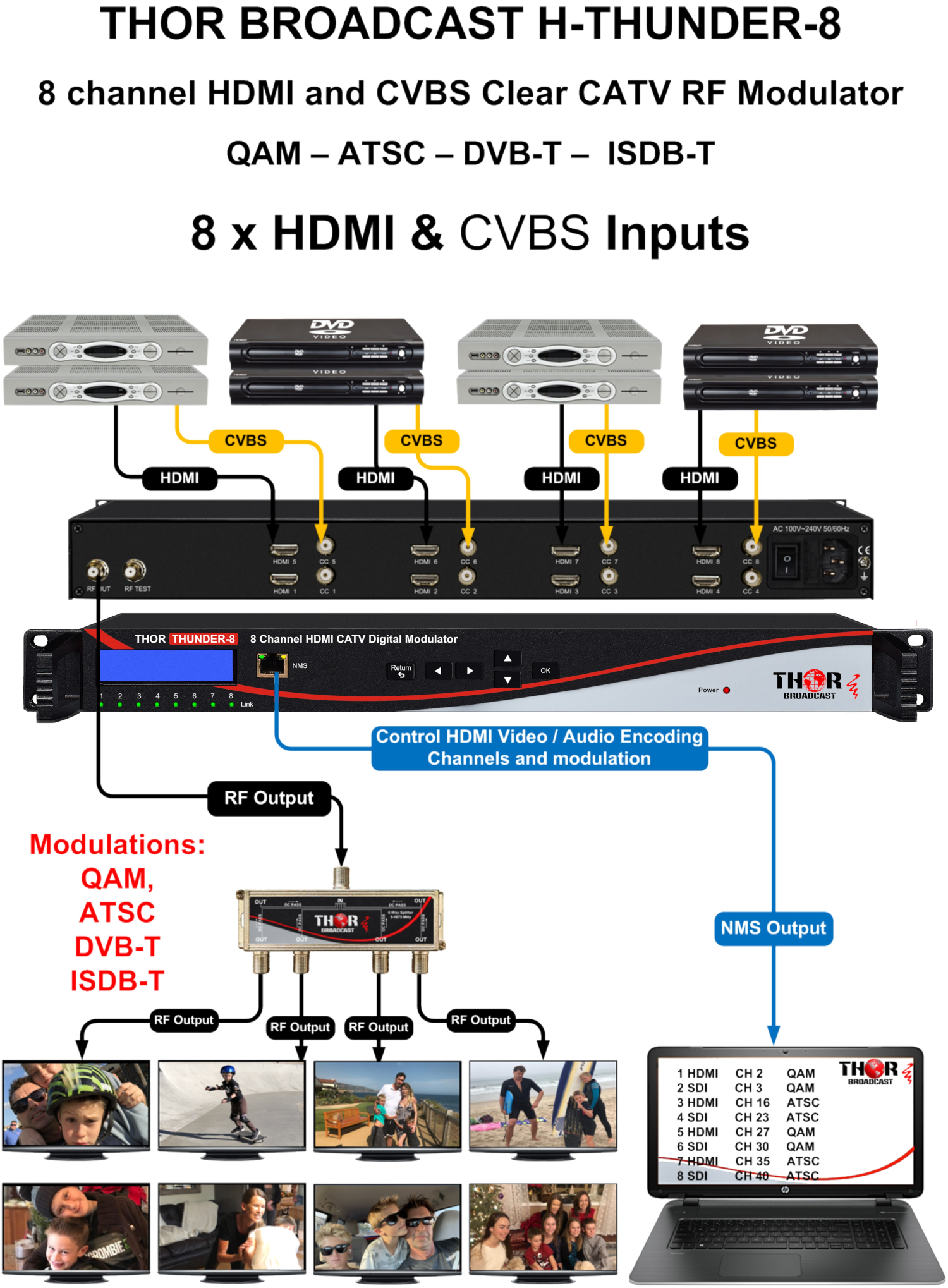
We do have 8-channel HDMI modulators available which generate valid channels and static images even without an HDMI source connected.

Therefore, you could use simple 8 ATSC to HDMI decoders with an 8-channel modulator.

This way, even if you lose the signal for some reason, the TVs will retain the channel information.

 
Will it work for you ?
 
This is the link to 8ch HDMI modulator
H-THUNDER-8
 
https://thorbroadcast.com/product/1-4-or-8-hdmi-digital-rf-encoder-modulator-8230.html/239
 
This is the link to ATSC to HDMI decoder STB
H-STB-QAM-ATSC
https://thorbroadcast.com/product/qam-catv-rf-and-atsc-rf-to-hdmi-decoder-stb-8230.html
 
 
Thi is the simple application drawing


Question:

Complication is that we are doing 20 channels total.

7 ‘primary’ channels (NBC, PBS, ABC, FOX, CBS, WB & KTTU) in HD, and 13 subchannels in SD.

This solution doesn’t take into account the subchannels, correct?

----

Before we get too far on this path, let me recap and add detail on the current BT product.


It has capability take 8 different ATSC channels on the input.

From that, I am able to cherry pick the lineup to provide a total of 20 different channels in clear QAM on 8 different RF channels on output.

I am actually only using 7, as each RF channel is a combination of 1 HD channel, plus 2 or 3 SD channels.

The ability to cherry pick and combine channels on the output are the biggest features that I utilize.

System works perfect except for one issue – when broadcast station loses signal, output on the device looses signal and TV remove channel.

Good news is that you now have the capability to do the ATSC to QAM / IP output, which I’m not sure you had many years ago.

The specific question I have is still the same now with this product.

What happens to the QAM output if the source looses signal - Does your product have the same behavior as our current BT product?

Answer:

For the 20 channels, you would need 20 ATSC STBs and 3 H-Thunder-8 modulators combined together. Each modulator would generate unique 8 channels, which you can then merge together.

--------------------------

So, to make this clear, our ATSC to QAM gateway works exactly like BT. This is why I proposed a different solution.

If you use ATSC decoders combined with the 8ch HDMI modulator, you will not have this issue.

The 8ch HDMI modulator has a constant output whether HDMI is connected or not (the TS is constantly generated), so TVs will never lose channel information regardless of whether they receive HDMI video or not.

Please let me know if this is clear

Question:
1) We have a client who would like to install two new C Band satellite dishes at their transmitter site and haul/Convert  the L Band signals to ship to their studios then convert back to L Band to feed multiple satellite receivers 
Do you make something that would work for this application ?
---------------------------------------------------------------------------------------------------------
2) I just realized I asked the wrong question 
The "fiber" I referenced would actually be high speed Internet from Conterra on each end. (They do use fiber but its not dedicated) 
An IT friend said this:
"They can do a switched Ethernet handoff that can be point to point so if the devices can accept an IP handoff then yes it should work"
IT is not my native language so pardon my ignorance !
At the end of the day the satellite receivers at the studio end need to see L band RF from the satellite dishes several miles away 

Answer:

1) Usually, satellite dishes don't send high-frequency C-Band signals over coaxial cable. Instead, installed LNBs downconvert C-band frequencies to a lower frequency band.

The satellite dish reflects the signal onto the LNB, which is mounted on the arm of the dish.

The LNB amplifies the signal received from the satellite and downconverts it to a lower frequency, enabling it to be transmitted through a coaxial cable to the receiver.

The satellite LNB works as a downconverter by converting the high-frequency satellite signal received by the dish into a lower frequency signal known as the L-band.

The L-band frequency range typically used for satellite communication is between 950 MHz and 2150 MHz.

The satellite LNB converts the received satellite signal, which may be in the Ku-band (10.7 GHz - 12.75 GHz) or C-band (3.7 GHz - 4.2 GHz), into a lower frequency signal in the L-band range.

Once converted to the L-band, the following devices can be used :


F-Lband-TxRx  1 L-band over fiber TX/RX Kit

https://thorbroadcast.com/product/l-band-over-fiber-tx-rx-basic-1-ch-kit.html
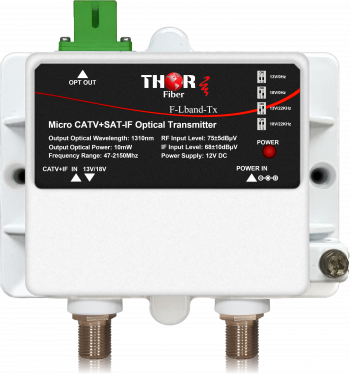
L-BAND over Fiber Tx+Rx Basic 1 Ch Kit

-------------------------------------------------

2) In this case, it is not so straightforward; it is impossible to
digitize the L-band spectrum and send it over IP.
However, in some cases, we can tune into specific DVBS/S2 channels and
convert TS (MPEG transport stream) videos to IP.
The video channels need to be free-to-air, clear, and not encrypted.
 Please check this product, the 16ch DVBS/S2 to IP gateway.
The unit has 16 individual satellite tuners, and each tuner can be set
to a different satellite DVBS/S2 (frequency) channel.
Any videos from this channel can be output as UDP multicast streams.
These streams can be sent over the LAN Ethernet connection.

H-16DVBS2-IP

https://thorbroadcast.com/product/16-rf-tuners-to-iptv-ts-qam-output.html/118


Question:

1) We’re trying to output 130 channels from QAM to IP.  What device do you have that can output the most QAM to IP channels as possible?

2) How many IP channels can it output at once?

3) These aren’t for over the air channels.  These are for Dish network so there are no subchannels.  If the Dish Smart Box can output all the channel to the Thor device, is there a limit to the number of channels that we can output via IP?

Answer:

1) The highest density unit we make for QAM to IP is this model: H-16QAM-IP

2) Each of the 16 ATSC channels has an average of 3-4 subchannels, resulting in a total of 48-64 subchannels, other words, each TS (Transport Stream) has its own UDP SPTS  multicast stream

3)

The same concept,
Each tuner can be tuned to a specific QAM frequency.
 
If each QAM frequency has only one Transport Stream (TS), then our unit will output one IP program per QAM channel.
 
However, usually the TS's are multiplexed onto QAM channels, meaning that each QAM channel, which has a 38 Mbps space, typically carries multiple TS's, each of which is usually encoded at 4-8 Mbps.
You can verify this on DirecTV equipment by looking for listings under the same frequency, such as channel # 2 (57 MHz) with subchannels 2.1, 2.2, 2.3, and so on
 
There is no limit on the number of outputs of the equipment, as the number of outputs is equal to the number of TS input streams.

Question:

Hello, I am looking for a solution to transmit TV channels for a hotel, I have 30 smart televisions to which I would like to transmit local TV channels, the installation of the building is with cat6 ethernet cable from a central unit to each TV, (I do not have cable coaxial), in the operations center I have a switch to provide internet to each TV, would you have any solution for an encoder through ethernet to distribute the TV channels by hiring a TV service? The hotel is located in Bolivia - Tarija, in this city there is no iptv yet, so the tv providers work with the coaxial service i will wait for your answer than you.

Answer:
I checked that Bolivia uses RF standard modulation ISDB-T; In this case if you have a TV service or antenna in your facility to provide those TV channels to your location; you can use an RF to IP gateway to convert all of the ISDBT channels to IP streams. 
We have a product that can convert those RF channels easily: H-8ISDBT-IP
https://thorbroadcast.com/product/atsc-or-qam-to-ip-gateway-atsc-qam-iptv-broadcast-8230.html/73
 
Do you know how many channels you have available through your service provider or antenna?
The maximum amount this device can intake is 8; so if you have 32 channels then you will need 4 of these devices. 
You will need to have a switch connected to your LAN with IGMP. 
Furthermore in order to decode those IPTV streams at your TV you'll require an IP Set Top Box at each location to convert ethernet to HDMI; HDMI cable connects to the TV. 
We have two options for these decoders:
https://thorbroadcast.com/product/compact-ip-decoder-set-top-box.html
https://thorbroadcast.com/product/4k-hevc-ip-and-usb-hd-video-decoder-ip-8230-1.html

Question:
I need to take 8 off-air feeds and convert them to about 20 IP SD multicast streams for my IPTV system.  I'm pretty sure your H-8ATSC-IP will receive, demux and convert to IP, but what do I need to transcode(?) the IP HD streams down to mpeg4 SD multicast?
Can you provide me a quote for that solution.

Answer:

Thank you for your inquiry.

As you correctly pointed out, the H-8ATSC-IP or H-16ATSC-IP gateway will output all TS's UDP multicasts from the 8 ATSC carriers.

But the unit works as a gateway and is completely transparent; whatever encoded signal is carried on the RF will be outputted on the IP. We can change PIDs or other PSID information, the encoded video and audio original format remains the same. In other words, the video encoded format and resolution will be exactly the same as the original format of the ATSC channels.

The only way we could achieve a resolution change would be by decoding all your videos to HDMI format first and then re-encoding all of them using an HDMI encoder.

We can use a simple ATSC STB, such as the H-STB-QAM-ATSC, to decode it to HDMI.

https://thorbroadcast.com/product/qam-catv-rf-and-atsc-rf-to-hdmi-decoder-stb-8230.html
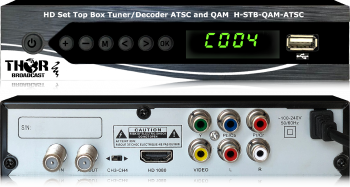
QAM CATV RF and ATSC RF to HDMI Decoder STB  / Digital RF to HDMI Decoder
We have many different encoders, but for your specific needs, you most likely require MPEG2 with AC3 Audio. In this case, the most suitable option would be our 4ch HDMI encoder H-4HD-EMH.
https://thorbroadcast.com/product/4-hdmi-broadcast-encoder-iptv-streamer-and-asi-out-mpeg2-8230.html
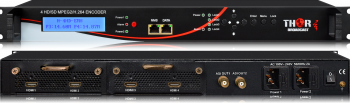
4 HDMI Broadcast Encoder IPTV Streamer and ASI Out MPEG2 / H.264 / AC3/ 1080p / CC
If H.264 encoding is sufficient, we also have 24ch encoders available -H-HDPerformux-24
https://thorbroadcast.com/product/4-8-16-24-hdmi-iptv-streaming-8230.html/216

 

Please let me know if any of these solutions would possibly work for your application.

Please don't hesitate to give me a call if you have any questions.

Question:

I hope you are well, I just wanted to reach out again, we have a vessel with an existing network being used for their satellite TV broadcasting and was wondering if we could put together a solution that would allow them to distribute free to air satellite services as well as HDMI sources, I had looked at the soukacatv systems as they seems to tick a good few of the boxes, but not too confident on the company at the moment (although I did like their streaming system), would you have anything that could fit the bill?

On the endpoints, they are slowly change their screens over to Smart TV’s, would a specific app be available that could decode the stream as opposed to getting the decoders, they have around 120 locations on board that would avail of the signal.

Answer:
We do have both DVBS/S2 and ATSC to IP decoder Gateway systems available. 
https://thorbroadcast.com/products/rf-decoders-ird-s
You can get those with either 8 or 16 RF into them with IP output. 
 
For HDMI sources we have a plethora of encoder options; depending on how many HDMI inputs you need to convert to IP this one is popular:
https://thorbroadcast.com/product/4-8-16-24-hdmi-iptv-streaming-8230.html/213
It can do from 4 to 24 HDMI inputs. 
We also have another unit called the Spartan that would be a good fit potentially
https://thorbroadcast.com/product/4-channel-hdmi-cvbs-network-encoder-streamer-udp-rtp-unicast-multicast-8230.html
 
If you need IP input and HDMI output Set Top Boxes for televisions, we have those available as well. 
https://thorbroadcast.com/product/compact-ip-decoder-set-top-box.html
 
So if you can give us more information on how you'd like to set up this LAN video system, we can give you some part numbers and estimates. 
This is a fairly straightforward application so long as neither of the RF streams you want to decode are encrypted. 
--
There lies the problem in itself. Generally smart TV's know this, well the companies that make them. So you'd have to essentially jail break them and get your own app on board. 
But realistically get one of the TV's and look up the specs and see what's available. Maybe one does have a VLC player or something. Not sure how that would all work out since you need to type in the syntax. 
The other thing you need to check is if the TV's are just MPEG2, or H264 capable; as the ATSC streams are MPEG2, and the Encoder streams would be H264. We also have encoders that can do MPEG2 IP outputs, but they are much pricier per channel. 
 
This is the largest of issues when we see places like stadiums with huge corridors and spaced out TV's elect to switch from RF QAM, to let's say an IPTV system. 
 
So there are several things at play here, and you need to have your ducks in a row to ensure it will all be working in harmony. 
 

Question:

1) What is the direrence between phisical layer charkteristic between ATSC 1.0 and ATSC 3.0 modulation of ait standard

---------------

2) what other modulation standards are based on OFDM (Orthogonal Frequency Division Multiplexing)

Answer:

The Advanced Television Systems Committee (ATSC) standards dictate how TV signals are broadcast and received. Two of the most notable standards are ATSC 1.0 and ATSC 3.0, and they differ in various technical aspects, including their physical layer characteristics.

ATSC 1.0 (also just "ATSC"):

  1. Modulation: ATSC 1.0 uses 8-VSB (8-level Vestigial Side Band) modulation. This is essentially a digital version of amplitude modulation and was chosen mainly for its compatibility with the existing NTSC system and its simplicity.

  2. Transmission: It operates in the 6 MHz VHF and UHF TV channels.

  3. Payload: The effective data rate for ATSC 1.0 is about 19.39 Mbps per 6 MHz channel.

  4. Performance: In practice, 8-VSB is not very robust against multipath interference. This means that in certain areas (like urban canyons) or with particular types of interference (like moving vehicles), ATSC 1.0 can suffer from reception issues.

ATSC 3.0:

  1. Modulation: ATSC 3.0 uses OFDM (Orthogonal Frequency Division Multiplexing), which is a type of multi-carrier modulation. This makes it much more robust against multipath interference than 8-VSB. It can also accommodate various modulation constellations including QPSK, 16QAM, 64QAM, and 256QAM, depending on the desired trade-off between data rate and signal robustness.

  2. Transmission: Like ATSC 1.0, it operates in the 6 MHz VHF and UHF TV channels. But with its adaptive capabilities, it can adjust based on reception conditions.

  3. Payload: Because of its adaptive nature, the effective data rate for ATSC 3.0 can vary. However, it can theoretically achieve higher data rates than ATSC 1.0 in optimal conditions.

  4. Performance: Being based on OFDM and having adaptive capabilities, ATSC 3.0 is designed to be more robust against various interference sources, providing better indoor reception and mobile reception. It also supports MIMO (Multiple Input, Multiple Output) technology, further enhancing its reception capabilities.

  5. Additional Features: ATSC 3.0 is not just an upgrade in terms of physical layer characteristics. It comes with other enhancements like support for 4K UHD, high dynamic range (HDR), better audio quality with Dolby AC-4, and even interactive features and hybrid content delivery in combination with broadband.

In summary, while ATSC 1.0 was a significant step forward from the analog NTSC system, ATSC 3.0 is a more advanced and flexible system designed to meet the needs of modern broadcasting, combining over-the-air transmission with broadband for a comprehensive and interactive viewer experience.

------------------

OFDM (Orthogonal Frequency Division Multiplexing) is a modulation scheme that has found its way into various modern communication standards due to its robustness against multipath interference and its efficient use of the spectrum. Here are several notable standards and systems that utilize OFDM:

  1. Wi-Fi Standards:

    • IEEE 802.11a: An early Wi-Fi standard that brought OFDM to wireless local area networks.
    • IEEE 802.11g: This Wi-Fi standard merged the best of 802.11a and 802.11b, using OFDM for higher data rates.
    • IEEE 802.11n (Wi-Fi 4): Introduced MIMO (Multiple Input, Multiple Output) in combination with OFDM.
    • IEEE 802.11ac (Wi-Fi 5): Uses multi-user MIMO (MU-MIMO) with OFDM.
    • IEEE 802.11ax (Wi-Fi 6): While it primarily utilizes OFDMA (a variant of OFDM), which allows for better spectrum efficiency by letting multiple clients share a channel.
  2. Digital Subscriber Lines:

    • ADSL (Asymmetric Digital Subscriber Line): Used for broadband data transmission over telephone lines.
    • VDSL (Very-high-bit-rate Digital Subscriber Line): A faster variant of DSL, also based on OFDM.
  3. Mobile Communication Standards:

    • LTE (Long Term Evolution): Uses OFDM for downlink (from the tower to the device) and SC-FDMA (Single Carrier Frequency Division Multiple Access), a variant of OFDM, for the uplink.
    • 5G NR (New Radio): The latest mobile communication standard also utilizes OFDM with various enhancements for different scenarios and use cases.
  4. Digital Terrestrial Television:

    • DVB-T (Digital Video Broadcasting - Terrestrial): The standard used for broadcasting digital TV in many parts of the world.
    • DVB-T2: An enhanced version of DVB-T, offering better spectrum efficiency and more robust transmission.
  5. Digital Radio:

    • DAB (Digital Audio Broadcasting): A standard for broadcasting digital radio, used mainly in Europe.
    • HD Radio: A standard used for AM and FM digital radio broadcasting in the U.S., which uses a form of OFDM.
  6. Power Line Communication:

    • HomePlug AV and AV2: Standards for data transmission over electrical power lines within a home, utilizing OFDM to handle the noise and interference present on power lines.


Question:

We are needing to output our unicast streams in H.264 format, is this device able to do that ? I see only MPEG 2 listed once I get to the programming window.

Do you make a product that can encode to H.264 with similar functions as this unit or possibly a separate unit that we could use as a standalone aggregator to ingest unicast in whatever format and convert to H.264 streams?


Answer:
The ATSC to IP Gateway takes the data as presented in ATSC and converts to IP; it does not encode or change the TS, including cross converting channels from MPEG2 to H264.
 
Again, this model is a Gateway, not an encoder, so it takes the streams exactly as they are, data rate, resolution, audio etc and strictly converts that information to UDP or RTP. 
 
--
There is 2 ways to do it:
 
1) Decode any video to HDMI or SDI and re-encode it using H.264 encoder
like this one H-HDPerformux-8 
https://thorbroadcast.com/product/4-8-16-24-hdmi-iptv-streaming-8230.html/214
 
We also have the ATSC STB's,decoders, RF in HDMI out
 
2) We do have 8 port ATSC transcoder but it can only support 8SD or 4HD streams
https://thorbroadcast.com/product/8-program-mpeg2-h264-matrix-hardwaretranscoder.html


Question:

I’m interested in a RF to IP gateway. I had a question regarding the unit. On the RF input of the unit, would I be able to use one coax line to pick up multiple ATSC channels and break those out into individual IP streams?

For example: One of my RF cable is connected to a high powered antenna that should pick up all the OTA channels in the area. If I connect that cable to RF In 1, will I be able to pick up OTA channels 2 and it’s subchannels along with 4, 5, 11 and their subchannels?

Also, I saw a drawing where a user could connect an ethernet line into a switch and connected multiple feeds from that switch to a tuner box or TV. Does that switch have to be an unmanaged switch or have the capability to be set up with particular protocols?

Answer:
Yes, you can use one coax line to pick up multiple ATSC channels and break them out into individual IP streams.
Each of the 8 or 16 tuners is independent and can be set to its own unique OTA channel frequency.
H-16ATSC-IP or   H-8ATSC-IP
 
For example, if you connect your high-powered antenna to RF In 1, the unit will scan channel 2 - 57 MHz and discover all the TS's muxed on that particular carrier.
Each TS can then be output as its own UDP multicast or unicast IP address. 
So, a fully populated 16-channel H-16ATSC-IP unit can output all the streams from all 16 unique physical channels.
 
The unit has RF inputs and loop-out outputs for cascading purposes. 
We recommend using a managed switch with IGMP protocol so that the multicast streams can be managed efficiently. 
This will prevent network congestion by sending only the streams that have been requested.

Question:
I am looking to stream RF satellite channels over IP, and I found the 16-8DVBS-IP meets my needs, thus, I am requesting additional info about your product.
  1.  H-16DVBS-IP supports up to 512 IP inputs and one IP (MPTS) output through GE1 and TS input for re-mux through 2 ASI ports, does this mean, H-16DVBS-IP can stream 512 SPTS HD channels simultaneously?
  2. Does the device support DVB S2X?
  3. Does the device support both UDP, RTMP, HTTP, HLS(ABR), SRT, RTP/RTSP?
  4. Does the device support different satellites like ArabSat, NileSat if it has been used in Egypt?
  5. Do you configure the device based on location or can it be used anywhere or universally/globe used? 
  6. Do you have distributor in Australia?
  7. Can you please send me the full spec for DVB S/S2?
  8. How can I access to the chennells over IP?

Answer:
Please see my responses to your inquiries below:
 
  1.  H-16DVBS-IP can stream 512 SPTS HD channels simultaneously?  - YES
  2. Does the device support DVB S2X? -NO
  3. Does the device support both UDP, RTMP, HTTP, HLS(ABR), SRT, RTP/RTSP? -NO , just UDP or  RTP unicast or multicast -
  4. Does the device support different satellites like ArabSat, NileSat if it has been used in Egypt? -any Free to air Satt ( no encrypted )
  5. Do you configure the device based on location or can it be used anywhere or universally/globe used?  NO, base on the frequencies
  6. Do you have distributor in Australia? -NO, we sale directly
  7. Can you please send me the full spec for DVB S/S2? - in is located on the website
  8. How can I access to the chennells over IP?  - Unit have NMS port for the Management, Data port is for  the IP output, you can access through the VLC player on the PC.s or IP STB's  like this one https://thorbroadcast.com/product/compact-ip-decoder-set-top-box.html  

Basically, this unit can accept up to 16 different satellite channels. You would need to know what the differences are, and it can output all the video/audio programs as IP streams. Typically, customers use it as a UPS multicast because they can access it anywhere on the LAN (Local Area Network) using VLC players on their PCs or IP STBs. An example of the multicast IP address is 224.2.2.2, port 1000. In VLC syntax, the address would be udp://@224.2.2.2:1000, and you can view the video.

If your plan is to send these videos to customers over the public internet, you would need a video server (we do not make this). Here’s how it would work: our unit would stream UDP multicast streams locally into the video server as the source, and the video server would send unicast streams to the devices that request them, typically as HLS streams.

. If you haven't done any IP projects in the past, there will be a learning curve. We can help you set up the equipment remotely, but you will need to know your satellite channels and frequencies

Question:

I’m looking for a product that can act as a satellite receiver for say galaxy 19 FTA, convert the channels to IP (multicast). I’m also looking for a device to convert regular OTA antennna channels to IP (multicast).
Do you have any IP based receivers for the “other end” client devices? The use case, we have a multi family apartment complex, I want to use one dish and antenna to transmit the channels via Ethernet to our residents.

Answer:

That’s actually a great idea, and you're definitely in the right place,  we specialize in exactly this type of solution.

For your application, we offer two types of IP Gateway devices:


Satellite (DVB-S/S2) to IP Gateways – Available in 8 or 16 tuner models.

H-8DVBS-IP  ( 8 Tuners)
https://thorbroadcast.com/product/atsc-or-qam-to-ip-gateway-atsc-qam-iptv-broadcast-8230.html/71

H-16DVBS-IP  ( 16 Tuners)

https://thorbroadcast.com/product/16-rf-tuners-to-iptv-1.html/118
 
 
ATSC Over-the-Air (antenna) to IP Gateways – Also available in 8 or 16 tuner versions.
H-8ATSC-IP  (8 Tuners)
https://thorbroadcast.com/product/atsc-or-qam-to-ip-gateway-atsc-qam-iptv-broadcast-8230.html/70
H-16ATSC-IP (16 Tuners)
https://thorbroadcast.com/product/16-rf-tuners-to-iptv-1.html/116
 

Each tuner is fully independent and can be configured to any DVB-S2 or ATSC frequency.  ( model dependent)

Each carrier can contain multiple video streams, and all of them can be converted to UDP multicast streams for IPTV distribution over your LAN.

For example, one ATSC 6 MHz channel may contain 2–6 programs, so a 16-tuner ATSC Gateway can output as many streams as those tuners can receive — potentially dozens of channels from just one unit.
(Please note: satellite signals must be free-to-air (FTA), unencrypted content.)

 
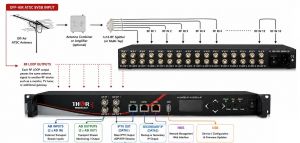
Application Drawing:
md_atsc-or-qam-to-ip-gateway-atsc-qam-iptv-broadcast-8230.png


To complete your setup, we also offer IP-to-HDMI Set-Top Boxes (STBs). These devices allow residents to receive and decode multicast IP channels, and they come with remote controls for easy channel switching using numbers or up/down buttons. 

Each STB is configured to match the multicast streams output from the gateway. 

There’s no limit to the number of video channels or client receivers you can deploy.

This solution is ideal for multi-family apartment complexes like yours  using just one dish and one antenna to distribute channels over Ethernet to all residents, without the need for separate satellite or antenna receivers in each unit.

Here is the link to the IP receiver (STB): H-STB-IP
  https://thorbroadcast.com/product/compact-ip-decoder-set-top-box.html


Application Drawing:


md_compact-ip-decoder-set-top-box.png


Let me know if anything is unclear I’d be happy to explain over a quick call if you prefer.

Question:
We are currently working on a new project in the Republic of Panama that requires converting open digital TV channels (DVB-T/T2) into IPTV multicast streams, which will be distributed over the network to LG Hospitality TVs using the LG Pro:Centric platform.
 
For this purpose, we are very interested in the H-8DVBT-IP gateway and would like to request technical guidance and availability information regarding this model.
 
Specifically, we would like to know:
 
  • If you currently have units of the H-8DVBT-IP in stock
  • If the device supports UDP/RTP multicast output compatible with LG Pro:Centric IPTV channel mapping
  • Recommended configuration guidelines for integration with hospitality environments
  • Pricing, lead time, and how we can proceed with placing an order
  • Shipping options to Miami o Panamá
 
We appreciate your assistance and look forward to your guidance so we can move forward with this implementation.
 
Thank you in advance for your support.

Answer:

Thank you for your email and for considering our DVB-T/T2 to IPTV gateway for your project in Panama. I’m happy to help.

To clarify how the system works: both H-8DVBT-IP and H-16DVBT-IP operate as transparent gateways. This means all the transport streams (TS) broadcast on the DVB-T/T2 channels are taken exactly as they are (no re-encoding) and converted directly into UDP or RTP multicast IPTV streams.

Since DVB-T/T2 channels are free-to-air and unencrypted, the output will also be unencrypted multicast streams. This is fully legal and compliant, as we are not decrypting or altering any content — we simply encapsulate the same original TS into IP.

From our experience, LG Pro:Centric systems accept both Pro:Idiom encrypted streams and unencrypted multicast streams. In your application, unencrypted multicast works perfectly. (Please double-check with your Pro:Centric controller, but I am 100% confident in the compatibility.)

Output Compatibility

• Fully supports UDP/RTP multicast
• Each TV program is output as SPTS with its own multicast IP
• Fully compatible with LG Pro:Centric IPTV channel mapping

Stock & Pricing

We currently have the H-16DVBT-IP in stock.

https://thorbroadcast.com/product/16-rf-tuners-to-iptv-1.html/284

  • H-16DVBT-IP (16 independent DVB-T tuners): $4,495 + shipping

Each of the 16 tuners can be tuned to any DVB-T frequency.
A typical DVB-T multiplex carries 3–7 TV programs, and each program becomes its own multicast address (e.g., 224.2.2.2:1000, 224.2.2.3:1002, etc.).

Recommended Configuration for Hospitality

• Assign clean sequential multicast IPs to each SPTS
• Use a managed switch with IGMP Snooping + IGMP Querier
• Map channels in LG Pro:Centric using the multicast URLs
• Place IPTV traffic on a dedicated VLAN
• Ensure DHCP/DNS settings required by Pro:Centric are active

I can support you step-by-step during setup if needed.

Question:

Additionally, we kindly request your support with technical recommendations regarding the RF side of the installation—specifically:


  • Appropriate antenna types for optimal DVB-T/T2 reception

  • Whether amplifiers are required in our scenario

  • Maximum recommended cable distances and cable types to ensure a strong RF signal before feeding the gateway

Any guidance you can provide will help us ensure a reliable deployment.

Answer:

Answers to your questions:

Additionally, we kindly request your support with technical recommendations regarding the RF side of the installation—specifically:

• Appropriate antenna types for optimal DVB-T/T2 reception – DVB-T only.

• Whether amplifiers are required in our scenario
This depends entirely on the RF signal strength and quality at the installation site. Normally, an amplifier is not necessary, but in some cases multiple antennas are required because many channels may originate from different broadcast towers. Please let me know if this is clear.

• Maximum recommended cable distances and cable types to ensure a strong RF signal before feeding the gateway
Shorter coaxial cable runs are always better. There is no strict maximum distance; the limitation is based on coax type and frequency characteristics (insertion loss).

Please cheek this table  ( example 211Mhz is loosing 2.65 db /100 feet of RJ11 Coaxial cable) 

COAX_RJ_59_RG_6_RG_11_insertion_loss_in_dB_per_100_feet_depends_on_the_frequency.jpg


Any guidance you can provide will help us ensure a reliable deployment.

Once you receive the equipment, connect the antenna, set the frequencies, and check the signal strength and quality. This step will determine the next actions. If the signal quality and strength are above 35%, the unit will operate without issues. If it is below that level, multiple antennas may be required and possibly antennas aimed in different directions. Please let me know if this is clear.

Also — please confirm that DVB-T is indeed what you need.
If this system will be used in Mexico, you will require ATSC tuners, not DVB-T. DVB-T is used in Europe, Africa, and parts of the Middle East, not in Latin America. Please double-check this.
Question:

When this box extracts all the tv sub channels and puts them over ip……how do we configure the thor box on the other end to see all of those streams and put them all back onto a single channel?

Aplication: 

Mountain A

H-8ISDBT-IP 

I want to take the channels seen fed form a UHF/VHF antenna

Plugged into RF In on back. If plugged into back of unit will that one port be able to see multiple channels and stream all of those channels or does that port have to be tuned to a specific frequency channel?

If I want to use same antenna for another input do I just run antenna from splitter to 2nd port?

Antenna has an amplifier and 5G filter and is specifically tuned from 174mhz -216 MHz.

Once these channels are acquired and transported over IP via AirFiber link 2 miles away

Mountain B

I want to use a THOR H-ASI-IP-B or  H-IP-4ASI on a mountain 2 miles away that has our transmitters. Receive the above channels over IP and then broadcast them over our transmitters.

Will this work?

Answer:
Yes, this setup will work. Please find the answers to your questions below:
 
Mountain A: H-8ISDBT-IP  - If this is located in California, you will need (ATSC- 8VSB model not ISDB-T) H-8ATSC-IP
https://thorbroadcast.com/product/atsc-or-qam-to-ip-gateway-atsc-qam-iptv-broadcast-8230.html/70
 
- Regarding the RF In port: Each port must be tuned to a specific frequency/channel.
LIST : - https://thorbroadcast.com/product/atsc-or-qam-to-ip-gateway-atsc-qam-iptv-broadcast-8230.html
 
- Using the same antenna for another input: Yes, you can simply run the antenna signal through a splitter to the second port.
- Antenna specs: The 174MHz - 216MHz tuning with an amplifier and 5G filter sounds great and will work well with our equipment.
- Transport over IP: Using the AirFiber link for the 2-mile span is a solid plan.
 
Mountain B: H-ASI-IP-B or H-IP-4ASI
Yes, these units will work for your requirements at the second site. You can use them to receive the IP UDP multicast streams and output ASI to connect directly to your transmitters.
 

Documents

h-16qam-ip-rf-gateway-user-manual.pdf
h-16qam-ip-quick-configuration-guide.pdf
H-16QAM-IP - QUICK SETUP GUIDE
H-16ATSC-IP - QUICK SETUP GUIDE
H-16QAM-IP - v2026 - QUICK SETUP GUIDE
h-16qam-ip-rf-gateway.pdf

16 RF Tuners to IPTV

Previous Next
Ask about 16 RF Tuners to IPTV

Contact form

This site is protected by reCAPTCHA and the Google Privacy Policy and Terms of Service apply.
*necesario
Thor Broadcast Sales

Email: [email protected]
Phone: 1(800) 521 8467 Ext 1
FAX: 1(800)521-6384


Get In Touch
Customer Service/ Support

Phone: 1-800 521 8467 Ext 2
Email: [email protected]
Login

Login


Forgot your password? Remind password
Don't have an Account? Register
Login by:facebookGoogle
The product has been added to the basket:
16 RF Tuners to IPTV
Go to shopping cart
Similar products:

IRD - Satellite or ATSC Decoder to SDI, IP, ASI, Closed Captions IRD - Satellite or ATSC Decoder to SDI, IP, ASI, Closed Captions

High end state of the art decoder with RF tuner, advanced IP streaming, front LCD confidence monitor, and supports 608 and 708 closed captioning. RF tuners for DVB-S2, ATSC, and QAM are available. All settings and alarm information are available through web browser based network management console.

4 X Satellite or ATSC IRD Decoder to IP and ASI 4 X Satellite or ATSC IRD Decoder to IP and ASI

Four independent RF tuners demodulate the entire carrier band frequency to IPTV MPTS, ASI and CATV QAM. High density program stream IRD for satellite, terrestrial ATSC, DVB-T, ISDB-T and QAM cable TV applications. ASI input for multiplexing additional TS programs to output simultaneously. 5 different RF tuner options available: ATSC, DVB-S2, DVB-T, ISDB-T or QAM (model dependent)

Contact Us

Thor Broadcast Sales

[email protected]
1(800)521-THOR (8467) Ext 1
1(800)521-6384

Customer Service/ Support

1(800)521-THOR (8467) Ext 2
[email protected]


  • CATV Modulators:
    • HDMI RF Modulators
    • HD-SDI converters
    • IP to CATV Edge Modulators
  • DVB Encoders:
    • IPTV Video Encoders
    • Hdmi RTSP RTMP RTSP Encoders
    • Transcoders, MPEG Converters, IP ASI Gateways
  • Decoders (IRD's & STB's):
    • RF input - Video /Audio Ouput
    • IP Broadcast Decoders
    • RF CATV and IPTV OTT STB's
  • Satellite Modulators:
    • DVB-S/S2 Satellite Modulators
  • Fiber Optic Transport:
    • SDI Fiber Optic Extenders, Digital Audio Extenders
    • SDI SD/HD/3G with CWDM
    • Cable TV CATV RF 45-900Mhz
    • L-Band Satellite RF 45-3000Mhz
    • Data & Ethernet over fiber
    • Analog Audio Video
    • Fiber Amplifiers - EDFA
    • DVB - ASI
    • Fiber Jumpers, Cables, Attenuators,
    • Optic Splitters Couplers CWDM Muxes
    • Optical Meters, Test Equipment, Accesories
    • Analog Baseband Video Audio, RS485/422/232 Data, Contact Closure
  • HDMI SDI Switchers, LAN Extenders, and Wireless Video Transport:
    • HD Video Switchers and Signal Format Converters for AV Pros
    • Wireless HD SD Video Data Equipment
    • Video Audio Extenders Over Ethernet LAN IP Network
  • HD 4K Cameras, SDI - HDMI - IP Streaming - PTZ - Broadcast and Security:
    • PTZ Streaming Cameras Broadcast cameras with SDI ,HDMI CVBS USB
  • DIscounted Inventory:
    • Satellite and CATV Broadcast Equipment for Sale
    • Lab Used Broadcast Equipment on sale
    • Past Generation Equipment
  • SDI Monitors:
  • Warehouse:


Thor Broadcast Logo
Email: [email protected]
Phone: 1(800) 521-8467 Ext 1
FAX: 1(800)521-6384
Information:
  • About us
  • Client Portfolio
  • Become a Reseller
  • Contact
  • Articles
  • Return Policy
  • Shipping Policy
  • International Order Policy
Popular:
  • RF Modulator
  • HDMI over COAX
  • HDMI over IP
  • COAX to HDMI
  • HDMI to SDI

Thor Broadcast
Torrance Business Park
2421 W 205th St
Torrance
CA 90501

© 2026 Thor Broadcast
Subscribe to our newsletter

Sign up here to get the latest news, updates and special offers delivered directly to your inbox.

You can unsubscribe at any time
newsletter image