| Availability: | In stock | Condition: | new |
|
| Shipping: | starting at $0.00 | Warranty: | 1Yrs |
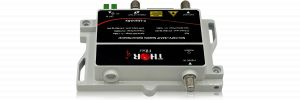
Model # F-Lband-Tx/Rx
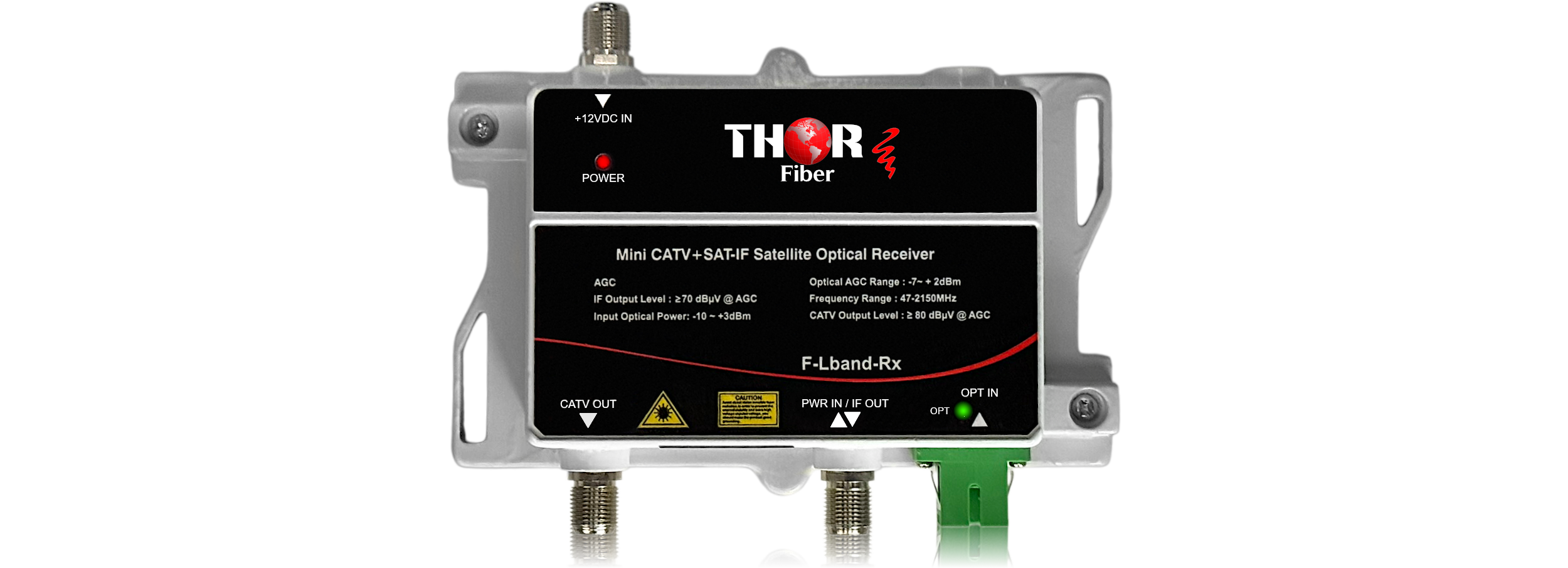
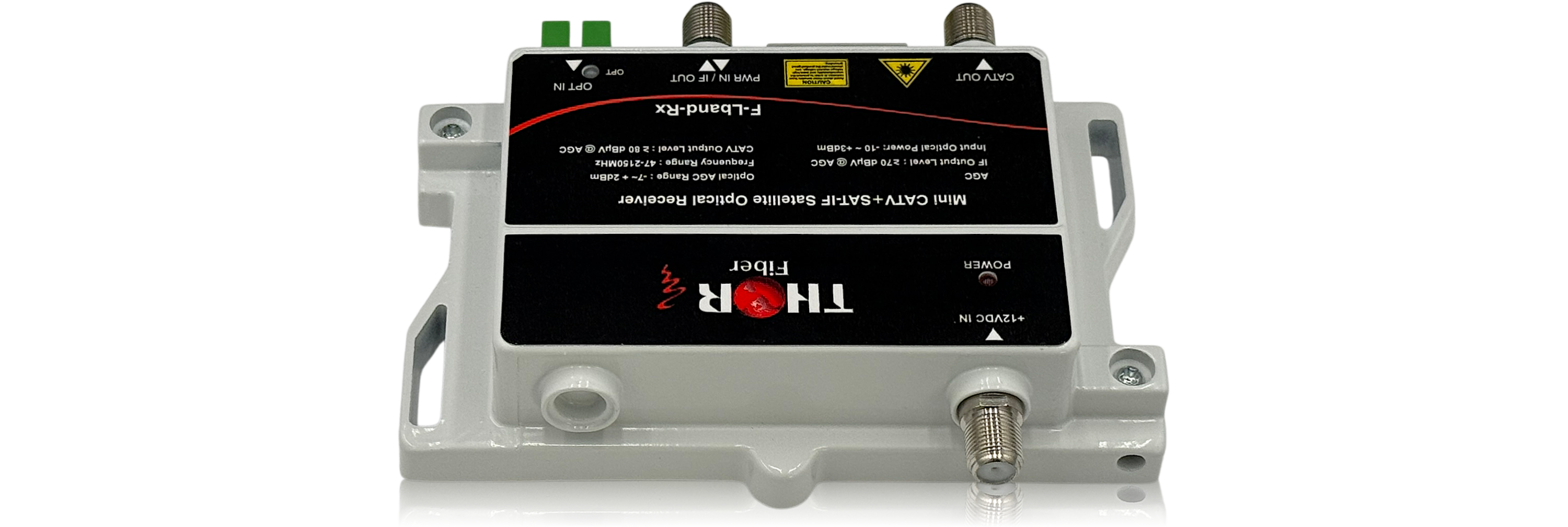
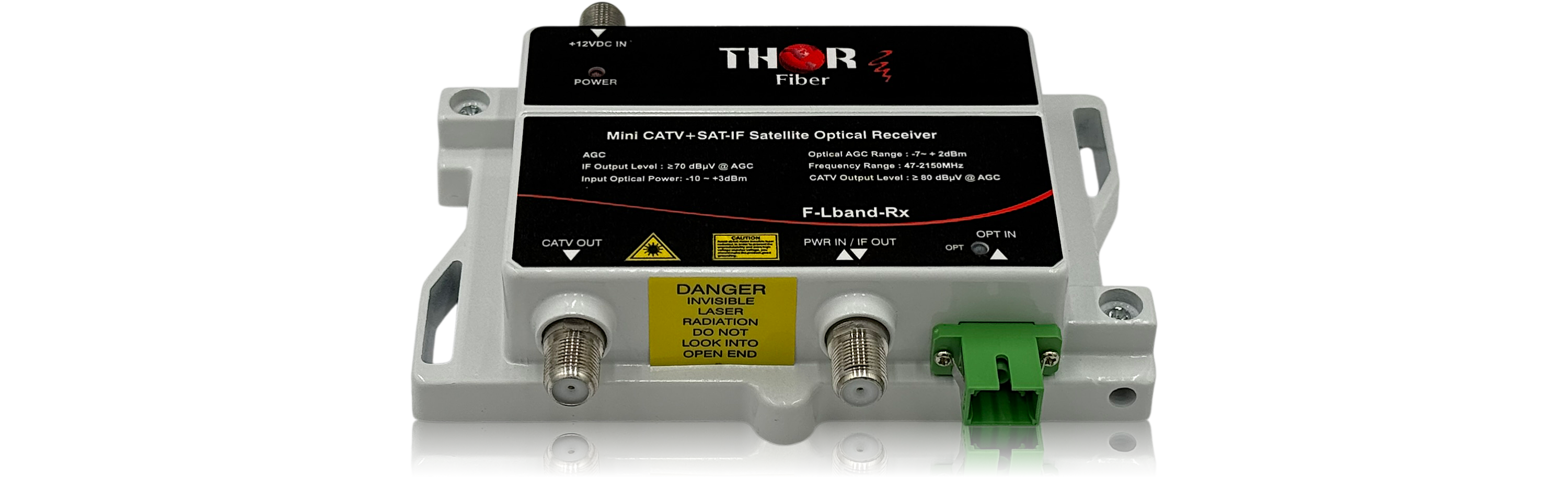
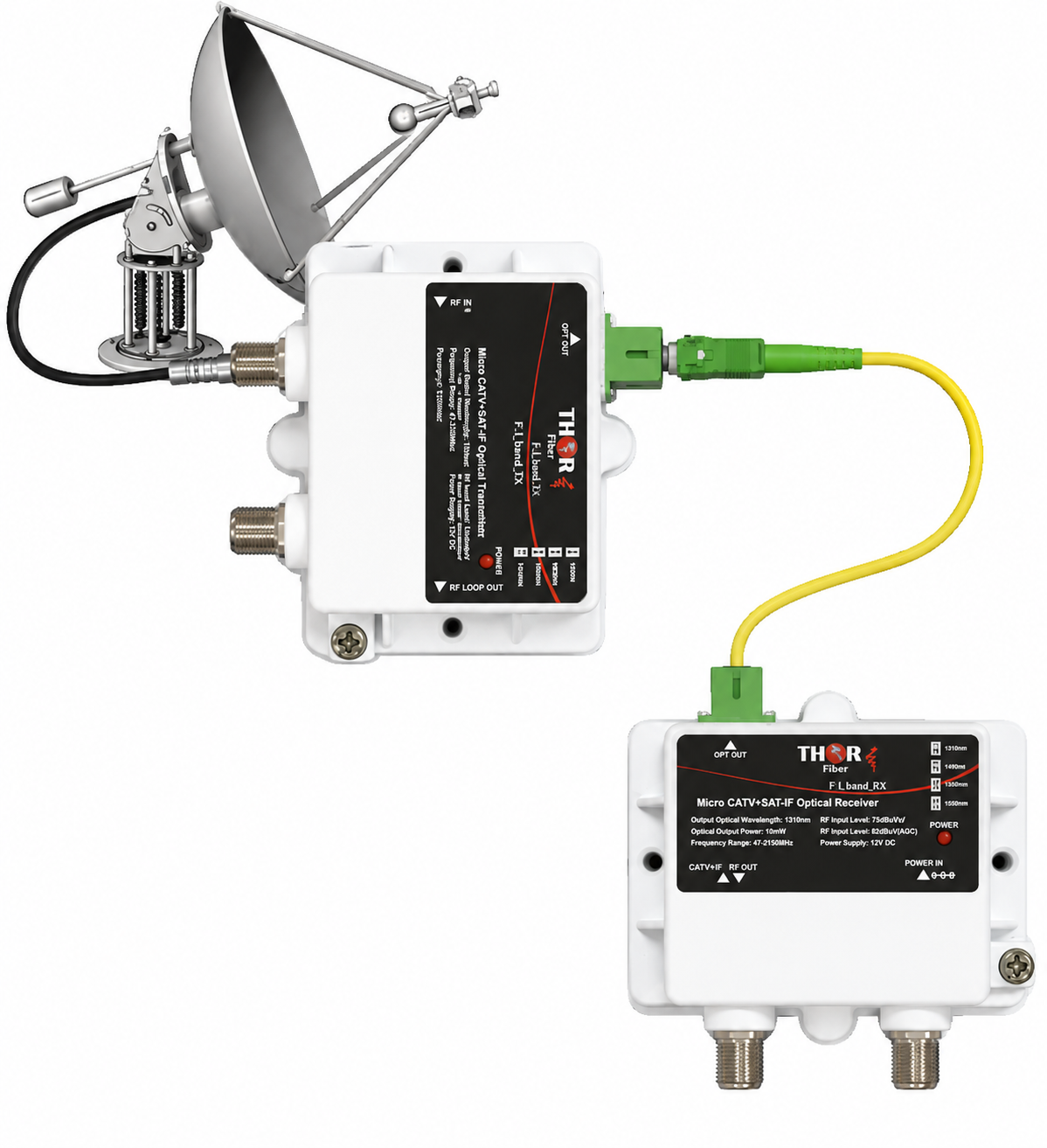
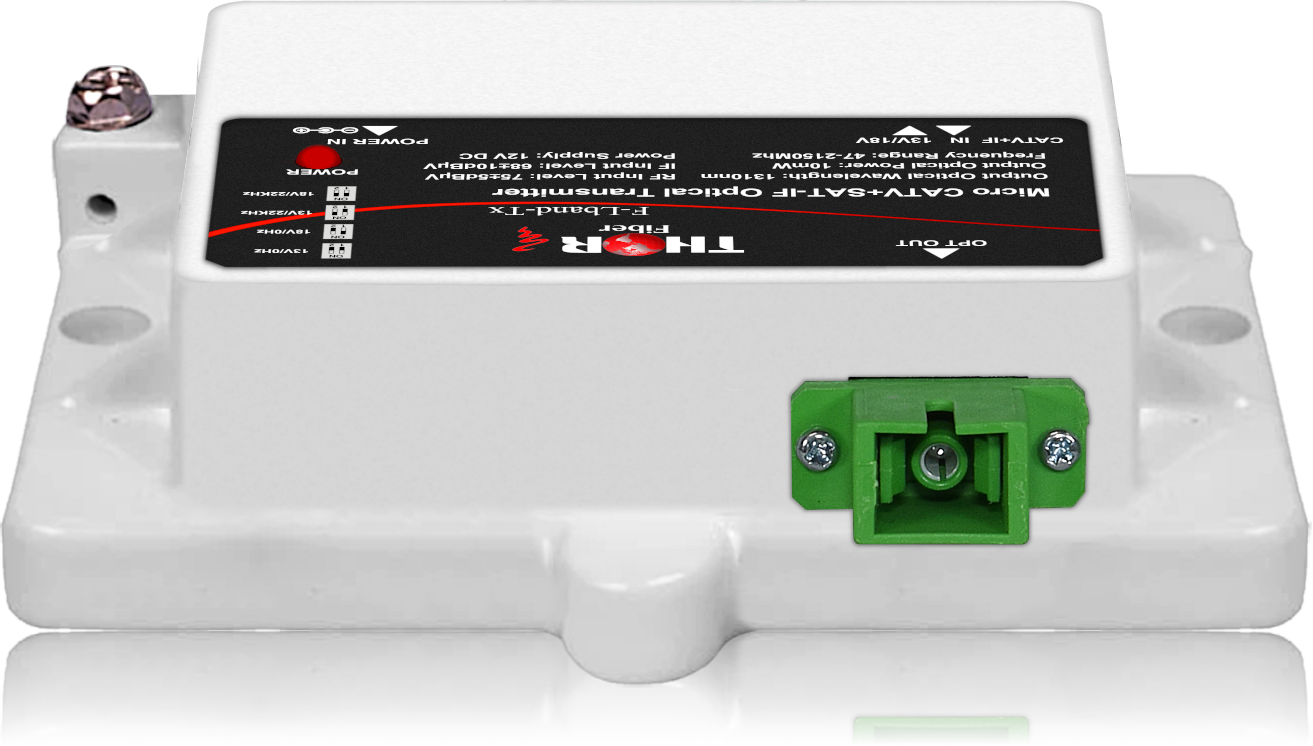
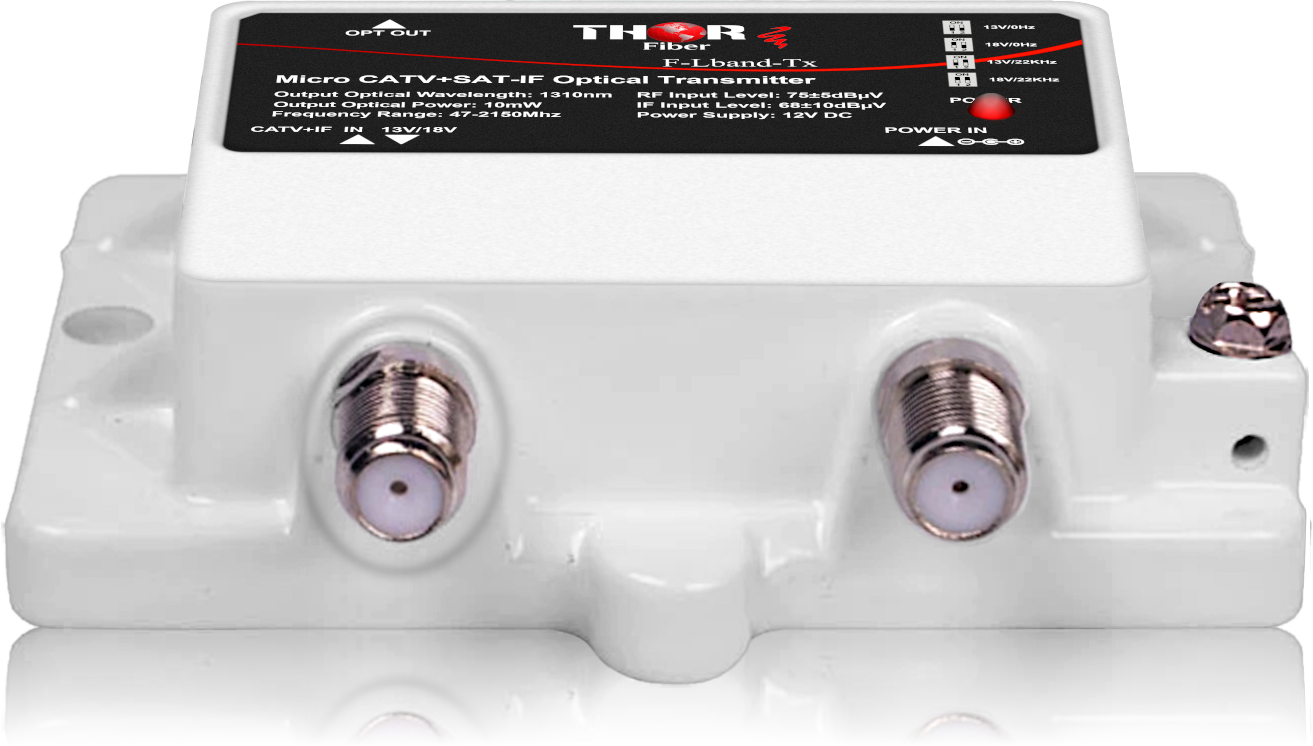
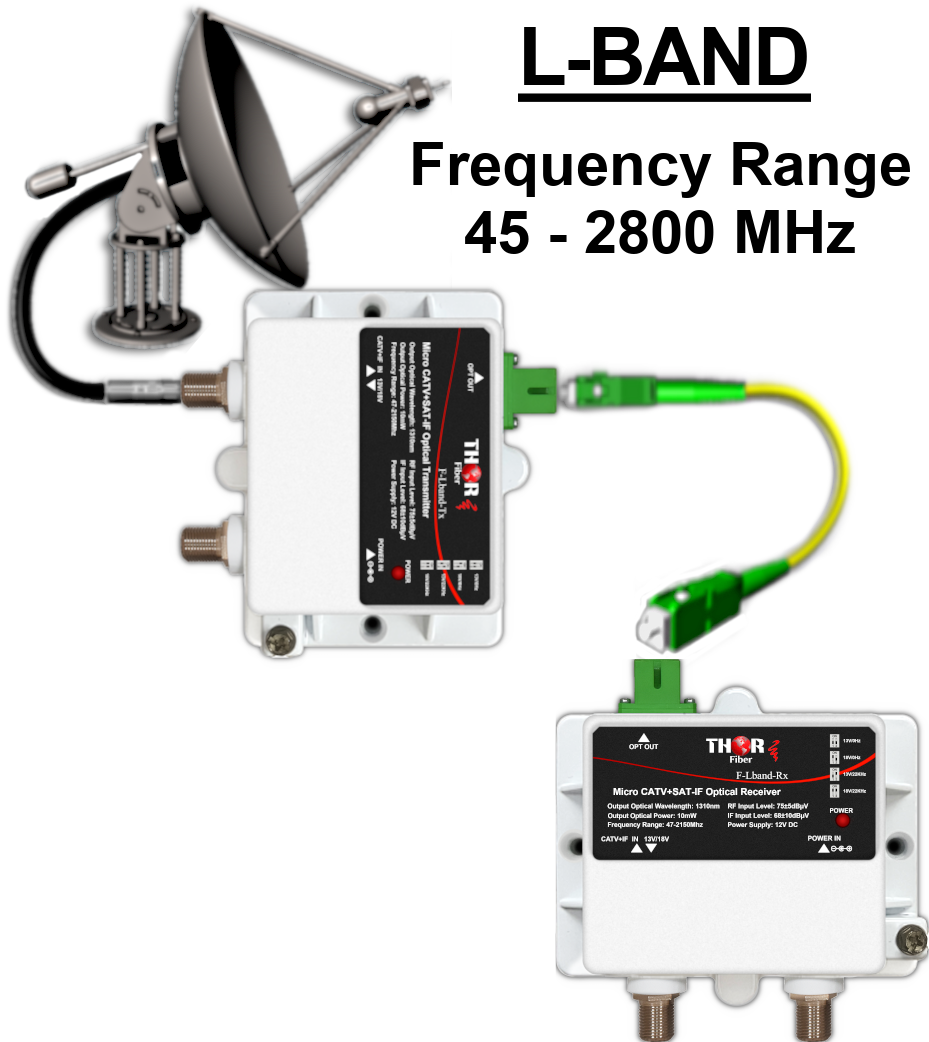
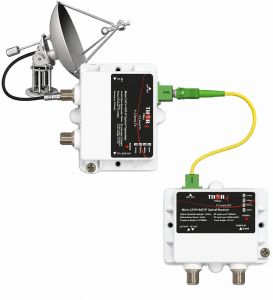
The L-Band fiber optic transmitter/receiver pair is used for transporting RF satellite signals in the L Band over fiber from the antenna to the satellite receiver. L-band RF signals have a very limited range over coaxial cable, typically no more than a few hundred feet. By transporting the L-Band RF signal over an optical fiber, this range can be extended to over 50 miles. Fiber optic cables are much smaller and easier to work with than traditional copper coax. Additionally, our units provide optional 13/18V LNB power as well as Automatic Gain Control (AGC) to manage RF input level. Fiber optic transport of satellite signals is useful in many applications, such as transportation of signals from a remote satellite farm to a broadcaster's headend, uplink and downlink applications, and DBS services. This fiber satellite (SAT) extender can even transport broadband CATV RF over fiber optic cable. Thor offers CWDM multiplexing solutions for transportation of up to 8 distinct L-Band signals over a single fiber, as well as multicasting solutions over several different fibers via optical coupling. Custom solutions are available; contact Thor today for help with your specific L Band DBS satellite RF Dish LNB over fiber needs.
 |
 |
IMPORTANT NOTE*** (It is very important to interface our unit with SC/APC - Angle Polished Connector to avoid any light reflections.)
If your fiber is terminated with the SC, ST, FC /PC flat connector, you need to use an optical jumper from PC type to SC/APC for proper conversion.


Standard Model Numbers
| Model Number | Description ( NOTE : All units ,TX's and RX's comes with the AC power supplies ) |
|
L-BAND Singlemode Fiber Transmitter for 10km |
|
L-BAND Singlemode Fiber Reciever for 10km |
|
L-BAND Singlemode Fiber Transmitter for 40km |
|
L-BAND Singlemode Fiber Reciever for 40km |
|
L-BAND Singlemode Fiber Transmitter for 80km |
|
L-BAND Singlemode Fiber Reciever for 80km |
|
L-BAND Singlemode Fiber Transmitter for 120km |
|
L-BAND Singlemode Fiber Reciever for 120km |
|
L-BAND Singlemode Fiber Transmitter for 10km |
|
L-BAND Singlemode Fiber Reciever for 10km |
 |
|
| *All Specifications Subject to Change Without Notice | |||
| Transmitter Properties | |||
|
1310 nm (standard) 1550 nm (optional) FP/DFB |
||
|
+2.0 dBm +/- 2 dB | ||
|
45 - 2800 MHz | ||
|
55 - 78 dBuV | ||
|
13 or 18 VDC / 650mA Max 22KHz | ||
|
F-Connector or by request | ||
|
13 dB | ||
|
75 Ohm | ||
|
40 dB | ||
|
40 dB | ||
| Receiver Properties | |||
|
1290 - 1600 nm | ||
|
-13 - 1 dBm (sensitivity -13 dBm) | ||
|
45 - 2800 MHz | ||
| Output RF Response Levels | |||
|
RF Output = 88 dBuV | ||
|
RF Output = 82 dBuV | ||
|
RF Output = 74 dBuV | ||
|
RF Output = 68 dBuV | ||
|
RF Output = 63 dBuV | ||
| General Parameters | |||
|
12VDC, 1.5A AC to DC power supply - Included (F-Type Female) | ||
|
(-45) - 150 F | ||
|
F - Connector | ||
|
SC/APC IMPORTANT NOTE*** (It is very important to interface our unit with SC/APC - Angle Polished Connector to avoid any light reflections.) If your fiber is terminated with the SC, ST, FC /PC flat connector, you need to use an optical jumper from PC type to SC/APC for proper conversion. |
||
|
TX WEIGHT: 0.9 lb RX WEIGHT: 1.0 lb |
||
Is the application just point to point? Is the CATV QAM or ATSC?
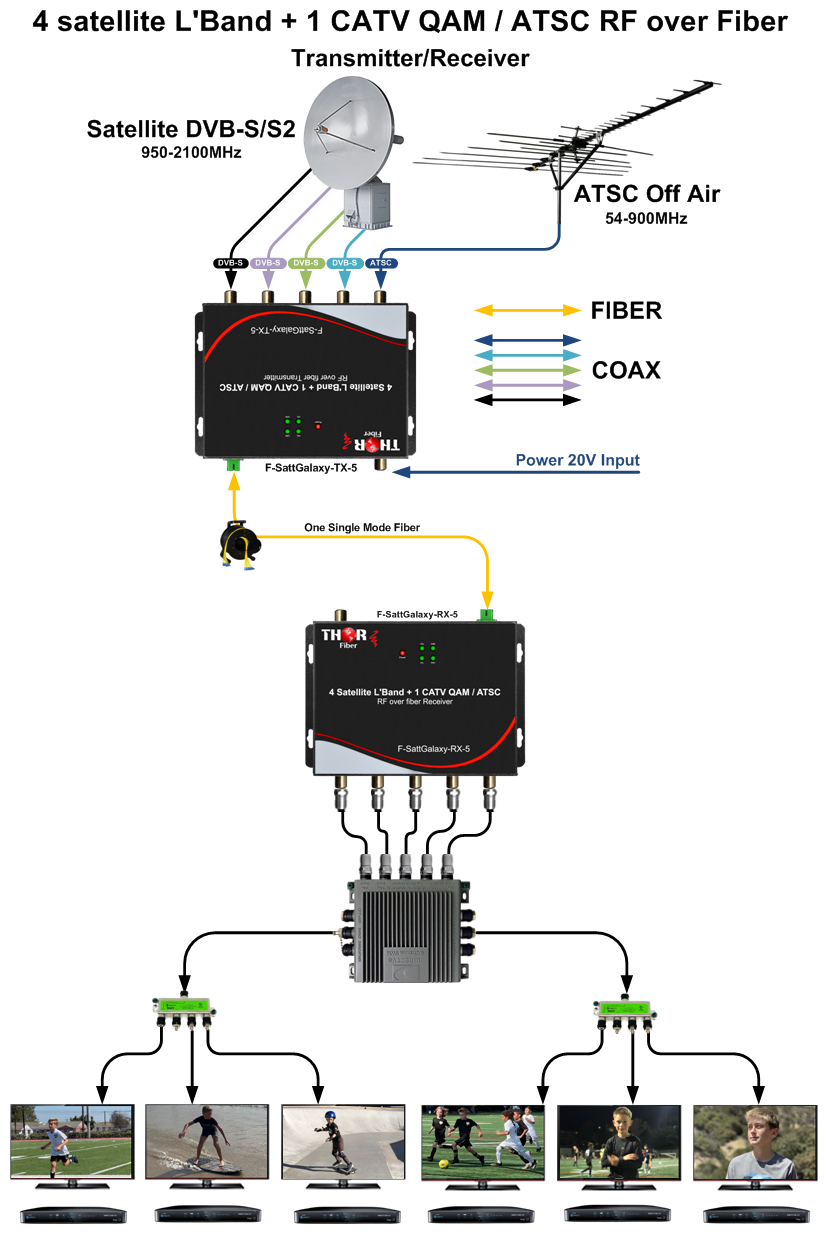
Does the customer have single-mode fiber in place with SC/APC connectors? What is the approximate distance of the fiber? Or do you know the optical budget/loss? We have an abundance of products for this kind of application. https://thorbroadcast.com/products/cable-tv-catv-rf-45-900mhz Transmitters and receivers are readily available and in stock; we just need a little more information so we can point you in the right direction.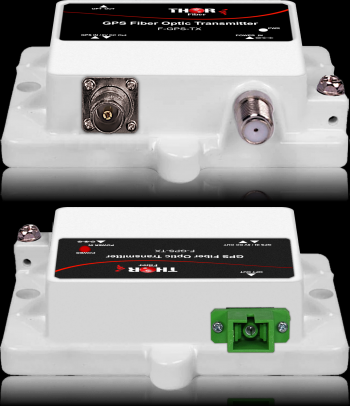
 3)
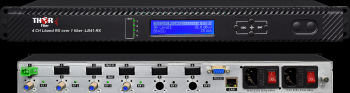
4-channel and 6-channel rackmountable - over single fiber
F-LB41-CWDM-TxRx - 4ch
https://thorbroadcast.com/product/4-ch-l-band-satellite-over-single-fiber-extender-transmitter-and-8230.html
F-LB61-CWDM-TxRx - 6ch
https://thorbroadcast.com/product/6-ch-l-band-satellite-over-single-fiber-extender-transmitter-and-8230.html
3)
4-channel and 6-channel rackmountable - over single fiber
F-LB41-CWDM-TxRx - 4ch
https://thorbroadcast.com/product/4-ch-l-band-satellite-over-single-fiber-extender-transmitter-and-8230.html
F-LB61-CWDM-TxRx - 6ch
https://thorbroadcast.com/product/6-ch-l-band-satellite-over-single-fiber-extender-transmitter-and-8230.html
 Please review and let me know if any of those units would work for you.
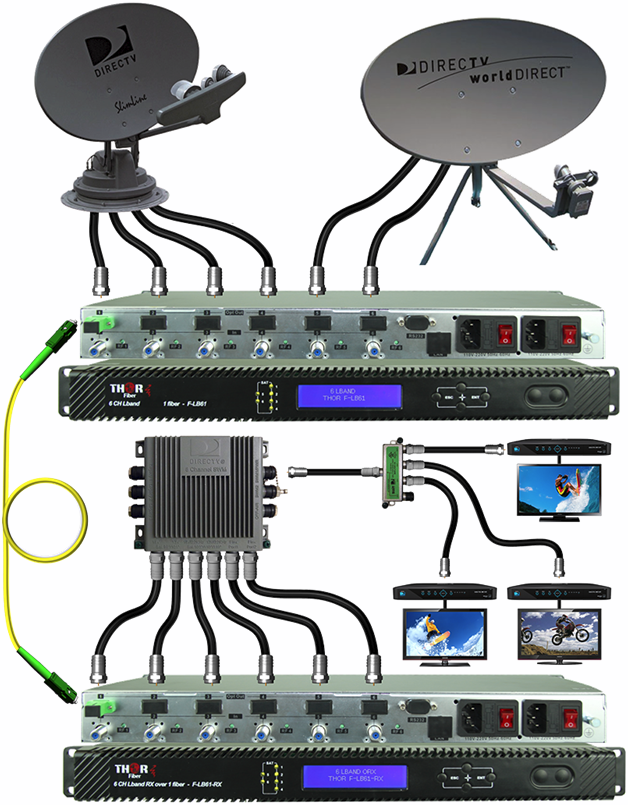
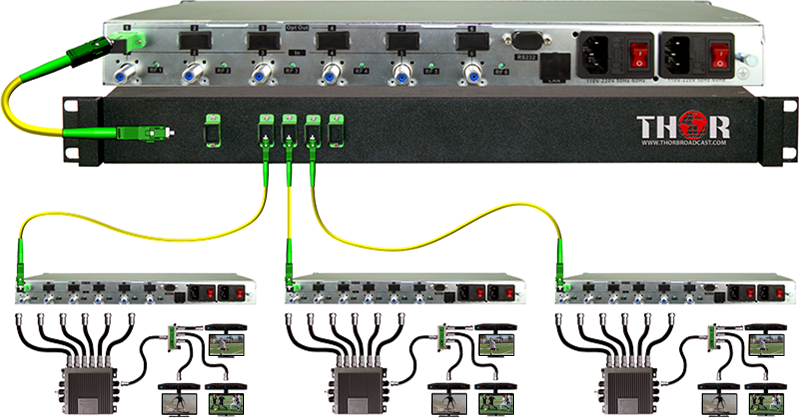
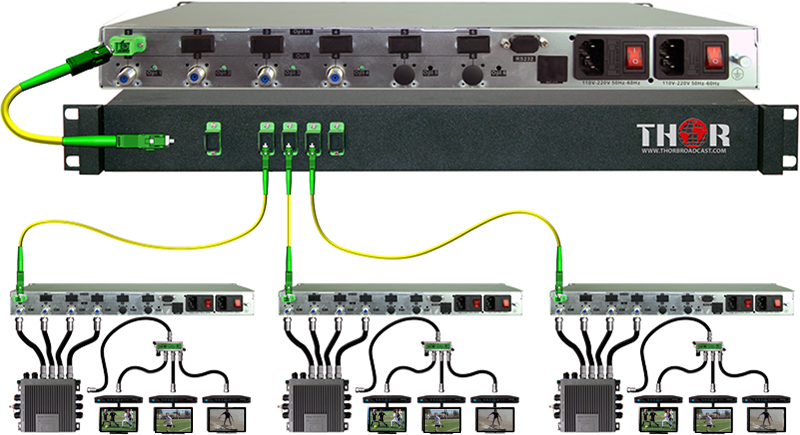
 I'd be happy to clarify how we can extend DirecTV signals using our L-band fiber optic extender products. DirecTV usually has four or more LNBs, which are connected directly via four or more coax cables into the SWM. The SWM has RF output/input and communicates with the STBs in both directions. Since fiber optic is strictly unidirectional, we can only extend the 4/6 LNBs' signal into the SWMs, not from the SWMs to set-top boxes. (So we cannot use F-LBAND-TX/RX from your splitter MSPLIT8R1-03.) The easiest way to help you with your application would be to use the F-LB41-TX 4 L-band Transmitter (4 LNB fiber optic extender with a 1x4 Optical Splitter and three F-LB41-RX receivers. These receivers would be connected to three SWMs, where you can run your 1x splitters and set-top boxes. Please check the link below for a drawing to visualize your application:
https://thorbroadcast.com/product/4-ch-l-band-satellite-over-single-fiber-extender-transmitter-and-8230.html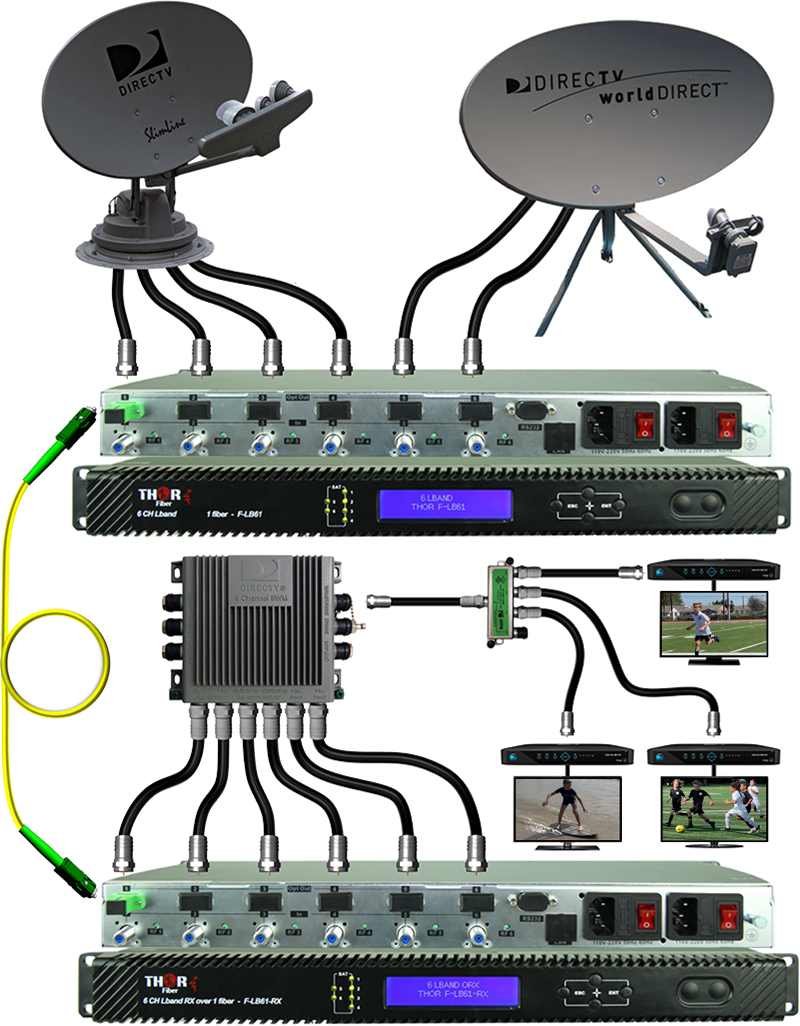
Our units require single mode fiber and SC/APC connectors. If you have LC/PC, then you will need to use LC/PC to SC/PC optical jumpers on each end of the fiber. Please let me know if this is clear.
Thank you for reaching out. Yes, this is correct-the GPS over fiber devices work as a transmitter and receiver pair. The F-4GPS-TX-WE is an optical transmitter only, converting the RF GPS electrical signal into an optical output. The F-LBAND-TX/RX is a receiver only, which converts the optical signal back to the original electrical GPS RF signal. Therefore, the device functions as a GPS RF extender over fiber and, importantly, acts as a physical isolator. We refer to this as a "fiber break" because it creates an inability to send any signals back from the RX to the TX. The RX is not equipped with any laser; it is just an optical detector.
If you only need one GPS, here is the link to the F-1GPS-TX/RX, which will do the job. Please note that we also have a very similar solution for satellite antenna L-band over fiber (F-LBAND-TX/RX) and for Cable TV RF with a fiber break. These devices are essentially rated for different RF frequency ranges.
If you only need one GPS, here is the link to the F-1GPS-TX/RX, which will do the job. https://thorbroadcast.com/product/1-gps-fiber-transport-system.html Please note that we also have very similar solutions for satellite antenna L-band over fiber (F-LBAND-TX/RX) https://thorbroadcast.com/product/l-band-over-fiber-tx-rx-basic-1-ch-kit.html and Cable TV RF cable (fiber break). They are essentially rated for different RF frequency ranges. https://thorbroadcast.com/product/rf-fiber-break-optical-rf-coax-isolation-solution.html In your application, which signal would you like to isolate: GPS, L-band, or CATV RF cable?
1) - To confirm the setup for your DirecTV system and which Lband RFoF which would fit your system; do you know how many LNB's your Dish has? And does it have a SWM built into the dish?
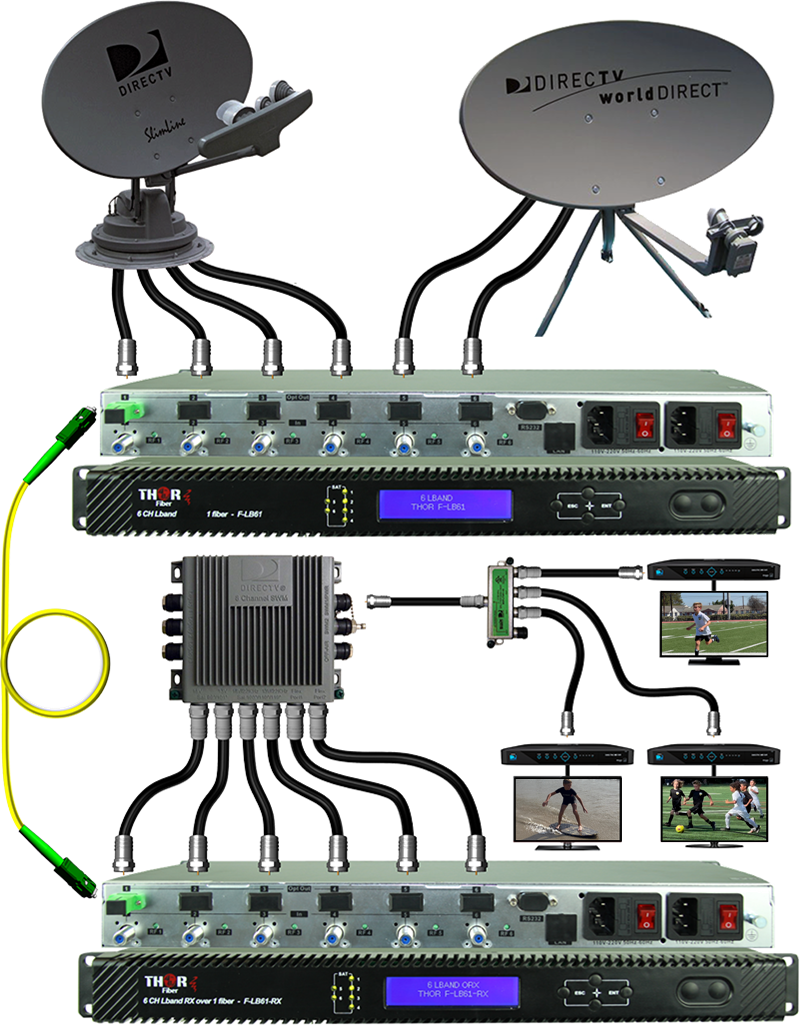
If you aren't sure, please send us the model numbers of which Dish you have; they vary between 1 to 5 LNB's generally. For fiber topologies with dishes, the fiber transmitter and receiver go in between the dish and the SWM; yes you'll need a SWM to distribute that signal last mile on coax. It's required because you have bidirectional communication between the STB's and the SWM. 2) The drawing shows the basic TX/RX setup. For DirecTV, the SWM is crucial for the return path communication. If you are using our F-Lband-Tx/Rx, you will need the SWM after the receiver, and then split the coax output from the SWM to your 8 STBs. Let me know if that clears things up. However the most important aspect is still finding out what kind of dish it has; also if there are other units utilizing the same dish it might alter your design. There are countless designs and styles of dishes from all the Satellite providers; so the number of LNB's is crucial; if the Dish has a built in SWM then you can't use our fiber gear. Also single mode fiber is a necessity; multimode won't work; and SC/APC connectors are industry standard for RFoF products. For most installs, a 4ch or 6ch L-Band over fiber setup is usually the cleanest way to cover the satellite bands they actually need Thor Broadcast 12:47?PM (0 minutes ago) to ROMAD For most installs, a 4ch or 6ch L-Band over fiber setup is usually the cleanest way to cover the satellite bands they actually need https://thorbroadcast.com/product/4-ch-l-band-satellite-over-single-fiber-extender-transmitter-and-8230.html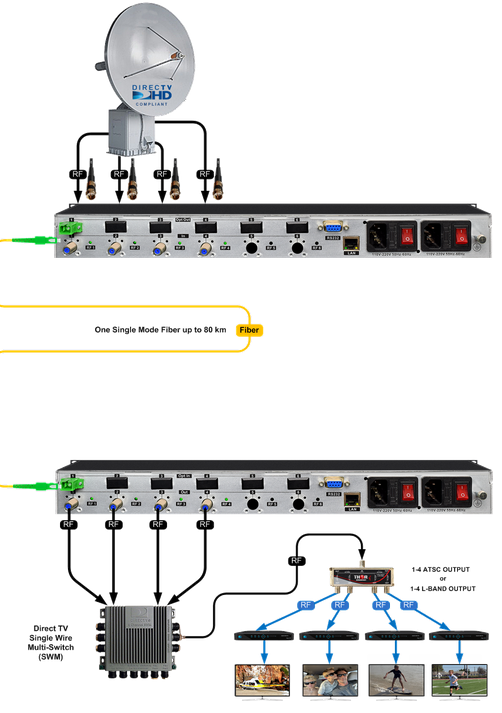
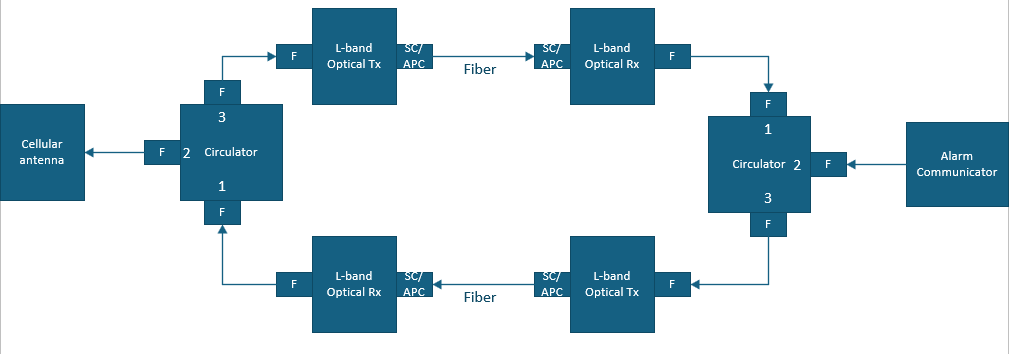
For your application with the Inmarsat system, you'll need a setup that's similar to a cell phone antenna. It supports duplex L-Band signals and is required to be bidirectional. Here is our solution:
For the bi-directional RF over fiber, you could possibly use 2 sets of F-L-band-TxRx over 2 singlemode fibers (one forward and one reverse). F-L-band-TxRx The frequency range is 45-2600 mhz. Again, you would need to use TWO sets TX/RX sets to make it bi-directional and use 2 single mode fibers (has to be singlemode and use SC/APC connectors. This is the link: https://thorbroadcast.com/product/l-band-over-fiber-tx-rx-basic-1-ch-kit.html You would also need an RF circulator, but that would be a good solution for this kind of application. Not exactly a common application, and we don't have specific products for this type of antenna; but what we proposed above should work. You can send me the specifications of that antenna so I can double-check, but my assumption is everything will be in the range required. You just need to make sure you have singlemode fiber. Please let me know if that would work for you.We have L-Band over Fiber TX/RX kits that should work for your 200 m run. I recommend looking at the basic 1-channel kit you linked on the site. - F-LBAND-Tx/Rx Tramsitter + Receiver
Since your system is a VSAT link (both uplink and downlink), you will need to use two L-Band RF over fiber links, working in opposite directions.
One link is for the downlink (satellite to equipment), and the second link is for the uplink (equipment to satellite).
Downlink path: Dish (LNB output) -> L-Band TX -> Fiber -> L-Band RX -> Modem / IRD
Uplink path: Modem / Modulator -> L-Band TX -> Fiber -> L-Band RX -> BUC -> Dish
Important note on RF levels:
Our transmitter requires an input level between +10 to +30 dBmV.
In most cases:
Uplink equipment outputs a higher RF level -> you will need to add an attenuator before the TX
Downlink signals from LNB are usually lower -> you may need amplification after the RX
Simple rule: If the signal is too high -> attenuate before TX If the signal is too low -> amplify after RX
Each direction is independent and requires its own TX/RX path. The system transports RF transparently, so it will work with your existing VSAT equipment without protocol changes.
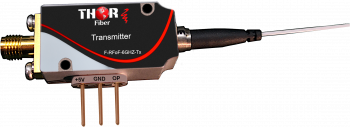 6GHz RF over Fiber
Up to 6GHz analog RF optical transport - RF over fiber Transmitter / Receiver for Satcom, GPS, WiMAX, LTE, and DAS RF transport applications
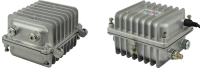 1 L-Band LNB Dish over fiber Extender with Outdoor Enclosure
Satellite RF 1 L-Band over fiber system, complete transmitter and receiver kit for harsh-environment or outdoor installations.

 ES
ES






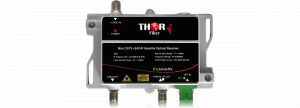






 Thor Broadcast
12:47?PM (0 minutes ago)
to ROMAD
For most installs, a 4ch or 6ch L-Band over fiber setup is usually the cleanest way to cover the satellite bands they actually need
Thor Broadcast
12:47?PM (0 minutes ago)
to ROMAD
For most installs, a 4ch or 6ch L-Band over fiber setup is usually the cleanest way to cover the satellite bands they actually need